

555 Exam 3
Study online at https://quizlet.com/_i5dnrb
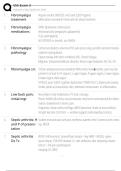
1. Fibromyalgia Regular aerobic EXERCISE and Good SLEEP hygiene.
treatment Medications reserved for those who fail above treatment.
2. Fibromyalgia SNRIs (duloxetine, milnacipran)
medications Anticonvulsants (pregabalin, gabapentin)
TCAs (amitriptyline)
NO OPIOIDS or steroids. use NSAIDs
3. Fibromyalgia: Central sensitization; abnormal CNS pain processing; possible serotonin/norepi-
pathology nephrine dysregulation.
Expect overlap with other conditions (IBS, Chronic fatigue,
Migraine, Temporomandibular disorder, Tension-type headache, RA, SLE, OA
4. fibromyalgia s/s Chronic widespread musculoskeletal PAIN similar level e 3 months, pain must be
present in at least 4 of 5 regions: L upper region, R upper region, L lower region,
R lower region, Axial region
FATIGUE, poor SLEEP, cognitive dysfunction ("FIBRO FOG"), depression/anxiety.
Tender points at characteristic sites, otherwise normal exam. no inflammation
5. Low back pain; Non-pharm: Early mobilization, PT, heat, massage.
initial mgt Pharm: NSAIDs (first line), muscle relaxants, short-term corticosteroids for inflam-
mation, duloxetine for chronic pain.
Diagnostics: None unless red flags; MRI if persistent >6 wks or neuro deficits.
Straight leg raise (SLR) test — positive suggests radiculopathy (sciatica).
6. Septic arthritis; H Sudden monoarticular joint pain, erythema, warmth, fever. Common joints: knee,
and P of presen- hip. REFER
tation
7. Septic arthritis REFER: Arthrocentesis Synovial fluid analysis = key (WBC >50,000, +gram
Dx Tx stain/culture). ESR/CRP elevated. Tx: Start antibiotics after obtaining cultures
(Vanco = 3rd gen cephalosporin
Imaging (US, MRI)
, 555 Exam 3
Study online at https://quizlet.com/_i5dnrb
8. Most common Staph aureus
organism for
septic arthritis in
adults
9. Gout manage- Start Tx early: NSAIDs, colchicine, or corticosteroids.
ment (acute) Lifestyle (“purines, “ETOH, weight loss).
10. Gout manage- Xanthine oxidase inhibitors
ment (chronic) Allopurinol: 100 mg PO initially then titrate
Febuxostat: 40 mg PO once daily then 80 mg
Uricosuric (probenecid).
11. Osteoporosis Dx DXA scan T-score d−2.5; screen all women e
65 or earlier if risk factors
12. Osteoporosis Tx Non-pharm: Calcium + Vit D, weight-bearing exercise, fall prevention.
Pharm:
Bisphosphonates (alendronate, risedronate).
RANK-L inhibitor (denosumab).
PTH analogs (teriparatide).
SERMs (raloxifene).
13. Amount of calci- 1200 mg/day
um needed daily
for OP
14. Amount of Vit D 800-1000 IU/day,
per day for OP
15. OA Dx Diagnostics: X-ray: joint space narrowing, osteophytes.
16. OA Tx Non-pharm: Exercise, weight loss, assistive devices.
Pharm:
Study online at https://quizlet.com/_i5dnrb
1. Fibromyalgia Regular aerobic EXERCISE and Good SLEEP hygiene.
treatment Medications reserved for those who fail above treatment.
2. Fibromyalgia SNRIs (duloxetine, milnacipran)
medications Anticonvulsants (pregabalin, gabapentin)
TCAs (amitriptyline)
NO OPIOIDS or steroids. use NSAIDs
3. Fibromyalgia: Central sensitization; abnormal CNS pain processing; possible serotonin/norepi-
pathology nephrine dysregulation.
Expect overlap with other conditions (IBS, Chronic fatigue,
Migraine, Temporomandibular disorder, Tension-type headache, RA, SLE, OA
4. fibromyalgia s/s Chronic widespread musculoskeletal PAIN similar level e 3 months, pain must be
present in at least 4 of 5 regions: L upper region, R upper region, L lower region,
R lower region, Axial region
FATIGUE, poor SLEEP, cognitive dysfunction ("FIBRO FOG"), depression/anxiety.
Tender points at characteristic sites, otherwise normal exam. no inflammation
5. Low back pain; Non-pharm: Early mobilization, PT, heat, massage.
initial mgt Pharm: NSAIDs (first line), muscle relaxants, short-term corticosteroids for inflam-
mation, duloxetine for chronic pain.
Diagnostics: None unless red flags; MRI if persistent >6 wks or neuro deficits.
Straight leg raise (SLR) test — positive suggests radiculopathy (sciatica).
6. Septic arthritis; H Sudden monoarticular joint pain, erythema, warmth, fever. Common joints: knee,
and P of presen- hip. REFER
tation
7. Septic arthritis REFER: Arthrocentesis Synovial fluid analysis = key (WBC >50,000, +gram
Dx Tx stain/culture). ESR/CRP elevated. Tx: Start antibiotics after obtaining cultures
(Vanco = 3rd gen cephalosporin
Imaging (US, MRI)
, 555 Exam 3
Study online at https://quizlet.com/_i5dnrb
8. Most common Staph aureus
organism for
septic arthritis in
adults
9. Gout manage- Start Tx early: NSAIDs, colchicine, or corticosteroids.
ment (acute) Lifestyle (“purines, “ETOH, weight loss).
10. Gout manage- Xanthine oxidase inhibitors
ment (chronic) Allopurinol: 100 mg PO initially then titrate
Febuxostat: 40 mg PO once daily then 80 mg
Uricosuric (probenecid).
11. Osteoporosis Dx DXA scan T-score d−2.5; screen all women e
65 or earlier if risk factors
12. Osteoporosis Tx Non-pharm: Calcium + Vit D, weight-bearing exercise, fall prevention.
Pharm:
Bisphosphonates (alendronate, risedronate).
RANK-L inhibitor (denosumab).
PTH analogs (teriparatide).
SERMs (raloxifene).
13. Amount of calci- 1200 mg/day
um needed daily
for OP
14. Amount of Vit D 800-1000 IU/day,
per day for OP
15. OA Dx Diagnostics: X-ray: joint space narrowing, osteophytes.
16. OA Tx Non-pharm: Exercise, weight loss, assistive devices.
Pharm:


