Metabolic Functions of the Liver
The three-stage process by which liver cells transform hydrophobic
chemicals into water soluble substances ready for excretion: Phase 1 -
oxidation, Phase 2 - conjugation, Phase 3 - elimination
The importance of these processes for the detoxification of potentially
harmful substances
The role of the liver in the deamination and interconversion of amino
acids and in the synthesis of plasma proteins
The dual function of the liver for glucose homeostasis in the body, a) by
the reversible storage of glucose in the form of glycogen, b) by its
ability to regenerate glucose
The implications these mechanisms for both the 'dealing' of the body
with 'chemical insults' and for chemical therapeutics
The importance of the liver in the metabolism of fats, cholesterol and
ketones
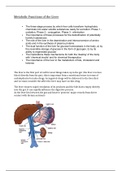
The liver is the first port of call for most things taken up in the gut (the liver receives
blood directly from the gut), this is important from a nutritional sense in terms of
carbohydrates but also drugs. As ingested drugs will be delivered to the liver first
and we must consider the affect the liver may have on this drug.
The liver ensures rapid circulation of its products and the bile ducts empty directly
into the gut. It can rapidly influence the digestive process.
As the liver lies between the gut and heart it ‘protects’ major vessels from direct
contact with dietary nutrients
, The liver is extremely important for maintaining constant blood glucose levels, it
does this by removal of glucose from the blood after a meal. By storing excess glucose
in the form of glycogen, by restoring blood glucose levels through glycogenesis and
glycogenolysis. Also by regulating the fluxes through glycolysis, gluconeogenesis and
pentose phosphate pathway.
It also has a major role in converting excess glucose into fatty acids which can later
be converted to glucose if need be.
The liver especially tries to maintain glucose for the brain and RBCs. The liver
produces fatty acids which are largely sent off to the adipocytes for storage via
VLDLs.
Importantly there is also interaction between liver and muscle, this is seen in
anaerobic respiration with the production of lactate and also in proteolysis.
Excess lactate has to be converted back to glucose.
Degradation of proteins will largely form alanine, this will also be transported in the
blood to the liver where it can be converted back to glucose and used for further
muscle activity or for brain.
Importance of the Liver for Protein and Amino Acid Metabolism
The liver is the major site for the synthesis of many serum proteins, such as albumin
and blood clotting factors.
The three-stage process by which liver cells transform hydrophobic
chemicals into water soluble substances ready for excretion: Phase 1 -
oxidation, Phase 2 - conjugation, Phase 3 - elimination
The importance of these processes for the detoxification of potentially
harmful substances
The role of the liver in the deamination and interconversion of amino
acids and in the synthesis of plasma proteins
The dual function of the liver for glucose homeostasis in the body, a) by
the reversible storage of glucose in the form of glycogen, b) by its
ability to regenerate glucose
The implications these mechanisms for both the 'dealing' of the body
with 'chemical insults' and for chemical therapeutics
The importance of the liver in the metabolism of fats, cholesterol and
ketones
The liver is the first port of call for most things taken up in the gut (the liver receives
blood directly from the gut), this is important from a nutritional sense in terms of
carbohydrates but also drugs. As ingested drugs will be delivered to the liver first
and we must consider the affect the liver may have on this drug.
The liver ensures rapid circulation of its products and the bile ducts empty directly
into the gut. It can rapidly influence the digestive process.
As the liver lies between the gut and heart it ‘protects’ major vessels from direct
contact with dietary nutrients
, The liver is extremely important for maintaining constant blood glucose levels, it
does this by removal of glucose from the blood after a meal. By storing excess glucose
in the form of glycogen, by restoring blood glucose levels through glycogenesis and
glycogenolysis. Also by regulating the fluxes through glycolysis, gluconeogenesis and
pentose phosphate pathway.
It also has a major role in converting excess glucose into fatty acids which can later
be converted to glucose if need be.
The liver especially tries to maintain glucose for the brain and RBCs. The liver
produces fatty acids which are largely sent off to the adipocytes for storage via
VLDLs.
Importantly there is also interaction between liver and muscle, this is seen in
anaerobic respiration with the production of lactate and also in proteolysis.
Excess lactate has to be converted back to glucose.
Degradation of proteins will largely form alanine, this will also be transported in the
blood to the liver where it can be converted back to glucose and used for further
muscle activity or for brain.
Importance of the Liver for Protein and Amino Acid Metabolism
The liver is the major site for the synthesis of many serum proteins, such as albumin
and blood clotting factors.