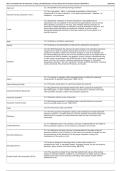
NFPA 25 Standard for the Inspection, Testing, and Maintenance of Water-Based Fire Protection Systems CHAPTER 3 2025/2026
Approved 3.2.1 Acceptable to the authority having jurisdiction
3.2.2 An organization , office , or individual responsible for enforcing the
requirements of a code or standard , or for approving equipment , materials , an
Authority Having Jurisdiction ( AHJ ) installation , or a procedure .
3.2.3 Equipment, materials, or services included in a list published by an
organization that is acceptable to the authority having jurisdiction and concerned
with evaluation of products or services, that maintains periodic inspection of
production of listed equipment or materials or periodic evaluation of services, and
whose listing states that either the equipment, material, or service meets
Listed
appropriate designated standards or has been tested and found suitable for a
specified purpose.
Shall 3.2.4 Indicates a mandatory requirement.
Should 3.2.5 Indicates a recommendation or that which is advised but not required.
3.2.6 An NFPA Standard, the main text of which contains only mandatory provisions
using the word "shall" to indicate requirements and that is in a form generally
suitable for mandatory reference by another standard or code or for adoption into
law. Nonmandatory provisions are not to be considered a part of the requirements of
a standard and shall be located in an appendix, annex, footnote, informational note,
or other means as permitted in the NFPA Manuals of Style. When used in a generic
sense, such as in the phrase "standards development process" or "standards
Standard development activities," the term "standards" includes all NFPA Standards, including
Codes, Standards, Recommended Practices, and Guides.
3.3.1 To maintain or regulate, within prescribed limits, by setting the operating
Adjust characteristics to specified parameters. [1911, 2012]
Alarm Receiving Facility 3.3.2 The place where alarm or supervisory signals are received
3.3.3 Equipment that automatically detects heat, flame, products of combustion,
flammable gases, or other conditions likely to produce fire or explosion and cause
Automatic Detection Equipment other automatic actuation of alarm and protection equipment.
Automatic Operation 3.3.4 Operation without human intervention
3.3.5 Self-acting equipment for transferring the connected load from one power
Automatic Transfer Switch source to another power source. [110, 2016]
Clean 3.3.6 To remove dirt, scale, and debris.
3.3.7 For the purposes of inspection, testing, and maintenance of water-based fire
protection systems, a condition that will or has the potential to adversely impact the
Deficiency performance of a system or portion thereof but does not rise to the level of an
impairment.
3.3.7.1 A deficiency that, if not corrected, can have a material effect on the ability of
Critical Deficiency the fire protection system or unit to function as intended in a fire event.
3.3.7.2 A deficiency that does not have a material effect on the ability of the fire
protection system or unit to function in a fire event, but correction is needed to meet
Noncritical Deficiency the requirements of this standard or for the proper inspection, testing, and
maintenance of the system or unit.
3.3.8 A device designed to discharge water or foam-water solution in a
predetermined, fixed, or adjustable pattern. Examples include, but are not limited to,
Discharge Device sprinklers, spray nozzles, and hose nozzles. [16,2015]
3.3.9 This assembly consists of two internally loaded check valves, either spring-
loaded or internally weighted, installed as a unit between two tightly closing resilient-
Double Check Valve Assembly (DCVA) seated shutoff valves as an assembly, and fittings with properly located resilient-
seated test cocks.
, NFPA 25 Standard for the Inspection, Testing, and Maintenance of Water-Based Fire Protection Systems CHAPTER 3 2025/2026
Main Drain 3.3.10.1 The primary drain connection located on the system riser.
3.3.10.2 A drain located beyond a sectional control valve that drains only a portion of
Sectional Drain the system.
3.3.11 A connection through which the fire department can pump supplemental
water into the sprinkler system, standpipe, or other system furnishing water for fire
Fire Department Connection extinguishment to supplement existing water supplies.
3.3.12 A valved connection on a water supply system having one or more outlets
and that is used to supply hose and fire department pumpers with water.
Fire Hydrant [1141, 2017]
3.3.12.1 A type of hydrant with the main control valve below the frost line between
Dry Barrel Hydrant (Frostproof Hydrant) the footpiece and the barrel.
3.3.12.2 A hydrant equipped with a monitor nozzle capable of delivering more than
Monitor Nozzle Hydrant 250 gpm (946 L/min).
3.3.12.3 A hydrant mounted on the outside of a wall of a building, fed from interior
piping, and equipped with control valves located inside the building that normally are
Wall Hydrant key-operated from the building's exterior.
3.3.12.4 A type of hydrant that is intended for use where there is no danger of
freezing weather and where each outlet is provided with a valve and an outlet.
Wet Barrel Hydrant [24, 2016]
3.3.13 A concentrated liquid foaming agent as received from the manufacturer.
Foam Concentrate [11, 2016]
3.3.14 A device designed to discharge water or foam-water solution in a
predetermined, fixed, or adjustable pattern. Examples include, but are not limited to,
[Foam] Discharge Device sprinklers, spray nozzles, and hose nozzles. [16,2015]
3.3.15 A combination of equipment provided for connection of a hose to the
Hose Connection standpipe system that includes a hose valve with a threaded outlet. [14, 2016]
3.3.16 An enclosure located over or adjacent to a hydrant or other water supply
designed to contain the necessary hose nozzles, hose wrenches, gaskets, and
Hose House spanners to be used in fire fighting in conjunction with and to provide aid to the local
fire department.
3.3.17 A device intended for discharging water for manual suppression or
Hose Nozzle extinguishment of a fire.
3.3.18 A combination of a hose rack or reel, hose nozzle, hose, and hose
Hose Station connection. [14, 2016]
Conventional Pin Rack 3.3.19.1 A hose rack where the hose is folded vertically and attached over the pins.
3.3.19.2 A hose rack where the hose is connected to the valve, then stack-folded
Horizontal Rack horizontally to the top of the rack.
Hose Reel 3.3.19.3 A circular device used to store hose.
3.3.19.4 The same as a "conventional" pin rack or hose reel except that, after the
valve is opened, a retaining device holds the hose and water until the last few feet
Semiautomatic Hose Rack Assembly are removed.
3.3.20 A test of a closed piping system and its attached appurtenances consisting of
subjecting the piping to an increased internal pressure for a specified duration to
Hydrostatic Test verify system integrity and system leakage rates. [24, 2016]
3.3.21 A condition where a fire protection system or unit or portion thereof is out of
order, and the condition can result in the fire protection system or unit not
Impairment functioning in a fire event.
Approved 3.2.1 Acceptable to the authority having jurisdiction
3.2.2 An organization , office , or individual responsible for enforcing the
requirements of a code or standard , or for approving equipment , materials , an
Authority Having Jurisdiction ( AHJ ) installation , or a procedure .
3.2.3 Equipment, materials, or services included in a list published by an
organization that is acceptable to the authority having jurisdiction and concerned
with evaluation of products or services, that maintains periodic inspection of
production of listed equipment or materials or periodic evaluation of services, and
whose listing states that either the equipment, material, or service meets
Listed
appropriate designated standards or has been tested and found suitable for a
specified purpose.
Shall 3.2.4 Indicates a mandatory requirement.
Should 3.2.5 Indicates a recommendation or that which is advised but not required.
3.2.6 An NFPA Standard, the main text of which contains only mandatory provisions
using the word "shall" to indicate requirements and that is in a form generally
suitable for mandatory reference by another standard or code or for adoption into
law. Nonmandatory provisions are not to be considered a part of the requirements of
a standard and shall be located in an appendix, annex, footnote, informational note,
or other means as permitted in the NFPA Manuals of Style. When used in a generic
sense, such as in the phrase "standards development process" or "standards
Standard development activities," the term "standards" includes all NFPA Standards, including
Codes, Standards, Recommended Practices, and Guides.
3.3.1 To maintain or regulate, within prescribed limits, by setting the operating
Adjust characteristics to specified parameters. [1911, 2012]
Alarm Receiving Facility 3.3.2 The place where alarm or supervisory signals are received
3.3.3 Equipment that automatically detects heat, flame, products of combustion,
flammable gases, or other conditions likely to produce fire or explosion and cause
Automatic Detection Equipment other automatic actuation of alarm and protection equipment.
Automatic Operation 3.3.4 Operation without human intervention
3.3.5 Self-acting equipment for transferring the connected load from one power
Automatic Transfer Switch source to another power source. [110, 2016]
Clean 3.3.6 To remove dirt, scale, and debris.
3.3.7 For the purposes of inspection, testing, and maintenance of water-based fire
protection systems, a condition that will or has the potential to adversely impact the
Deficiency performance of a system or portion thereof but does not rise to the level of an
impairment.
3.3.7.1 A deficiency that, if not corrected, can have a material effect on the ability of
Critical Deficiency the fire protection system or unit to function as intended in a fire event.
3.3.7.2 A deficiency that does not have a material effect on the ability of the fire
protection system or unit to function in a fire event, but correction is needed to meet
Noncritical Deficiency the requirements of this standard or for the proper inspection, testing, and
maintenance of the system or unit.
3.3.8 A device designed to discharge water or foam-water solution in a
predetermined, fixed, or adjustable pattern. Examples include, but are not limited to,
Discharge Device sprinklers, spray nozzles, and hose nozzles. [16,2015]
3.3.9 This assembly consists of two internally loaded check valves, either spring-
loaded or internally weighted, installed as a unit between two tightly closing resilient-
Double Check Valve Assembly (DCVA) seated shutoff valves as an assembly, and fittings with properly located resilient-
seated test cocks.
, NFPA 25 Standard for the Inspection, Testing, and Maintenance of Water-Based Fire Protection Systems CHAPTER 3 2025/2026
Main Drain 3.3.10.1 The primary drain connection located on the system riser.
3.3.10.2 A drain located beyond a sectional control valve that drains only a portion of
Sectional Drain the system.
3.3.11 A connection through which the fire department can pump supplemental
water into the sprinkler system, standpipe, or other system furnishing water for fire
Fire Department Connection extinguishment to supplement existing water supplies.
3.3.12 A valved connection on a water supply system having one or more outlets
and that is used to supply hose and fire department pumpers with water.
Fire Hydrant [1141, 2017]
3.3.12.1 A type of hydrant with the main control valve below the frost line between
Dry Barrel Hydrant (Frostproof Hydrant) the footpiece and the barrel.
3.3.12.2 A hydrant equipped with a monitor nozzle capable of delivering more than
Monitor Nozzle Hydrant 250 gpm (946 L/min).
3.3.12.3 A hydrant mounted on the outside of a wall of a building, fed from interior
piping, and equipped with control valves located inside the building that normally are
Wall Hydrant key-operated from the building's exterior.
3.3.12.4 A type of hydrant that is intended for use where there is no danger of
freezing weather and where each outlet is provided with a valve and an outlet.
Wet Barrel Hydrant [24, 2016]
3.3.13 A concentrated liquid foaming agent as received from the manufacturer.
Foam Concentrate [11, 2016]
3.3.14 A device designed to discharge water or foam-water solution in a
predetermined, fixed, or adjustable pattern. Examples include, but are not limited to,
[Foam] Discharge Device sprinklers, spray nozzles, and hose nozzles. [16,2015]
3.3.15 A combination of equipment provided for connection of a hose to the
Hose Connection standpipe system that includes a hose valve with a threaded outlet. [14, 2016]
3.3.16 An enclosure located over or adjacent to a hydrant or other water supply
designed to contain the necessary hose nozzles, hose wrenches, gaskets, and
Hose House spanners to be used in fire fighting in conjunction with and to provide aid to the local
fire department.
3.3.17 A device intended for discharging water for manual suppression or
Hose Nozzle extinguishment of a fire.
3.3.18 A combination of a hose rack or reel, hose nozzle, hose, and hose
Hose Station connection. [14, 2016]
Conventional Pin Rack 3.3.19.1 A hose rack where the hose is folded vertically and attached over the pins.
3.3.19.2 A hose rack where the hose is connected to the valve, then stack-folded
Horizontal Rack horizontally to the top of the rack.
Hose Reel 3.3.19.3 A circular device used to store hose.
3.3.19.4 The same as a "conventional" pin rack or hose reel except that, after the
valve is opened, a retaining device holds the hose and water until the last few feet
Semiautomatic Hose Rack Assembly are removed.
3.3.20 A test of a closed piping system and its attached appurtenances consisting of
subjecting the piping to an increased internal pressure for a specified duration to
Hydrostatic Test verify system integrity and system leakage rates. [24, 2016]
3.3.21 A condition where a fire protection system or unit or portion thereof is out of
order, and the condition can result in the fire protection system or unit not
Impairment functioning in a fire event.