NRSG 3400 Quiz 1 Questions With Complete Solutions
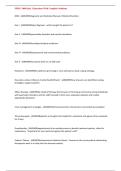
DSM - (ANSWER)Diagnostic and Statistical Manual of Mental Disorders
Axis I - (ANSWER)Major diagnosis - what brought the patient in?
Axis II - (ANSWER)personality disorders and mental retardation
Axis III - (ANSWER)unrelated medical conditions
Axis IV - (ANSWER)psychosocial and environmental problems
Axis V - (ANSWER)functional level on a 0-100 scale
Resiliency - (ANSWER)the ability to go through a crisis and bounce back; coping strategy
How does culture influence mental health/illness? - (ANSWER)how stressors are identified, coping
strategies, support systems
Milieu therapy - (ANSWER)a model of therapy that focuses on forming a community among individuals
with psychiatric disorders and the staff involved in their care; empowers patients and models
appropriate behaviors
Crisis management strategies - (ANSWER)clinical prevention interventions and verbal de-escalation
Three-day paper - (ANSWER)patient is brought into hospital for evaluation and agrees to be evaluated
for 3 days
Guardianship - (ANSWER)appointment of an outside person to decide treatment options, often for
medications, *important for any treatment against the patient's will*
Peplau's Theory - (ANSWER)interpersonal relations theory - focuses on the nurse-patient relationship;
therapeutic work is to help client to decrease anxiety
, NRSG 3400 Quiz 1 Questions With Complete Solutions
Stages of therapeutic change - (ANSWER)1) preorientation phase: nurse and patient get to know each
other
2) orientation phase: dyad work to develop goals for interaction, can be long-term or short-term
depending on how long interaction will last
3) working phase: work of therapy, resolution occurs, coping skills are taught and mastered, bulk of
work occurs in this phase
4) termination phase: important to start early on, lets client know there's a beginning, middle, and end
to the work
Erik Erikson's Theory - (ANSWER)personality continues to develop over the entire lifespan, didn't stress
unconscious motives or desires, feels events that occur early in development can leave a permanent
mark on one's later social-emotional development.
ego development during infancy (0-18 months) - (ANSWER)trust vs. mistrust
ego development during toddler phase (18mos-3yrs) - (ANSWER)Autonomy vs shame and doubt
ego development during preschool age (3-6yrs) - (ANSWER)Initiative vs guilt
ego development during school age (7-11yrs) - (ANSWER)industry vs inferiority
ego development during adolescence (12-18yrs) - (ANSWER)identity vs role confusion
ego development during early adulthood (19-28yrs) - (ANSWER)intimacy vs isolation
ego development during middle adulthood (29-60yrs) - (ANSWER)generativity vs stagnation
ego development during late adulthood (61yrs-death) - (ANSWER)integrity vs despair
DSM - (ANSWER)Diagnostic and Statistical Manual of Mental Disorders
Axis I - (ANSWER)Major diagnosis - what brought the patient in?
Axis II - (ANSWER)personality disorders and mental retardation
Axis III - (ANSWER)unrelated medical conditions
Axis IV - (ANSWER)psychosocial and environmental problems
Axis V - (ANSWER)functional level on a 0-100 scale
Resiliency - (ANSWER)the ability to go through a crisis and bounce back; coping strategy
How does culture influence mental health/illness? - (ANSWER)how stressors are identified, coping
strategies, support systems
Milieu therapy - (ANSWER)a model of therapy that focuses on forming a community among individuals
with psychiatric disorders and the staff involved in their care; empowers patients and models
appropriate behaviors
Crisis management strategies - (ANSWER)clinical prevention interventions and verbal de-escalation
Three-day paper - (ANSWER)patient is brought into hospital for evaluation and agrees to be evaluated
for 3 days
Guardianship - (ANSWER)appointment of an outside person to decide treatment options, often for
medications, *important for any treatment against the patient's will*
Peplau's Theory - (ANSWER)interpersonal relations theory - focuses on the nurse-patient relationship;
therapeutic work is to help client to decrease anxiety
, NRSG 3400 Quiz 1 Questions With Complete Solutions
Stages of therapeutic change - (ANSWER)1) preorientation phase: nurse and patient get to know each
other
2) orientation phase: dyad work to develop goals for interaction, can be long-term or short-term
depending on how long interaction will last
3) working phase: work of therapy, resolution occurs, coping skills are taught and mastered, bulk of
work occurs in this phase
4) termination phase: important to start early on, lets client know there's a beginning, middle, and end
to the work
Erik Erikson's Theory - (ANSWER)personality continues to develop over the entire lifespan, didn't stress
unconscious motives or desires, feels events that occur early in development can leave a permanent
mark on one's later social-emotional development.
ego development during infancy (0-18 months) - (ANSWER)trust vs. mistrust
ego development during toddler phase (18mos-3yrs) - (ANSWER)Autonomy vs shame and doubt
ego development during preschool age (3-6yrs) - (ANSWER)Initiative vs guilt
ego development during school age (7-11yrs) - (ANSWER)industry vs inferiority
ego development during adolescence (12-18yrs) - (ANSWER)identity vs role confusion
ego development during early adulthood (19-28yrs) - (ANSWER)intimacy vs isolation
ego development during middle adulthood (29-60yrs) - (ANSWER)generativity vs stagnation
ego development during late adulthood (61yrs-death) - (ANSWER)integrity vs despair