ST
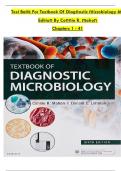
How Humans Evolved – 7th
UV
IA_ Edition
AP
TEST BANK PR
O
Robert Boyd
VE
Joan B. Silk
D?
Comprehensive Test Bank for Instructors
and Students
© Robert Boyd & Joan B. Silk
All rights reserved. Reproduction or distribution without permission is prohibited.
Created by MedConnoisseur ©2025/2026
,ST
TABLE OF CONTENTS
UV
How Humans Evolved – 7th Edition
Robert Boyd & Joan B. Silk
IA_
Part I: How Evolution Works
AP
1. Adaptation by Natural Selection
2. Genetics
3. The Modern Synthesis
4.
PR
Speciation and Phylogeny
Part II: Primate Ecology and Behavior
O
5. Primate Diversity and Ecology
6. Primate Mating Systems
7. The Evolution of Cooperation
VE
8. Primate Life Histories and the Evolution of Intelligence
Part III: The History of the Human Lineage
9. From Tree Shrew to Ape
D?
10. The Earliest Hominins
11. Early Homo and H. erectus (2.6–1 Ma)
12. The Neanderthals and Their Contemporaries
13. Homo sapiens and the Evolution of Modern Human Behavior
Part IV: Evolution and Modern Humans
14. Human Genetics and Variation
15. Evolution and Human Behavior
16. Culture, Cooperation, and Human Uniqueness
Created by MedConnoisseur ©2025/2026
,CHAPTER 1: Adaptation by Natural Selection
ST
MULTIPLE CHOICE
1. Adaptations are defined as the components of an organism that
UV
a. allow it to survive and reproduce.
b. allow it to evolve more rapidly.
ANS: A DIF: Medium
c. occur by random chance alone.
d. absolutely never change.
REF: Explaining Adaptation Before Darwin
OBJ: Describe why our modern understanding of the diversity of life is based on the ideas of Charles
IA_
Darwin. MSC: Remembering
2. Which of the following is an adaptation?
a. The human eye.
b. Design by a divine creator.
AP
c. Both the human and the fish eye, but humans are better adapted to their environments than
fish are to theirs.
d. The Grand Canyon.
ANS: A DIF: Easy PR REF: Explaining Adaptation Before Darwin
OBJ: Explain how natural selection can produce very complex adaptations like the human eye.
MSC: Applying
3. Influential nineteenth-century scientists like Charles Darwin concluded that the complex adaptations
a. a divine creator designed them.
OV
we see in plants and animals are problematic and require a special explanation because
b. it is very unlikely that they arose by random chance alone.
c. they occur in most plants and animals.
d. they have no real function. ED
ANS: B DIF: Easy REF: Explaining Adaptation Before Darwin
OBJ: Describe why our modern understanding of the diversity of life is based on the ideas of Charles
Darwin. MSC: Understanding
that adaptations are proof that
a. evolution is a process based on random chance alone.
?
4. Before Charles Darwin proposed his theory of natural selection by adaptation, many scholars argued
b. because of their ability to adapt quickly, humans are better than all other species.
c. God exists and designs all things to fit a specific purpose.
d. there is no way that God can exist.
ANS: C DIF: Easy REF: Explaining Adaptation Before Darwin
OBJ: Describe why our modern understanding of the diversity of life is based on the ideas of Charles
Darwin. MSC: Remembering
5. Charles Darwin is known for his revolutionary argument that
a. plants and animals are not designed by God and do not change over time.
b. plants and animals change slowly over time.
c. fossil plants and animals changed, but existing plants and animals do not.
d. plants and animals are created by chance and then evolve through divine intervention.
ANS: B DIF: Easy REF: Darwin’s Theory of Adaptation
OBJ: Describe why our modern understanding of the diversity of life is based on the ideas of Charles
Darwin. MSC: Remembering
, 6. The postulates that make up Darwin’s theory of adaptation include all of the following EXCEPT
ST a. any given environment can support only a certain number of individuals.
b. variation affects the ability of individuals to survive and reproduce.
c. individuals always compete with each other physically.
d. variation is passed from parents to offspring.
UV
ANS: C
Darwin.
DIF: Easy
MSC: Remembering
REF: Darwin’s Theory of Adaptation
OBJ: Describe why our modern understanding of the diversity of life is based on the ideas of Charles
IA_
7. For natural selection to occur, variation must exist. This is true because without variation
a. there is no way for change to occur between generations.
b. the one trait that exists is always advantageous, and change is not necessary.
c. there is no competition among individuals.
d. traits are never inherited by offspring.
ANS: A
AP
DIF: Hard REF: Darwin’s Theory of Adaptation
OBJ: Explain how competition, variation, and heritability lead to evolution by natural selection.
MSC: Understanding
use, it really refers to
a. the survival of the physically fit.
PR
8. Even though natural selection was named after the artificial selection that plant and animal breeders
b. the reproduction of traits from generation to generation.
ANS: C DIF: Hard
OV
c. the selective retention of variation in a population.
d. the variable ability of species to survive and reproduce.
REF: Darwin’s Theory of Adaptation
OBJ: Explain how competition, variation, and heritability lead to evolution by natural selection.
MSC: Understanding ED
9. During 1976 on the Galápagos Island of Daphne Major, Peter and Rosemary Grant found evidence of
natural selection by adaptation when they observed that
a. finches with shallow beaks were less likely to survive and reproduce than finches with
?
deep beaks.
b. finch beak size had no effect on survival rates.
c. many more small seeds were available for the finches to eat.
d. more finches with deep beaks died than finches with shallow beaks.
ANS: A DIF: Medium REF: Darwin’s Theory of Adaptation
OBJ: See why natural selection sometimes causes species to become better adapted to their
environments. MSC: Applying
10. Natural selection acted on the medium ground finch on Daphne Major because
a. birds with medium beak sizes experienced higher mortality.
b. a drought changed the environment where the finches lived.
c. offspring of finches with small beaks did not survive the juvenile period.
d. the population reached equilibrium.
ANS: B DIF: Medium REF: Darwin’s Theory of Adaptation
OBJ: See why natural selection sometimes causes species to become better adapted to their
environments. MSC: Applying
11. Which of the following is an example of directional selection?
How Humans Evolved – 7th
UV
IA_ Edition
AP
TEST BANK PR
O
Robert Boyd
VE
Joan B. Silk
D?
Comprehensive Test Bank for Instructors
and Students
© Robert Boyd & Joan B. Silk
All rights reserved. Reproduction or distribution without permission is prohibited.
Created by MedConnoisseur ©2025/2026
,ST
TABLE OF CONTENTS
UV
How Humans Evolved – 7th Edition
Robert Boyd & Joan B. Silk
IA_
Part I: How Evolution Works
AP
1. Adaptation by Natural Selection
2. Genetics
3. The Modern Synthesis
4.
PR
Speciation and Phylogeny
Part II: Primate Ecology and Behavior
O
5. Primate Diversity and Ecology
6. Primate Mating Systems
7. The Evolution of Cooperation
VE
8. Primate Life Histories and the Evolution of Intelligence
Part III: The History of the Human Lineage
9. From Tree Shrew to Ape
D?
10. The Earliest Hominins
11. Early Homo and H. erectus (2.6–1 Ma)
12. The Neanderthals and Their Contemporaries
13. Homo sapiens and the Evolution of Modern Human Behavior
Part IV: Evolution and Modern Humans
14. Human Genetics and Variation
15. Evolution and Human Behavior
16. Culture, Cooperation, and Human Uniqueness
Created by MedConnoisseur ©2025/2026
,CHAPTER 1: Adaptation by Natural Selection
ST
MULTIPLE CHOICE
1. Adaptations are defined as the components of an organism that
UV
a. allow it to survive and reproduce.
b. allow it to evolve more rapidly.
ANS: A DIF: Medium
c. occur by random chance alone.
d. absolutely never change.
REF: Explaining Adaptation Before Darwin
OBJ: Describe why our modern understanding of the diversity of life is based on the ideas of Charles
IA_
Darwin. MSC: Remembering
2. Which of the following is an adaptation?
a. The human eye.
b. Design by a divine creator.
AP
c. Both the human and the fish eye, but humans are better adapted to their environments than
fish are to theirs.
d. The Grand Canyon.
ANS: A DIF: Easy PR REF: Explaining Adaptation Before Darwin
OBJ: Explain how natural selection can produce very complex adaptations like the human eye.
MSC: Applying
3. Influential nineteenth-century scientists like Charles Darwin concluded that the complex adaptations
a. a divine creator designed them.
OV
we see in plants and animals are problematic and require a special explanation because
b. it is very unlikely that they arose by random chance alone.
c. they occur in most plants and animals.
d. they have no real function. ED
ANS: B DIF: Easy REF: Explaining Adaptation Before Darwin
OBJ: Describe why our modern understanding of the diversity of life is based on the ideas of Charles
Darwin. MSC: Understanding
that adaptations are proof that
a. evolution is a process based on random chance alone.
?
4. Before Charles Darwin proposed his theory of natural selection by adaptation, many scholars argued
b. because of their ability to adapt quickly, humans are better than all other species.
c. God exists and designs all things to fit a specific purpose.
d. there is no way that God can exist.
ANS: C DIF: Easy REF: Explaining Adaptation Before Darwin
OBJ: Describe why our modern understanding of the diversity of life is based on the ideas of Charles
Darwin. MSC: Remembering
5. Charles Darwin is known for his revolutionary argument that
a. plants and animals are not designed by God and do not change over time.
b. plants and animals change slowly over time.
c. fossil plants and animals changed, but existing plants and animals do not.
d. plants and animals are created by chance and then evolve through divine intervention.
ANS: B DIF: Easy REF: Darwin’s Theory of Adaptation
OBJ: Describe why our modern understanding of the diversity of life is based on the ideas of Charles
Darwin. MSC: Remembering
, 6. The postulates that make up Darwin’s theory of adaptation include all of the following EXCEPT
ST a. any given environment can support only a certain number of individuals.
b. variation affects the ability of individuals to survive and reproduce.
c. individuals always compete with each other physically.
d. variation is passed from parents to offspring.
UV
ANS: C
Darwin.
DIF: Easy
MSC: Remembering
REF: Darwin’s Theory of Adaptation
OBJ: Describe why our modern understanding of the diversity of life is based on the ideas of Charles
IA_
7. For natural selection to occur, variation must exist. This is true because without variation
a. there is no way for change to occur between generations.
b. the one trait that exists is always advantageous, and change is not necessary.
c. there is no competition among individuals.
d. traits are never inherited by offspring.
ANS: A
AP
DIF: Hard REF: Darwin’s Theory of Adaptation
OBJ: Explain how competition, variation, and heritability lead to evolution by natural selection.
MSC: Understanding
use, it really refers to
a. the survival of the physically fit.
PR
8. Even though natural selection was named after the artificial selection that plant and animal breeders
b. the reproduction of traits from generation to generation.
ANS: C DIF: Hard
OV
c. the selective retention of variation in a population.
d. the variable ability of species to survive and reproduce.
REF: Darwin’s Theory of Adaptation
OBJ: Explain how competition, variation, and heritability lead to evolution by natural selection.
MSC: Understanding ED
9. During 1976 on the Galápagos Island of Daphne Major, Peter and Rosemary Grant found evidence of
natural selection by adaptation when they observed that
a. finches with shallow beaks were less likely to survive and reproduce than finches with
?
deep beaks.
b. finch beak size had no effect on survival rates.
c. many more small seeds were available for the finches to eat.
d. more finches with deep beaks died than finches with shallow beaks.
ANS: A DIF: Medium REF: Darwin’s Theory of Adaptation
OBJ: See why natural selection sometimes causes species to become better adapted to their
environments. MSC: Applying
10. Natural selection acted on the medium ground finch on Daphne Major because
a. birds with medium beak sizes experienced higher mortality.
b. a drought changed the environment where the finches lived.
c. offspring of finches with small beaks did not survive the juvenile period.
d. the population reached equilibrium.
ANS: B DIF: Medium REF: Darwin’s Theory of Adaptation
OBJ: See why natural selection sometimes causes species to become better adapted to their
environments. MSC: Applying
11. Which of the following is an example of directional selection?