PAEDIATRIC NOTES 2018
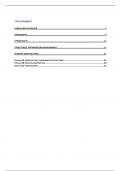
Contents
General 2
Neonatology 16
Cardiology 44
Nephrology 76
Haematology and Onco 118
Endocrinology 167
Pulmonology 191
Infectious Diseases 214
Gastroenterology 216
Emergency Conditions 263
1
,GENERAL
Psychomotor Development in Children
● Developmental milestones: set of functional skills or age-specific tasks that most children can do at a
certain age range
○ Premature children should have their milestones adjusted for their corrected age
● Causes of developmental delay: genetic, complications of pregnancy and birth, chronic and serious
diseases, hearing loss, environmental factors. Shocker.
● Gross motor:
○ Crawling: by end of 11th month
■ 3rd month: keeps head up for 10 seconds
■ 4th month: supports body using forearms
■ 5th month: no longer needs arms for support when lying on stomach (looks like they’re
swimming)
■ 9th month:crawls like seal
○ Sitting: unsupported by 10th month
■ Neck support by end of 1st month
■ 3rd month: keeps in sitting position with head straight for 30 seconds
■ 4th month: turns over from the chest to the back
■ 5th month: turns over from the back to the chest
■ 6th month: controls head properly, seats themselves with front support
■ 7th month: plays with feet lying on their back
■ 8th month: pulls up from own strength from dorsal to sitting position using fingers given
to him
○ Standing and walking
■ Supporting reflex disappears end of 2nd month
■ 9th month: stands for minimum 30 seconds when hands held
■ 11th month: pulls to standing position, steps forward with aid of parent
■ 15th month: walks by themselves
■ 18th months: walking, running, climbing furniture
■ By 2 years walks and runs firmly, kicks ball
● Fine Motor
○ Grasping and hand coordination
■ 4th month: plays with their own hands, puts toys in mouth (hand-mouth coordination)
■ 6th month: grasps toy properly, shifting from one hand to the other
■ 8th month: grasps simultaneously two toys with both hands
■ 10th month: tweezers grasping - grasps small object with straight index finger and
opposed thumb
■ 12th month: pincer grasp - grasps small object with the end of index finger and
opposed thumb
■ 2.5 years: able to carry ‘fragile’ things like eggs or a glass of water.
● Cognitive development
○ Perception:
■ 1st month: can follow an object moved roughly in the visual field
■ 3rd month: reacts to sound of a bell. Where the fuck is this child that its casually
listening to fucking bells. The actual quote ‘reacts for the sound of the bell by stop of
movement and the short look’. Good luck translating.
■ 4th month: looks at thing in their hands.
■ 5th month: looks for noise. Prior to 5 months they were deaf. Except for that bell test.
■ 6th month: like a cat a child will knock things off tables and then look at it.
■ 2.5 years: understands directions
■ By 3 years they ask stupid questions.
● Language
○ 3 months: baby coos if you play with it.
○ 6th month: babbles like an idiot and ‘listens’
2
, ○ 9th month: can say mama and dada.
○ Ultimately should be talking by 1 year old.
○ Sentences by 21st month
○ 2nd year: less stupid more articulate
● Listening:
○ By 6 months should move head to see where noise is coming from
○ 11th month: stops doing stupid shit when you say stop
○ 12th month: understands simple commands
○ 18th month: will be smart enough to do your bidding - bring you shit.
● Social development:
○ 2nd month: should be able to smile
○ 6th month: is scared of strangers, recognises parents
○ 8th month: emotional lability
○ 10th month: can high five, basically fully developed
○ 11th month: ‘begins to pass the urine into a chamber’ lecture facts.
○ 18th month: they have personality, tries to eat with a spoon, starts telling you they’ve gotta pee
○ 24th month: they’re basically developed allow it.
● Panic! If a child doesn’t hit the following milestones (only important part of lecture)
Children’s Nutrition
● The final development of human digestive system is complete by the 10th - 12th month - 2nd year of
life
● Milestones in the development of digestive system:
○ Motoric Function
■ Sucking reflex: 24th week of pregnancy
■ Swallowing-sucking coordination - 4 sucks per 1 swallow
● No coordination in babies with birth weight <1700g
■ Gastro-esophageal sphincter sufficiency development
● Till 6th week of modified gestational age
● Feeding in semi-sitting position and maintaining upright position after feeding
for first 6 weeks of life
■ Emptying of stomach
● Neonates and young infants
○ fast phase (within 20 mins accounting for 75% of stomach capacity)
○ Slow phase (180 mins)
■ Period of intestinal passage
● Premature babies and neonates: 8 - 96 hours
● Adults: 8-12 hours
■ Physiological insufficiency of the anus
● Decreased tonus of the anal sphincter during the first 10 hours of life
○ Enzyme Activity:
3
, ● Pre-duodenal digestion:
○ Lipase, and lactase present in breast milk
○ Ebner’s lipase in salivary gland
● Physiological lactose intolerance: 10-21 days
○ Physiological diarrhoea
● Daily Nutritional Requirements
○ Calories:
● Protein:
● Water Requirement:
● Fat + Carb requirements:
Breast Feeding
● Few hours after delivery
● Feeding ‘on demand’
○ At first 7- 8 times (can be more) per 24 hours
● Breast should be empty before changing side
● Minimum breastfeeding period - 6 months ideally
● Composition of breastmilk changes throughout the day
○ Initially: sweet and watery
○ Overtime: more fatty and protein rich
■ 0-5 days: colostrum, antibodies, neutrophils, macrophages, lymphocytes B and T,
interferon, lysozyme, growth factors
■ 5 -14 days: intermediate milk which is protein rich
■ From 2nd week: mature milk, high fat and lactose content, less protein content
○ Breast milk composition:
4
Contents
General 2
Neonatology 16
Cardiology 44
Nephrology 76
Haematology and Onco 118
Endocrinology 167
Pulmonology 191
Infectious Diseases 214
Gastroenterology 216
Emergency Conditions 263
1
,GENERAL
Psychomotor Development in Children
● Developmental milestones: set of functional skills or age-specific tasks that most children can do at a
certain age range
○ Premature children should have their milestones adjusted for their corrected age
● Causes of developmental delay: genetic, complications of pregnancy and birth, chronic and serious
diseases, hearing loss, environmental factors. Shocker.
● Gross motor:
○ Crawling: by end of 11th month
■ 3rd month: keeps head up for 10 seconds
■ 4th month: supports body using forearms
■ 5th month: no longer needs arms for support when lying on stomach (looks like they’re
swimming)
■ 9th month:crawls like seal
○ Sitting: unsupported by 10th month
■ Neck support by end of 1st month
■ 3rd month: keeps in sitting position with head straight for 30 seconds
■ 4th month: turns over from the chest to the back
■ 5th month: turns over from the back to the chest
■ 6th month: controls head properly, seats themselves with front support
■ 7th month: plays with feet lying on their back
■ 8th month: pulls up from own strength from dorsal to sitting position using fingers given
to him
○ Standing and walking
■ Supporting reflex disappears end of 2nd month
■ 9th month: stands for minimum 30 seconds when hands held
■ 11th month: pulls to standing position, steps forward with aid of parent
■ 15th month: walks by themselves
■ 18th months: walking, running, climbing furniture
■ By 2 years walks and runs firmly, kicks ball
● Fine Motor
○ Grasping and hand coordination
■ 4th month: plays with their own hands, puts toys in mouth (hand-mouth coordination)
■ 6th month: grasps toy properly, shifting from one hand to the other
■ 8th month: grasps simultaneously two toys with both hands
■ 10th month: tweezers grasping - grasps small object with straight index finger and
opposed thumb
■ 12th month: pincer grasp - grasps small object with the end of index finger and
opposed thumb
■ 2.5 years: able to carry ‘fragile’ things like eggs or a glass of water.
● Cognitive development
○ Perception:
■ 1st month: can follow an object moved roughly in the visual field
■ 3rd month: reacts to sound of a bell. Where the fuck is this child that its casually
listening to fucking bells. The actual quote ‘reacts for the sound of the bell by stop of
movement and the short look’. Good luck translating.
■ 4th month: looks at thing in their hands.
■ 5th month: looks for noise. Prior to 5 months they were deaf. Except for that bell test.
■ 6th month: like a cat a child will knock things off tables and then look at it.
■ 2.5 years: understands directions
■ By 3 years they ask stupid questions.
● Language
○ 3 months: baby coos if you play with it.
○ 6th month: babbles like an idiot and ‘listens’
2
, ○ 9th month: can say mama and dada.
○ Ultimately should be talking by 1 year old.
○ Sentences by 21st month
○ 2nd year: less stupid more articulate
● Listening:
○ By 6 months should move head to see where noise is coming from
○ 11th month: stops doing stupid shit when you say stop
○ 12th month: understands simple commands
○ 18th month: will be smart enough to do your bidding - bring you shit.
● Social development:
○ 2nd month: should be able to smile
○ 6th month: is scared of strangers, recognises parents
○ 8th month: emotional lability
○ 10th month: can high five, basically fully developed
○ 11th month: ‘begins to pass the urine into a chamber’ lecture facts.
○ 18th month: they have personality, tries to eat with a spoon, starts telling you they’ve gotta pee
○ 24th month: they’re basically developed allow it.
● Panic! If a child doesn’t hit the following milestones (only important part of lecture)
Children’s Nutrition
● The final development of human digestive system is complete by the 10th - 12th month - 2nd year of
life
● Milestones in the development of digestive system:
○ Motoric Function
■ Sucking reflex: 24th week of pregnancy
■ Swallowing-sucking coordination - 4 sucks per 1 swallow
● No coordination in babies with birth weight <1700g
■ Gastro-esophageal sphincter sufficiency development
● Till 6th week of modified gestational age
● Feeding in semi-sitting position and maintaining upright position after feeding
for first 6 weeks of life
■ Emptying of stomach
● Neonates and young infants
○ fast phase (within 20 mins accounting for 75% of stomach capacity)
○ Slow phase (180 mins)
■ Period of intestinal passage
● Premature babies and neonates: 8 - 96 hours
● Adults: 8-12 hours
■ Physiological insufficiency of the anus
● Decreased tonus of the anal sphincter during the first 10 hours of life
○ Enzyme Activity:
3
, ● Pre-duodenal digestion:
○ Lipase, and lactase present in breast milk
○ Ebner’s lipase in salivary gland
● Physiological lactose intolerance: 10-21 days
○ Physiological diarrhoea
● Daily Nutritional Requirements
○ Calories:
● Protein:
● Water Requirement:
● Fat + Carb requirements:
Breast Feeding
● Few hours after delivery
● Feeding ‘on demand’
○ At first 7- 8 times (can be more) per 24 hours
● Breast should be empty before changing side
● Minimum breastfeeding period - 6 months ideally
● Composition of breastmilk changes throughout the day
○ Initially: sweet and watery
○ Overtime: more fatty and protein rich
■ 0-5 days: colostrum, antibodies, neutrophils, macrophages, lymphocytes B and T,
interferon, lysozyme, growth factors
■ 5 -14 days: intermediate milk which is protein rich
■ From 2nd week: mature milk, high fat and lactose content, less protein content
○ Breast milk composition:
4