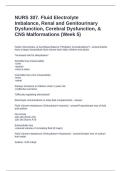
NURS 307. Fluid Electrolyte
Imbalance, Renal and Genitourinary
Dysfunction, Cerebral Dysfunction, &
CNS Malformations (Week 5)
Fluids, Electrolytes, & Acid-Base Balance (*Pediatric Considerations*) - answerInfants
have a larger extracellular fluid volume than older children and adults
*Increased risk for dehydration*
Sensible loss (measurable)
-urine
-sputum
-rains & tubes
Insensible loss (non-measurable)
-tears
-sweat
Kidneys immature in children under 2 years old
-Ineffective secretion
*Difficulty regulating electrolytes*
Electrolyte concentrations in body fluid compartments - answer
Fluid Volume Imbalances (*Dehydration*-Isotonic) - answerProportionate loss of fluid
and sodium
Na normal
130-150 (Peds ATI)
136-145 (Norm ATI)
Extracellular loss
-reduced volume of circulating fluid (if major)
Fluid Volume Imbalances (*Dehydration*-Hypotonic) - answerGreater loss of sodium
than water
Sodium <130 mEq/L
,-Peds ATI
Extracellular shift to intracellcular to compensate
Shock is likely
Physical manifestations are more severe with smaller fluid loss
E.g. prolonged vomiting, diarrhea, renal disease, burns
Fluid Volume Imbalances (*Dehydration*-Hypertonic) - answerGreater water loss than
sodium
Sodium >150 mEq/L
-Peds ATI
Intracellular shift into extracellular to compensate
Neurological changes can occur
E.g. diabetes insipidus, fluid volume overload
Dehydration (*Causes*) - answerOccurs due to vomiting, diarrhea, burns, hemorrhage
Radiant warmers
Third spacing (fluid goes to the intravascular space/blood vessels)
-Adrenal insufficiency, overuse of diuretics
Dehydration (*Mild*) - answer*Mild*
3-5% infant
3-4% child
-w/n normal limits
-cap refill >2 secs
-Possible slight thirst
Dehydration (*Moderate*) - answer*Moderate*
6-9% infant
6-8% child
-cap refill 2-4 secs
-slight tachypnea/
-slight HR
-*normal to sunken anterior fontanel on infant*
,-dry mucous membranes
-decreased tears
-decreased skin tugor
-possible thirst & irritability
Dehydration (*Severe*) - answer*Severe*
>10% infant
10% child
-cap refill >4 secs
-tachycardia
>rapid weak
-orthostatic BP (possible shock)
-extreme thirst
-Very dry mucous membranes
-Tented skin
-No tearing w/ sunken eye balls
-Hyperpnea
-*Sunken anterior fontanel*
-Oliguria or anuria
Oral Rehydration Therapy - answer*Prevent dehydration if possible*
•Recover patient with IV fluid resuscitation, oral rehydration therapy, change
environmental factors when applicable
*Oral rehydration best for mild or moderate loss*
ATI oral
Mild: 50 mL/kg rehydration fluid every 4-6 hrs
Moderate: 100 mL/kg rf every 4-6 hrs
Replacement of diarrhea losses with 10 mL/kg q stool
Severe: on IV fluids per
No diarrhea, no dehydration: age appropriate diet
Rehydration complete: resume normal diet
*20 mL/kg IV for replacement for fluids *
*Dehydration/Electrolyte issues corrected by: (signs)*
-Infant urinating
-2 ml/kg/hr
, Adult
-15 ml/kg/hr
IV Fluid Needs - answerMaintenance=M
•Up to 10kg 100ml/kg
•11-20 kg 50ml/kg
•>20kg 20ml/kg
Replacement Fluid-RF
*Weight loss%*x*kg*x*10*
-5% x 15 kg x 10
>750 ml
M+RF=IVF needs
*For 24 hrs*
-adjust if hourly
Fluid Volume Excess - answerToo much fluid in vascular and interstitial compartment.
•Serum sodium normal
*•Due to aldosterone*
-Adrenal tumors
-CHF
-Liver cirrhosis
-Chronic renal failure
-cardiac/kidney/liver issues
•May also be attributed to low socioeconomic families that over dilute formula and fluid
overload children
-instead of 1:1 they may to 1:2
Edema (*Causes*) - answerIncreased blood hydrostatic pressure
•Inflammation
•Local infection
•Extracellular FVE
Decreased blood colloid osmotic pressure
•Nephrotic syndrome
•Liver cirrhosis
Increased interstitial fluid osmotic pressure
Imbalance, Renal and Genitourinary
Dysfunction, Cerebral Dysfunction, &
CNS Malformations (Week 5)
Fluids, Electrolytes, & Acid-Base Balance (*Pediatric Considerations*) - answerInfants
have a larger extracellular fluid volume than older children and adults
*Increased risk for dehydration*
Sensible loss (measurable)
-urine
-sputum
-rains & tubes
Insensible loss (non-measurable)
-tears
-sweat
Kidneys immature in children under 2 years old
-Ineffective secretion
*Difficulty regulating electrolytes*
Electrolyte concentrations in body fluid compartments - answer
Fluid Volume Imbalances (*Dehydration*-Isotonic) - answerProportionate loss of fluid
and sodium
Na normal
130-150 (Peds ATI)
136-145 (Norm ATI)
Extracellular loss
-reduced volume of circulating fluid (if major)
Fluid Volume Imbalances (*Dehydration*-Hypotonic) - answerGreater loss of sodium
than water
Sodium <130 mEq/L
,-Peds ATI
Extracellular shift to intracellcular to compensate
Shock is likely
Physical manifestations are more severe with smaller fluid loss
E.g. prolonged vomiting, diarrhea, renal disease, burns
Fluid Volume Imbalances (*Dehydration*-Hypertonic) - answerGreater water loss than
sodium
Sodium >150 mEq/L
-Peds ATI
Intracellular shift into extracellular to compensate
Neurological changes can occur
E.g. diabetes insipidus, fluid volume overload
Dehydration (*Causes*) - answerOccurs due to vomiting, diarrhea, burns, hemorrhage
Radiant warmers
Third spacing (fluid goes to the intravascular space/blood vessels)
-Adrenal insufficiency, overuse of diuretics
Dehydration (*Mild*) - answer*Mild*
3-5% infant
3-4% child
-w/n normal limits
-cap refill >2 secs
-Possible slight thirst
Dehydration (*Moderate*) - answer*Moderate*
6-9% infant
6-8% child
-cap refill 2-4 secs
-slight tachypnea/
-slight HR
-*normal to sunken anterior fontanel on infant*
,-dry mucous membranes
-decreased tears
-decreased skin tugor
-possible thirst & irritability
Dehydration (*Severe*) - answer*Severe*
>10% infant
10% child
-cap refill >4 secs
-tachycardia
>rapid weak
-orthostatic BP (possible shock)
-extreme thirst
-Very dry mucous membranes
-Tented skin
-No tearing w/ sunken eye balls
-Hyperpnea
-*Sunken anterior fontanel*
-Oliguria or anuria
Oral Rehydration Therapy - answer*Prevent dehydration if possible*
•Recover patient with IV fluid resuscitation, oral rehydration therapy, change
environmental factors when applicable
*Oral rehydration best for mild or moderate loss*
ATI oral
Mild: 50 mL/kg rehydration fluid every 4-6 hrs
Moderate: 100 mL/kg rf every 4-6 hrs
Replacement of diarrhea losses with 10 mL/kg q stool
Severe: on IV fluids per
No diarrhea, no dehydration: age appropriate diet
Rehydration complete: resume normal diet
*20 mL/kg IV for replacement for fluids *
*Dehydration/Electrolyte issues corrected by: (signs)*
-Infant urinating
-2 ml/kg/hr
, Adult
-15 ml/kg/hr
IV Fluid Needs - answerMaintenance=M
•Up to 10kg 100ml/kg
•11-20 kg 50ml/kg
•>20kg 20ml/kg
Replacement Fluid-RF
*Weight loss%*x*kg*x*10*
-5% x 15 kg x 10
>750 ml
M+RF=IVF needs
*For 24 hrs*
-adjust if hourly
Fluid Volume Excess - answerToo much fluid in vascular and interstitial compartment.
•Serum sodium normal
*•Due to aldosterone*
-Adrenal tumors
-CHF
-Liver cirrhosis
-Chronic renal failure
-cardiac/kidney/liver issues
•May also be attributed to low socioeconomic families that over dilute formula and fluid
overload children
-instead of 1:1 they may to 1:2
Edema (*Causes*) - answerIncreased blood hydrostatic pressure
•Inflammation
•Local infection
•Extracellular FVE
Decreased blood colloid osmotic pressure
•Nephrotic syndrome
•Liver cirrhosis
Increased interstitial fluid osmotic pressure