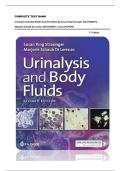
COMPLETE TEST BANK
Urinalysis and Body Fluids Seventh Edition by Susan King Strasinger DA MT(ASCP),
Marjorie Schaub Di Lorenzo MT(ASCP)SH || ALL CHAPTERS
7th Edition
,Table of Contents
Part One: Basic Principles ............................................................................................................... 3
Chapter 1: safety and quality management................................................................................ 3
Chapter 2: urine and body fluid analysis automation ............................................................... 34
Chapter 3: introduction to urinalysis ........................................................................................ 44
Chapter 4: renal function .......................................................................................................... 69
Part Two: Urinalysis ..................................................................................................................... 111
Chapter 5: physical examination of urine ............................................................................... 111
Chapter 6: chemical examination of urine .............................................................................. 131
Chapter 7: microscopic examination of urine ......................................................................... 182
Chapter 8: renal disease ......................................................................................................... 244
Chapter 9: urine screening for metabolic disorders ............................................................... 277
Part Three: Other Body Fluids ..................................................................................................... 314
Chapter 10: cerebrospinal fluid .............................................................................................. 314
Chapter 11: semen .................................................................................................................. 358
Chapter 12: synovial fluid ....................................................................................................... 394
Chapter 13: serous fluid .......................................................................................................... 419
Chapter 14: bronchoalveolar lavage fluid ............................................................................... 442
Chapter 15: amniotic fluid ...................................................................................................... 451
Chapter 16: fecal analysis ....................................................................................................... 473
Chapter 17: vaginal secretions ................................................................................................ 497
,Part One: Basic Principles
Chapter 1: safety and quality management
Multiple choice
1. An example of a chemical hazard is:
A. Carcinogen exposure
B. Strained back
C. Viral infection
D. Shock
Answer: a
Dif: level 1
Obj: 1-1
Top: safety hazards
2. Centrifuging an uncapped tube of urine is most likely to produce a/an:
A. Electrical shock
B. Broken tube
C. Unbalancing
D. Aerosol
Answer: d
Dif: level 2
Obj: 1-1
Top: safety hazards
, 3. Laboratory equipment and other inanimate objects serve as what in the chain of
infection?
A. Host
B. Reservoir
C. Point of entry
D. Point of exit
Answer: b
Dif: level 1
Obj: 1-2
Top: chain of infection
4. The chain of infection includes all of the following except a:
A. Source
B. Host
C. Disinfectant
D. Transmission method
Answer: c
Dif: level 1
Obj: 1-2
Top: chain of infection
Urinalysis and Body Fluids Seventh Edition by Susan King Strasinger DA MT(ASCP),
Marjorie Schaub Di Lorenzo MT(ASCP)SH || ALL CHAPTERS
7th Edition
,Table of Contents
Part One: Basic Principles ............................................................................................................... 3
Chapter 1: safety and quality management................................................................................ 3
Chapter 2: urine and body fluid analysis automation ............................................................... 34
Chapter 3: introduction to urinalysis ........................................................................................ 44
Chapter 4: renal function .......................................................................................................... 69
Part Two: Urinalysis ..................................................................................................................... 111
Chapter 5: physical examination of urine ............................................................................... 111
Chapter 6: chemical examination of urine .............................................................................. 131
Chapter 7: microscopic examination of urine ......................................................................... 182
Chapter 8: renal disease ......................................................................................................... 244
Chapter 9: urine screening for metabolic disorders ............................................................... 277
Part Three: Other Body Fluids ..................................................................................................... 314
Chapter 10: cerebrospinal fluid .............................................................................................. 314
Chapter 11: semen .................................................................................................................. 358
Chapter 12: synovial fluid ....................................................................................................... 394
Chapter 13: serous fluid .......................................................................................................... 419
Chapter 14: bronchoalveolar lavage fluid ............................................................................... 442
Chapter 15: amniotic fluid ...................................................................................................... 451
Chapter 16: fecal analysis ....................................................................................................... 473
Chapter 17: vaginal secretions ................................................................................................ 497
,Part One: Basic Principles
Chapter 1: safety and quality management
Multiple choice
1. An example of a chemical hazard is:
A. Carcinogen exposure
B. Strained back
C. Viral infection
D. Shock
Answer: a
Dif: level 1
Obj: 1-1
Top: safety hazards
2. Centrifuging an uncapped tube of urine is most likely to produce a/an:
A. Electrical shock
B. Broken tube
C. Unbalancing
D. Aerosol
Answer: d
Dif: level 2
Obj: 1-1
Top: safety hazards
, 3. Laboratory equipment and other inanimate objects serve as what in the chain of
infection?
A. Host
B. Reservoir
C. Point of entry
D. Point of exit
Answer: b
Dif: level 1
Obj: 1-2
Top: chain of infection
4. The chain of infection includes all of the following except a:
A. Source
B. Host
C. Disinfectant
D. Transmission method
Answer: c
Dif: level 1
Obj: 1-2
Top: chain of infection