

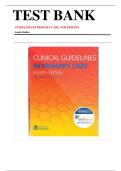
TEST BANK
GUIDELINES IN PRIMARY CARE, 4TH EDITION
Amelie Hollier
,Clinical Guidelines in Primary Care 4th Edition Hollier Test Bank
Table of Contents
Chapter 1: Cardiovascular Disorders
Chapter 2: Dermatologic Disorders
Chapter 3: Ear Nose & Throat Disorders
Chapter 4: Endocrine Disorders
Chapter 5: Gastrointestinal Disorders
Chapter 6: Genetic Disorders
Chapter 7: Health Promotion - Pediatric
Chapter 8: Hematologic Disorders
Chapter 9: Lactation and Breastfeeding
Chapter 10: Men’s Health Disorders
Chapter 11: Neurologic Disorders
Chapter 12: Ophthalmic Disorders
Chapter 13: Orthopedic Disorders
Chapter 14: Pregnancy
Chapter 15: Psychiatric Disorders, Violence, Abuse, Neglect
Chapter 16: Pulmonary Disorders
Chapter 17: Sexually Transmitted Diseases
Chapter 18: Urologic Disorders
Chapter 19: Women’s Health Disorders
,Chapter 1: Cardiovascular Disorders
Clinical Guidelines in Primary Care 4th Edition Test bank
MULTIPLE CHOICE
1. The nurse is aware that the muscle layer of the heart, which is responsible for the hearts
contraction, is the:
a. endocardium.
b. pericardium.
c. mediastinum.
d. myocardium.
ANS: D
The myocardium is the specialized muscle layer that allows the heart to contract.
2. The nurse clarifies that the master pacemaker of the heart is the:
a. left ventricle.
b. atrioventricular (AV) node.
c. sinoatrial (SA) node.
d. bundle of His.
ANS: C
The SA node is the master pacemaker of the heart.
3. The nurse is
aware that the symptoms of an impending myocardial infarction (MI) differ in
women because acute chest pain is not present. Women are frequently misdiagnosed as having:
a. hepatitis A.
b. indigestion.
c. urinary infection.
d. menopausal complications.
, ANS: B
Indigestion, dgallbladder dattack, danxiety dattack, dand ddepression dare dfrequent dmisdiagnoses
dfor dwomen dhaving dan dMI.
4. The dnurse didentifies dthe dLUBB dsound dof dthe dLUBB/DUBB dof dthe dcardiac dcycle das dthe
dsound dof dthe:
a. AV dvalves dclosing.
b. closure dof dthe dsemilunar dvalves.
c. contraction dof dthe dpapillary dmuscles.
d. contraction dof dthe dventricles.
ANS: dA
The dLUBB dis dthe dfirst dsound dof da dlow dpitch dheard dwhen dthe dAV dvalves dclose.
5. A dpatient dis dadmitted dfrom dthe demergency ddepartment. dThe demergency ddepartment
dphysician dnotes dthe dpatient dhas da ddiagnosis dof dheart dfailure dwith da dNew dYork dHeart
dAssociation d(NYHA) dclassification dof dIV. dThis dindicates dthe dpatients dcondition das:
a. moderate dheart dfailure.
b. severe dheart dfailure.
c. congestive dheart dfailure.
d. negligible dheart dfailure.
ANS: dB
Class dIV: dSevere; dpatient dunable dto dperform dany dphysical dactivity dwithout ddiscomfort.
dAngina dor dsymptoms dof dcardiac dinefficiency dmay ddevelop dat drest.
6. The dnurse dassesses dthat dthe dhome dhealth dpatient dhas dno dsigns dor dsymptoms dof dheart
dfailure, dbut ddoes dhave da dhistory dof drheumatic dfever dand dhas dbeen drecently ddiagnosed
dwith ddiabetes dmellitus. dThe dnurse dis daware dthat dusing dthe dAmerican dCollege dof
dCardiology dand dthe dAmerican dHeart dAssociation d(ACC/AHA) dstaging, dthis dpatient
dwould dbe da:
a. stage dA.
b. stage dB.
c. stage dC.
d. stage dD.
ANS: dA
The dACC/AHA dstaging ddescribes dstage dA das da dperson dwithout dsymptoms dof dheart dfailure,
dbut dwith dprimary dconditions dassociated dwith dthe ddevelopment dof dthe ddisease.
GUIDELINES IN PRIMARY CARE, 4TH EDITION
Amelie Hollier
,Clinical Guidelines in Primary Care 4th Edition Hollier Test Bank
Table of Contents
Chapter 1: Cardiovascular Disorders
Chapter 2: Dermatologic Disorders
Chapter 3: Ear Nose & Throat Disorders
Chapter 4: Endocrine Disorders
Chapter 5: Gastrointestinal Disorders
Chapter 6: Genetic Disorders
Chapter 7: Health Promotion - Pediatric
Chapter 8: Hematologic Disorders
Chapter 9: Lactation and Breastfeeding
Chapter 10: Men’s Health Disorders
Chapter 11: Neurologic Disorders
Chapter 12: Ophthalmic Disorders
Chapter 13: Orthopedic Disorders
Chapter 14: Pregnancy
Chapter 15: Psychiatric Disorders, Violence, Abuse, Neglect
Chapter 16: Pulmonary Disorders
Chapter 17: Sexually Transmitted Diseases
Chapter 18: Urologic Disorders
Chapter 19: Women’s Health Disorders
,Chapter 1: Cardiovascular Disorders
Clinical Guidelines in Primary Care 4th Edition Test bank
MULTIPLE CHOICE
1. The nurse is aware that the muscle layer of the heart, which is responsible for the hearts
contraction, is the:
a. endocardium.
b. pericardium.
c. mediastinum.
d. myocardium.
ANS: D
The myocardium is the specialized muscle layer that allows the heart to contract.
2. The nurse clarifies that the master pacemaker of the heart is the:
a. left ventricle.
b. atrioventricular (AV) node.
c. sinoatrial (SA) node.
d. bundle of His.
ANS: C
The SA node is the master pacemaker of the heart.
3. The nurse is
aware that the symptoms of an impending myocardial infarction (MI) differ in
women because acute chest pain is not present. Women are frequently misdiagnosed as having:
a. hepatitis A.
b. indigestion.
c. urinary infection.
d. menopausal complications.
, ANS: B
Indigestion, dgallbladder dattack, danxiety dattack, dand ddepression dare dfrequent dmisdiagnoses
dfor dwomen dhaving dan dMI.
4. The dnurse didentifies dthe dLUBB dsound dof dthe dLUBB/DUBB dof dthe dcardiac dcycle das dthe
dsound dof dthe:
a. AV dvalves dclosing.
b. closure dof dthe dsemilunar dvalves.
c. contraction dof dthe dpapillary dmuscles.
d. contraction dof dthe dventricles.
ANS: dA
The dLUBB dis dthe dfirst dsound dof da dlow dpitch dheard dwhen dthe dAV dvalves dclose.
5. A dpatient dis dadmitted dfrom dthe demergency ddepartment. dThe demergency ddepartment
dphysician dnotes dthe dpatient dhas da ddiagnosis dof dheart dfailure dwith da dNew dYork dHeart
dAssociation d(NYHA) dclassification dof dIV. dThis dindicates dthe dpatients dcondition das:
a. moderate dheart dfailure.
b. severe dheart dfailure.
c. congestive dheart dfailure.
d. negligible dheart dfailure.
ANS: dB
Class dIV: dSevere; dpatient dunable dto dperform dany dphysical dactivity dwithout ddiscomfort.
dAngina dor dsymptoms dof dcardiac dinefficiency dmay ddevelop dat drest.
6. The dnurse dassesses dthat dthe dhome dhealth dpatient dhas dno dsigns dor dsymptoms dof dheart
dfailure, dbut ddoes dhave da dhistory dof drheumatic dfever dand dhas dbeen drecently ddiagnosed
dwith ddiabetes dmellitus. dThe dnurse dis daware dthat dusing dthe dAmerican dCollege dof
dCardiology dand dthe dAmerican dHeart dAssociation d(ACC/AHA) dstaging, dthis dpatient
dwould dbe da:
a. stage dA.
b. stage dB.
c. stage dC.
d. stage dD.
ANS: dA
The dACC/AHA dstaging ddescribes dstage dA das da dperson dwithout dsymptoms dof dheart dfailure,
dbut dwith dprimary dconditions dassociated dwith dthe ddevelopment dof dthe ddisease.



