

C168 • C168 Critical Thinking
WGU C168and Logic
Critical Vocab Practice
Thinking
Study online at https://quizlet.com/_btpjeh
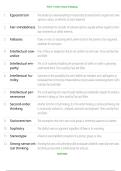
1. Egocentrism The tendency to view everything in relationship to oneself and to regard one's own
opinions, values, or interests as most important.
2. Fair-mindedness The commitment to consider all relevant opinions equally without regard to one's
own sentiments or selfish interests.
3. Fallacies Flaws or errors in reasoning which, when found in the premise of an argument,
invalidate its conclusion.
4. Intellectual cow- Fear of ideas or viewpoints that do not conform to one's own. Term used by Paul
ardice and Elder.
5. Intellectual em- The act of routinely inhabiting the perspectives of others in order to genuinely
pathy understand them. Term used by Paul and Elder.
6. Intellectual hu- Openness to the possibility that one's beliefs are mistaken and a willingness to
mility reevaluate them in the face of new evidence or persuasive counterarguments. Term
used by Paul and Elder.
7. Intellectual per- The act of working one's way through intellectual complexities despite frustrations
severance inherent in doing so. Term used by Paul and Elder.
8. Second-order Another term for critical thinking. It is first-order thinking, or ordinary thinking, that
thinking is consciously realized i.e., analyzed, assessed, and improved. Term used by Paul
and Elder.
9. Sociocentrism The assumption that one's own social group is inherently superior to all others.
10. Sophistry The ability to win an argument regardless of flaws in its reasoning.
11. Stereotype A fixed or oversimplified conception of a person, group, or idea.
12. Strong-sense crit- Thinking that uses critical thinking skills to evaluate all beliefs, especially one's own,
ical thinking and that pursues what is intellectually fair and just.
2025/2026
1/7
, C168 • C168 Critical Thinking
WGU C168and Logic
Critical Vocab Practice
Thinking
Study online at https://quizlet.com/_btpjeh
13. Weak-sense criti- Thinking that does not consider counter viewpoints, that lacks fair-mindedness and
cal thinking that uses critical thinking skills simply to defend current beliefs.
14. Accuracy Being near to the true value or meaning of something
15. Assumptions Unstated or hidden beliefs that support our explicit reasoning
16. Clarity Being unambiguous and easily understood
17. Concepts General categories or ideas by which we interpret or classify information used in
our thinking
18. Implication What logically follows from reasoning
19. Inference A logical process of drawing conclusions
20. Point of view The particular perspective from which something is observed or thought through
21. Precision Being precise or exact
22. Purpose The goal or objective of reasoning
23. Common factor In analyzing causation, looking for a single shared factor
method
24. Concomitant In analyzing causation, looking for a pattern of variation between a possible cause
variation and a possible effect
25. Process of elimi- In analyzing causation, successively ruling out non-causal factors until one correct
nation causal factor remains
26. Question of fact A question with one correct answer.
27. Question of judg- A question with competing and debatable answers
ment
2025/2026
2/7
WGU C168and Logic
Critical Vocab Practice
Thinking
Study online at https://quizlet.com/_btpjeh
1. Egocentrism The tendency to view everything in relationship to oneself and to regard one's own
opinions, values, or interests as most important.
2. Fair-mindedness The commitment to consider all relevant opinions equally without regard to one's
own sentiments or selfish interests.
3. Fallacies Flaws or errors in reasoning which, when found in the premise of an argument,
invalidate its conclusion.
4. Intellectual cow- Fear of ideas or viewpoints that do not conform to one's own. Term used by Paul
ardice and Elder.
5. Intellectual em- The act of routinely inhabiting the perspectives of others in order to genuinely
pathy understand them. Term used by Paul and Elder.
6. Intellectual hu- Openness to the possibility that one's beliefs are mistaken and a willingness to
mility reevaluate them in the face of new evidence or persuasive counterarguments. Term
used by Paul and Elder.
7. Intellectual per- The act of working one's way through intellectual complexities despite frustrations
severance inherent in doing so. Term used by Paul and Elder.
8. Second-order Another term for critical thinking. It is first-order thinking, or ordinary thinking, that
thinking is consciously realized i.e., analyzed, assessed, and improved. Term used by Paul
and Elder.
9. Sociocentrism The assumption that one's own social group is inherently superior to all others.
10. Sophistry The ability to win an argument regardless of flaws in its reasoning.
11. Stereotype A fixed or oversimplified conception of a person, group, or idea.
12. Strong-sense crit- Thinking that uses critical thinking skills to evaluate all beliefs, especially one's own,
ical thinking and that pursues what is intellectually fair and just.
2025/2026
1/7
, C168 • C168 Critical Thinking
WGU C168and Logic
Critical Vocab Practice
Thinking
Study online at https://quizlet.com/_btpjeh
13. Weak-sense criti- Thinking that does not consider counter viewpoints, that lacks fair-mindedness and
cal thinking that uses critical thinking skills simply to defend current beliefs.
14. Accuracy Being near to the true value or meaning of something
15. Assumptions Unstated or hidden beliefs that support our explicit reasoning
16. Clarity Being unambiguous and easily understood
17. Concepts General categories or ideas by which we interpret or classify information used in
our thinking
18. Implication What logically follows from reasoning
19. Inference A logical process of drawing conclusions
20. Point of view The particular perspective from which something is observed or thought through
21. Precision Being precise or exact
22. Purpose The goal or objective of reasoning
23. Common factor In analyzing causation, looking for a single shared factor
method
24. Concomitant In analyzing causation, looking for a pattern of variation between a possible cause
variation and a possible effect
25. Process of elimi- In analyzing causation, successively ruling out non-causal factors until one correct
nation causal factor remains
26. Question of fact A question with one correct answer.
27. Question of judg- A question with competing and debatable answers
ment
2025/2026
2/7


