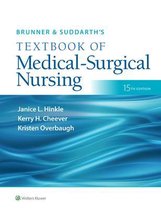
Brunner & Suddarth's Textbook of Medical-Surgical
Nursing
15th Edition
• Author(s)Janice Hinkle, Kerry H. Cheever, Kristen
Overbaugh
TEST BANK
(Brunner & Suddarth’s Textbook of Medical-Surgical Nursing — ).
UNIT 1
UNIT 1: Principles of Nursing Practice
Chapter 1: Professional Nursing Practice
Chapter 2: Medical-Surgical Nursing
Chapter 3: Health Education and Health Promotion
Chapter 4: Adult Health and Physical, Nutritional, and Cultural Assessment
Chapter 5: Stress and Inflammatory Responses
Chapter 6: Genetics and Genomics in Nursing
Chapter 7: Disability and Chronic Illness
Chapter 8: Management of the Older Adult Patient
UNIT 2: Concepts and Principles of Patient Management
Chapter 9: Pain Management
Chapter 10: Fluid and Electrolytes
Chapter 11: Shock, Sepsis, and Multiple Organ Dysfunction Syndrome
Chapter 12: Management of Patients with Oncologic Disorders
Chapter 13: Palliative and End-of-Life Care
UNIT 3: Perioperative Concepts and Nursing Management
Chapter 14: Preoperative Nursing Management
Chapter 15: Intraoperative Nursing Management
Chapter 16: Postoperative Nursing Management
UNIT 4: Gas Exchange and Respiratory Function
Chapter 17: Assessment of Respiratory Function
Chapter 18: Management of Patients with Upper Respiratory Tract Disorders
Chapter 19: Management of Patients with Chest and Lower Respiratory Tract Disorders
Chapter 20: Management of Patients with Chronic Pulmonary Disease
UNIT 5: Cardiovascular and Circulatory Function
Chapter 21: Assessment of Cardiovascular Function
Chapter 22: Management of Patients with Arrhythmias and Conduction Problems
Chapter 23: Management of Patients with Coronary Vascular Disorders
Chapter 24: Management of Patients with Structural, Infectious, and Inflammatory Cardiac Disorders
,Chapter 25: Management of Patients with Complications from Heart Disease
Chapter 26: Assessment and Management of Patients with Vascular Disorders and Problems of Peripheral
Circulation
Chapter 27: Assessment and Management of Patients with Hypertension
UNIT 6: Hematologic Function
Chapter 28: Assessment of Hematologic Function and Treatment Modalities
Chapter 29: Management of Patients with Nonmalignant Hematologic Disorders
Chapter 30: Management of Patients with Hematologic Neoplasms
UNIT 7: Immunologic Function
Chapter 31: Assessment of Immune Function
Chapter 32: Management of Patients with Immune Deficiency Disorders
Chapter 33: Assessment and Management of Patients with Allergic Disorders
Chapter 34: Assessment and Management of Patients with Inflammatory Rheumatic Disorders
UNIT 8: Musculoskeletal Function
Chapter 35: Assessment of Musculoskeletal Function
Chapter 36: Management of Patients with Musculoskeletal Disorders
Chapter 37: Management of Patients with Musculoskeletal Trauma
UNIT 9: Digestive and Gastrointestinal Function
Chapter 38: Assessment of Digestive and Gastrointestinal Function
Chapter 39: Management of Patients with Oral and Esophageal Disorders
Chapter 40: Management of Patients with Gastric and Duodenal Disorders
Chapter 41: Management of Patients with Intestinal and Rectal Disorders
UNIT 10: Metabolic and Endocrine Function
Chapter 42: Assessment and Management of Patients with Obesity
Chapter 43: Assessment and Management of Patients with Hepatic Disorders
Chapter 44: Management of Patients with Biliary Disorders
Chapter 45: Assessment and Management of Patients with Endocrine Disorders
Chapter 46: Management of Patients with Diabetes
UNIT 11: Kidney and Urinary Tract Function
Chapter 47: Assessment of Kidney and Urinary Function
Chapter 48: Management of Patients with Kidney Disorders
Chapter 49: Management of Patients with Urinary Disorders
UNIT 12: Reproductive Function
Chapter 50: Assessment and Management of Patients with Female Physiologic Processes
Chapter 51: Management of Patients with Female Reproductive Disorders
Chapter 52: Assessment and Management of Patients with Breast Disorders
Chapter 53: Assessment and Management of Patients with Male Reproductive Disorders
Chapter 54: Assessment and Management of Patients Who Are LGBTQ
UNIT 13: Integumentary Function
Chapter 55: Assessment of Integumentary Function
Chapter 56: Management of Patients with Dermatologic Disorders
Chapter 57: Management of Patients with Burn Injury
,UNIT 14: Sensory Function
Chapter 58: Assessment and Management of Patients with Eye and Vision Disorders
Chapter 59: Assessment and Management of Patients with Hearing and Balance Disorders
UNIT 15: Neurologic Function
Chapter 60: Assessment of Neurologic Function
Chapter 61: Management of Patients with Neurologic Dysfunction
Chapter 62: Management of Patients with Cerebrovascular Disorders
Chapter 63: Management of Patients with Neurologic Trauma
Chapter 64: Management of Patients with Neurologic Infections, Autoimmune Disorders, and Neuropathies
Chapter 65: Management of Patients with Oncologic or Degenerative Neurologic Disorders
UNIT 16: Acute Community-Based Challenges
Chapter 66: Management of Patients with Infectious Diseases
Chapter 67: Emergency Nursing
Chapter 68: Disaster Nursing
1
Reference: Ch. 1: Professional Nursing Practice — Nursing
Question Stem: A newly licensed nurse is preparing a short
presentation defining nursing for a community health fair.
Which statement best reflects the profession’s central focus?
A. Nursing primarily provides technical procedures ordered by
physicians.
B. Nursing focuses on promoting health, preventing illness, and
restoring function in individuals and communities.
C. Nursing emphasizes documentation and billing accuracy
above patient education.
D. Nursing’s main role is to make medical diagnoses and
prescribe treatments.
Correct Answer: B
Rationale:
B: Brunner & Suddarth define nursing as a profession that
promotes health, prevents illness, restores health, and supports
, coping with disability and death — across individuals, families,
and communities.
A: Nursing includes technical skills but is not limited to carrying
out physician orders.
C: Documentation is important but secondary to direct care,
education, and advocacy.
D: Diagnosis and prescribing are not primary nursing roles
(except in advanced practice scopes).
Teaching Point: Nursing is holistic care: health promotion,
illness prevention, restoration, and support.
Citation: (Brunner & Suddarth’s Textbook of Medical-Surgical
Nursing, 15th Ed., Hinkle et al.)
2
Reference: Ch. 1: Professional Nursing Practice — The Patient:
Consumer of Nursing and Health Care
Question Stem: A patient tells the nurse, “I want to choose
services that fit my values and budget.” Which nursing action
best supports the patient as a health-care consumer?
A. Make decisions for the patient to ensure efficiency.
B. Provide options, explain benefits/risks, and help the patient
make an informed choice.
C. Encourage the patient to accept the most expensive option
because it’s superior.
D. Withhold cost information to avoid confusion.
Nursing
15th Edition
• Author(s)Janice Hinkle, Kerry H. Cheever, Kristen
Overbaugh
TEST BANK
(Brunner & Suddarth’s Textbook of Medical-Surgical Nursing — ).
UNIT 1
UNIT 1: Principles of Nursing Practice
Chapter 1: Professional Nursing Practice
Chapter 2: Medical-Surgical Nursing
Chapter 3: Health Education and Health Promotion
Chapter 4: Adult Health and Physical, Nutritional, and Cultural Assessment
Chapter 5: Stress and Inflammatory Responses
Chapter 6: Genetics and Genomics in Nursing
Chapter 7: Disability and Chronic Illness
Chapter 8: Management of the Older Adult Patient
UNIT 2: Concepts and Principles of Patient Management
Chapter 9: Pain Management
Chapter 10: Fluid and Electrolytes
Chapter 11: Shock, Sepsis, and Multiple Organ Dysfunction Syndrome
Chapter 12: Management of Patients with Oncologic Disorders
Chapter 13: Palliative and End-of-Life Care
UNIT 3: Perioperative Concepts and Nursing Management
Chapter 14: Preoperative Nursing Management
Chapter 15: Intraoperative Nursing Management
Chapter 16: Postoperative Nursing Management
UNIT 4: Gas Exchange and Respiratory Function
Chapter 17: Assessment of Respiratory Function
Chapter 18: Management of Patients with Upper Respiratory Tract Disorders
Chapter 19: Management of Patients with Chest and Lower Respiratory Tract Disorders
Chapter 20: Management of Patients with Chronic Pulmonary Disease
UNIT 5: Cardiovascular and Circulatory Function
Chapter 21: Assessment of Cardiovascular Function
Chapter 22: Management of Patients with Arrhythmias and Conduction Problems
Chapter 23: Management of Patients with Coronary Vascular Disorders
Chapter 24: Management of Patients with Structural, Infectious, and Inflammatory Cardiac Disorders
,Chapter 25: Management of Patients with Complications from Heart Disease
Chapter 26: Assessment and Management of Patients with Vascular Disorders and Problems of Peripheral
Circulation
Chapter 27: Assessment and Management of Patients with Hypertension
UNIT 6: Hematologic Function
Chapter 28: Assessment of Hematologic Function and Treatment Modalities
Chapter 29: Management of Patients with Nonmalignant Hematologic Disorders
Chapter 30: Management of Patients with Hematologic Neoplasms
UNIT 7: Immunologic Function
Chapter 31: Assessment of Immune Function
Chapter 32: Management of Patients with Immune Deficiency Disorders
Chapter 33: Assessment and Management of Patients with Allergic Disorders
Chapter 34: Assessment and Management of Patients with Inflammatory Rheumatic Disorders
UNIT 8: Musculoskeletal Function
Chapter 35: Assessment of Musculoskeletal Function
Chapter 36: Management of Patients with Musculoskeletal Disorders
Chapter 37: Management of Patients with Musculoskeletal Trauma
UNIT 9: Digestive and Gastrointestinal Function
Chapter 38: Assessment of Digestive and Gastrointestinal Function
Chapter 39: Management of Patients with Oral and Esophageal Disorders
Chapter 40: Management of Patients with Gastric and Duodenal Disorders
Chapter 41: Management of Patients with Intestinal and Rectal Disorders
UNIT 10: Metabolic and Endocrine Function
Chapter 42: Assessment and Management of Patients with Obesity
Chapter 43: Assessment and Management of Patients with Hepatic Disorders
Chapter 44: Management of Patients with Biliary Disorders
Chapter 45: Assessment and Management of Patients with Endocrine Disorders
Chapter 46: Management of Patients with Diabetes
UNIT 11: Kidney and Urinary Tract Function
Chapter 47: Assessment of Kidney and Urinary Function
Chapter 48: Management of Patients with Kidney Disorders
Chapter 49: Management of Patients with Urinary Disorders
UNIT 12: Reproductive Function
Chapter 50: Assessment and Management of Patients with Female Physiologic Processes
Chapter 51: Management of Patients with Female Reproductive Disorders
Chapter 52: Assessment and Management of Patients with Breast Disorders
Chapter 53: Assessment and Management of Patients with Male Reproductive Disorders
Chapter 54: Assessment and Management of Patients Who Are LGBTQ
UNIT 13: Integumentary Function
Chapter 55: Assessment of Integumentary Function
Chapter 56: Management of Patients with Dermatologic Disorders
Chapter 57: Management of Patients with Burn Injury
,UNIT 14: Sensory Function
Chapter 58: Assessment and Management of Patients with Eye and Vision Disorders
Chapter 59: Assessment and Management of Patients with Hearing and Balance Disorders
UNIT 15: Neurologic Function
Chapter 60: Assessment of Neurologic Function
Chapter 61: Management of Patients with Neurologic Dysfunction
Chapter 62: Management of Patients with Cerebrovascular Disorders
Chapter 63: Management of Patients with Neurologic Trauma
Chapter 64: Management of Patients with Neurologic Infections, Autoimmune Disorders, and Neuropathies
Chapter 65: Management of Patients with Oncologic or Degenerative Neurologic Disorders
UNIT 16: Acute Community-Based Challenges
Chapter 66: Management of Patients with Infectious Diseases
Chapter 67: Emergency Nursing
Chapter 68: Disaster Nursing
1
Reference: Ch. 1: Professional Nursing Practice — Nursing
Question Stem: A newly licensed nurse is preparing a short
presentation defining nursing for a community health fair.
Which statement best reflects the profession’s central focus?
A. Nursing primarily provides technical procedures ordered by
physicians.
B. Nursing focuses on promoting health, preventing illness, and
restoring function in individuals and communities.
C. Nursing emphasizes documentation and billing accuracy
above patient education.
D. Nursing’s main role is to make medical diagnoses and
prescribe treatments.
Correct Answer: B
Rationale:
B: Brunner & Suddarth define nursing as a profession that
promotes health, prevents illness, restores health, and supports
, coping with disability and death — across individuals, families,
and communities.
A: Nursing includes technical skills but is not limited to carrying
out physician orders.
C: Documentation is important but secondary to direct care,
education, and advocacy.
D: Diagnosis and prescribing are not primary nursing roles
(except in advanced practice scopes).
Teaching Point: Nursing is holistic care: health promotion,
illness prevention, restoration, and support.
Citation: (Brunner & Suddarth’s Textbook of Medical-Surgical
Nursing, 15th Ed., Hinkle et al.)
2
Reference: Ch. 1: Professional Nursing Practice — The Patient:
Consumer of Nursing and Health Care
Question Stem: A patient tells the nurse, “I want to choose
services that fit my values and budget.” Which nursing action
best supports the patient as a health-care consumer?
A. Make decisions for the patient to ensure efficiency.
B. Provide options, explain benefits/risks, and help the patient
make an informed choice.
C. Encourage the patient to accept the most expensive option
because it’s superior.
D. Withhold cost information to avoid confusion.