??
ED
OV
PR
AP
?_
IA
UV
ST
, ??
ED
OV
PR
AP
?_
IA
UV
ST
, ??
ED
OV
PR
AP
?_
IA
UV
ST
,ST
UV
IA
?_
AP
PR
OV
ED
??
ED
OV
PR
AP
?_
IA
UV
ST
, ??
ED
OV
PR
AP
?_
IA
UV
ST
, ??
ED
OV
PR
AP
?_
IA
UV
ST
,ST
UV
IA
?_
AP
PR
OV
ED
??


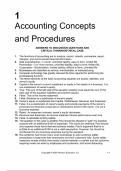
The Solutions Manual for College Accounting: A Practical Approach, 15th Edition by Jeffrey Slater and Mike Deschamps (ISBN 9780137635801) provides complete, step-by-step worked solutions to all end-of-chapter problems, exercises, and applications in the textbook. Designed to support instructors and students, it follows the full structure of the text and ensures accurate guidance through each stage of the accounting cycle and beyond. The manual begins with Chapter 1: Accounting Concepts and Procedures, followed by Chapter 2: Debits and Credits: Analyzing and Recording Business Transactions, and Chapter 3: Beginning the Accounting Cycle, before progressing into Chapter 4: The Accounting Cycle Continued and its appendix on depreciation. The cycle is completed in Chapter 5: The Accounting Cycle Completed, which then transitions into Chapter 6: Banking Procedures and Control of Cash. Payroll processes are covered extensively in Chapter 7: Calculating Pay and Recording Payroll Taxes and Chapter 8: Paying the Payroll, Depositing Payroll Taxes, and Filing the Required Quarterly and Annual Tax Forms. Merchandising transactions are addressed in Chapter 9: Sales and Cash Receipts in a Perpetual Inventory System and Chapter 10: Purchases and Cash Payments in a Perpetual Inventory System, with broader accounting cycle application in Chapter 11: Preparing a Worksheet for a Merchandise Company and Chapter 12: Completion of the Accounting Cycle for a Merchandise Company, including its appendix on the periodic method. Advanced topics are systematically integrated, beginning with Chapter 13: Accounting for Bad Debts, Chapter 14: Notes Receivable and Notes Payable, Chapter 15: Accounting for Merchandise Inventory, and Chapter 16: Accounting for Property, Plant, Equipment, and Intangible Assets. Business structures are analyzed in Chapter 17: Partnership, Chapter 18: Corporations: Organizations and Stock, Chapter 19: Corporations: Stock Values, Dividends, Treasury Stocks, and Retained Earnings, and Chapter 20: Corporations and Bonds Payable. The text then emphasizes financial analysis and reporting in Chapter 21: Statement of Cash Flows and Chapter 22: Analyzing Financial Statements, before moving into applied systems in Chapter 23: The Voucher System, Chapter 24: Departmental Accounting, and Chapter 25: Manufacturing Accounting.

Quality you can trust: written by students who passed their tests and reviewed by others who've used these notes.
No worries! You can instantly pick a different document that better fits what you're looking for.
No subscription, no commitments. Pay the way you're used to via credit card and download your PDF document instantly.

“Bought, downloaded, and aced it. It really can be that simple.”

