

NUR 314 FINAL EXAM – Questions With Quality
Solutions
Save
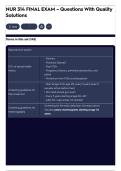
Terms in this set (145)
Reproductive system
- Partners
- Practices (Sexual)
5 P's of sexual health - Past STDs
history - Pregnancy (history, prevention/protection, and
plans)
- Protection from STDs (contraception)
- Start at age 21 (to age 29), every 3 years (even if
sexually active before then)
Screening guidelines for
i. But need annual gyn exam
Pap smear test
- Every 5 years starting at age 30- 65?
- After 65 = pap smear not needed
Screening for the early detection of breast cancer
Screening guidelines for
includes yearly mammograms starting at age 45
Mammography
years.
, ↑ risk of BRCA? No
lactating women - Bacteria gain access through
cracked nipple.
Risk Factors:
Lactational Mastitis - May also be due to clogged milk duct
- Previous mastitis
- Sore or cterm-9racked nipples
- Improper nursing techniques
- Overly tired or stressed
- Poor nutrition
- Smoking
Fibrocystic Breast
Fibroadenomas
(Benign breast lumps)
Intraductal Papilloma ↑ risk of BRCA? Slight ↑ risk of cancer
(Benign, wartlike growth)
Ductal Ectasia
(Duct dilation)
, Transient, non-inflammatory enlargement of 1 or
both breasts
- Men
- Temporary, benign
• Most common cause: disturbance of normal ratio
of active androgen to estrogen in plasma or the
breast itself
• Can occur in puberty, due to imbalance of
Gynecomastia estrogen and testosterone
(Men) • Resolves often by age 18
• Treatment focuses on reassurance of the benign
nature of this disease.
• Can be a manifestation of other problems:
Testicular tumors, adrenal cancers, pituitary tumors,
hyperthyroidism, liver disease
• Side effect of certain drugs: Spironolactone,
digitalis, tricyclic antidepressants
• Marijuana can cause it.
Breast Cancer
(Women)
, - Pendulous breasts
Loss of subcutaneous fat
Loss of structural support
Atrophy of mammary glands
- ↓ Glandular Tissue density
- ↑ Incidence of breast cancer
> 50% of breast cancers diagnosed are in women
aged 65 or older
Pt education
• Teach to wear well fitted bras w/ good support,
Gerontologic this will improve overall appearance & reduce pain
Considerations in the upper back, shoulders, & neck.
• Wearing a good bra will also decrease the risk of
developing dermatitis that occurs when skin lies on
top of skin
• Encourage the pt to become familiar w/ their own
breasts & what is normal for them.
As breast cancer risk increases w/ age, it important
that older females continue for their yearly
mammograms & clinical breast exams, & they are
aware of subtle changes in their breast tissue.
- Monthly breast exams
Chemotherapy
Herceptin (Trastuzumab)
It can treat breast, stomach, and esophageal cancer.
Anti-diabetic medication (T2)
Infertility, PCOS
Metformin (Glucophage) - AEs: Lactic acidosis, megaloblastic anemia,
hepatotoxicity, diarrhea, nausea, vomiting,
flatulence
(Nolvadex, Soltamox)
- Estrogen Receptor Modulator (SERMs)
Antiestrogens, hormonal oncologics
Tamoxifen
- Thromboembolism, PE
- Stroke
- Endometrial CA
- may cause visual changes
Solutions
Save
Terms in this set (145)
Reproductive system
- Partners
- Practices (Sexual)
5 P's of sexual health - Past STDs
history - Pregnancy (history, prevention/protection, and
plans)
- Protection from STDs (contraception)
- Start at age 21 (to age 29), every 3 years (even if
sexually active before then)
Screening guidelines for
i. But need annual gyn exam
Pap smear test
- Every 5 years starting at age 30- 65?
- After 65 = pap smear not needed
Screening for the early detection of breast cancer
Screening guidelines for
includes yearly mammograms starting at age 45
Mammography
years.
, ↑ risk of BRCA? No
lactating women - Bacteria gain access through
cracked nipple.
Risk Factors:
Lactational Mastitis - May also be due to clogged milk duct
- Previous mastitis
- Sore or cterm-9racked nipples
- Improper nursing techniques
- Overly tired or stressed
- Poor nutrition
- Smoking
Fibrocystic Breast
Fibroadenomas
(Benign breast lumps)
Intraductal Papilloma ↑ risk of BRCA? Slight ↑ risk of cancer
(Benign, wartlike growth)
Ductal Ectasia
(Duct dilation)
, Transient, non-inflammatory enlargement of 1 or
both breasts
- Men
- Temporary, benign
• Most common cause: disturbance of normal ratio
of active androgen to estrogen in plasma or the
breast itself
• Can occur in puberty, due to imbalance of
Gynecomastia estrogen and testosterone
(Men) • Resolves often by age 18
• Treatment focuses on reassurance of the benign
nature of this disease.
• Can be a manifestation of other problems:
Testicular tumors, adrenal cancers, pituitary tumors,
hyperthyroidism, liver disease
• Side effect of certain drugs: Spironolactone,
digitalis, tricyclic antidepressants
• Marijuana can cause it.
Breast Cancer
(Women)
, - Pendulous breasts
Loss of subcutaneous fat
Loss of structural support
Atrophy of mammary glands
- ↓ Glandular Tissue density
- ↑ Incidence of breast cancer
> 50% of breast cancers diagnosed are in women
aged 65 or older
Pt education
• Teach to wear well fitted bras w/ good support,
Gerontologic this will improve overall appearance & reduce pain
Considerations in the upper back, shoulders, & neck.
• Wearing a good bra will also decrease the risk of
developing dermatitis that occurs when skin lies on
top of skin
• Encourage the pt to become familiar w/ their own
breasts & what is normal for them.
As breast cancer risk increases w/ age, it important
that older females continue for their yearly
mammograms & clinical breast exams, & they are
aware of subtle changes in their breast tissue.
- Monthly breast exams
Chemotherapy
Herceptin (Trastuzumab)
It can treat breast, stomach, and esophageal cancer.
Anti-diabetic medication (T2)
Infertility, PCOS
Metformin (Glucophage) - AEs: Lactic acidosis, megaloblastic anemia,
hepatotoxicity, diarrhea, nausea, vomiting,
flatulence
(Nolvadex, Soltamox)
- Estrogen Receptor Modulator (SERMs)
Antiestrogens, hormonal oncologics
Tamoxifen
- Thromboembolism, PE
- Stroke
- Endometrial CA
- may cause visual changes


