

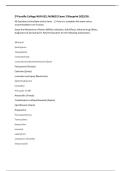
D'Youville College NUR 632; NUR632 Exam 2 Blueprint 2025/26.
40 Questions all multiple choice items. 1.5 hours to complete the exam unless
accommodations are in place.
Know the Mechanism of Action (MOA), Indication, Side Effects, Adverse drug Effects,
Diagnostics & lab during TX, Patient Education for the following medications.
Albuterol
Ipratropium
Theophylline
Corticosteroids
corticosteroid beclomethasone (Qvar)
Fluticasone (Flonase)
Cetirizine (Zyrtec)
cromolyn nasal spray (Nasalcrom)
diphenhydramine
loratadine
Principals of ABT
Amoxicillin (Trimox)
Trimethoprim-sulfamethoxazole (Septra)
Ciprofloxacin (Cipro)
Doxycycline
Fluoroquinolones
Tetracyclines
doxycycline
isoniazid
valacyclovir
oseltamivir (Tamiflu)
ketoconazole
,metronidazole (Flagyl)
HCV Treatment
prednisone
longterm corticosteroid therapy
Asprin
Here’s a detailed overview of the medications you requested, categorized for easier reference:
Bronchodilators:
1. Albuterol (Ventolin, ProAir, Proventil)
• MOA: Beta-2 adrenergic agonist that stimulates beta-2 receptors in the bronchial smooth
muscle, causing bronchodilation.
• Indication: Acute asthma exacerbations, bronchospasm in reversible obstructive airway
disease, prevention of exercise-induced bronchospasm.
• Side Effects: Tachycardia, palpitations, tremors, nervousness, headache.
• Adverse Effects: Hypokalemia, paradoxical bronchospasm, hypertension.
• Diagnostics & Lab Monitoring: Monitor potassium levels and assess for cardiac
arrhythmias.
• Patient Education:
o Use for acute symptom relief.
o Wait 1 minute between puffs.
o Rinse mouth after use to avoid throat irritation.
2. Ipratropium (Atrovent)
• MOA: Anticholinergic that inhibits muscarinic receptors in the bronchial smooth muscle,
reducing bronchoconstriction.
• Indication: Maintenance treatment of bronchospasm in COPD, off-label for asthma.
• Side Effects: Dry mouth, cough, nausea, dizziness.
• Adverse Effects: Paradoxical bronchospasm, worsening of narrow-angle glaucoma,
urinary retention.
• Diagnostics & Lab Monitoring: Monitor respiratory function and signs of paradoxical
bronchospasm.
• Patient Education:
o Not for acute relief.
o Use regularly as prescribed.
, o Rinse mouth to prevent dryness.
3. Theophylline
• MOA: Methylxanthine that inhibits phosphodiesterase, increasing cAMP levels and
causing bronchodilation.
• Indication: Chronic asthma and COPD management.
• Side Effects: Nausea, vomiting, anorexia, headache, restlessness.
• Adverse Effects: Cardiac arrhythmias, seizures, theophylline toxicity.
• Diagnostics & Lab Monitoring: Monitor serum theophylline levels (therapeutic range:
10-20 mcg/mL), liver function, and signs of toxicity.
• Patient Education:
o Avoid caffeine.
o Report symptoms of toxicity (nausea, palpitations).
o Take on an empty stomach for better absorption.
Corticosteroids:
4. Beclomethasone (Qvar)
• MOA: Inhibits inflammatory response by suppressing cytokines and immune cells.
• Indication: Maintenance treatment of asthma.
• Side Effects: Hoarseness, throat irritation, oral candidiasis.
• Adverse Effects: Immunosuppression, adrenal suppression (long-term use).
• Diagnostics & Lab Monitoring: Monitor adrenal function and assess for oral infections.
• Patient Education:
o Rinse mouth after use.
o Not for acute relief.
o Consistent use is necessary for control.
5. Fluticasone (Flonase)
• MOA: Reduces inflammation by inhibiting inflammatory mediators.
• Indication: Allergic rhinitis and nasal congestion.
• Side Effects: Nasal irritation, headache, epistaxis.
• Adverse Effects: Nasal septal perforation (rare with prolonged use).
• Diagnostics & Lab Monitoring: Assess nasal mucosa for damage.
• Patient Education:
o Use regularly for best results.
40 Questions all multiple choice items. 1.5 hours to complete the exam unless
accommodations are in place.
Know the Mechanism of Action (MOA), Indication, Side Effects, Adverse drug Effects,
Diagnostics & lab during TX, Patient Education for the following medications.
Albuterol
Ipratropium
Theophylline
Corticosteroids
corticosteroid beclomethasone (Qvar)
Fluticasone (Flonase)
Cetirizine (Zyrtec)
cromolyn nasal spray (Nasalcrom)
diphenhydramine
loratadine
Principals of ABT
Amoxicillin (Trimox)
Trimethoprim-sulfamethoxazole (Septra)
Ciprofloxacin (Cipro)
Doxycycline
Fluoroquinolones
Tetracyclines
doxycycline
isoniazid
valacyclovir
oseltamivir (Tamiflu)
ketoconazole
,metronidazole (Flagyl)
HCV Treatment
prednisone
longterm corticosteroid therapy
Asprin
Here’s a detailed overview of the medications you requested, categorized for easier reference:
Bronchodilators:
1. Albuterol (Ventolin, ProAir, Proventil)
• MOA: Beta-2 adrenergic agonist that stimulates beta-2 receptors in the bronchial smooth
muscle, causing bronchodilation.
• Indication: Acute asthma exacerbations, bronchospasm in reversible obstructive airway
disease, prevention of exercise-induced bronchospasm.
• Side Effects: Tachycardia, palpitations, tremors, nervousness, headache.
• Adverse Effects: Hypokalemia, paradoxical bronchospasm, hypertension.
• Diagnostics & Lab Monitoring: Monitor potassium levels and assess for cardiac
arrhythmias.
• Patient Education:
o Use for acute symptom relief.
o Wait 1 minute between puffs.
o Rinse mouth after use to avoid throat irritation.
2. Ipratropium (Atrovent)
• MOA: Anticholinergic that inhibits muscarinic receptors in the bronchial smooth muscle,
reducing bronchoconstriction.
• Indication: Maintenance treatment of bronchospasm in COPD, off-label for asthma.
• Side Effects: Dry mouth, cough, nausea, dizziness.
• Adverse Effects: Paradoxical bronchospasm, worsening of narrow-angle glaucoma,
urinary retention.
• Diagnostics & Lab Monitoring: Monitor respiratory function and signs of paradoxical
bronchospasm.
• Patient Education:
o Not for acute relief.
o Use regularly as prescribed.
, o Rinse mouth to prevent dryness.
3. Theophylline
• MOA: Methylxanthine that inhibits phosphodiesterase, increasing cAMP levels and
causing bronchodilation.
• Indication: Chronic asthma and COPD management.
• Side Effects: Nausea, vomiting, anorexia, headache, restlessness.
• Adverse Effects: Cardiac arrhythmias, seizures, theophylline toxicity.
• Diagnostics & Lab Monitoring: Monitor serum theophylline levels (therapeutic range:
10-20 mcg/mL), liver function, and signs of toxicity.
• Patient Education:
o Avoid caffeine.
o Report symptoms of toxicity (nausea, palpitations).
o Take on an empty stomach for better absorption.
Corticosteroids:
4. Beclomethasone (Qvar)
• MOA: Inhibits inflammatory response by suppressing cytokines and immune cells.
• Indication: Maintenance treatment of asthma.
• Side Effects: Hoarseness, throat irritation, oral candidiasis.
• Adverse Effects: Immunosuppression, adrenal suppression (long-term use).
• Diagnostics & Lab Monitoring: Monitor adrenal function and assess for oral infections.
• Patient Education:
o Rinse mouth after use.
o Not for acute relief.
o Consistent use is necessary for control.
5. Fluticasone (Flonase)
• MOA: Reduces inflammation by inhibiting inflammatory mediators.
• Indication: Allergic rhinitis and nasal congestion.
• Side Effects: Nasal irritation, headache, epistaxis.
• Adverse Effects: Nasal septal perforation (rare with prolonged use).
• Diagnostics & Lab Monitoring: Assess nasal mucosa for damage.
• Patient Education:
o Use regularly for best results.



