lOMoARcPSD|24365327
1
Lesson 7 - OWL
○ L7, P1
■
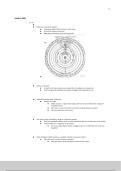
■ What's the Copernican system?↓
■ Copernicus (1480-1543): the sun is in the centre
■ No need of Ptolemy's epicycles
■ Made the sun the centre to get rid of epicycles
■
■ What's an epicycle?
■ A small circle whose centre moves around the circumference of a larger one
■ Used to explain the retrograde movements of bigger circles (planets) we see
■ What did Giordano Bruno (1584) do?↓
■ Plurality of worlds
■ Stellis vacuum - a region that's empty, there are no stars; followed by a region of
immobilised stars
■ Each star is a universe by itself with many worlds and planets around it
■ He was burned alive for his ideas
■ Why didn't people immediately adopt the Copernican system?
■ They had irrefutable evidence from Aristotle and Ptolemy that the was the centre of the model
■ Galileo-Galilei was a supporter of this system
■ but, he was opposing the church; struggle for power, to define how the world was
organised
■ What did Kepler (1604) identify as a problem with the Copernican system?↓
■ The orbits aren't circular, but they're elliptical
■ With this theory, all the calculations started to fall in place
, lOMoARcPSD|24365327
2
■ What also changed the Copernican model, apart from Kepler's theory?
■ Jupiter has satellites (1610)
■ How was Newton able to transform the astronomical sciences into mathematical laws?
■ Gravitational force gives orbits (1687)
■ The universe is constituted by:
■ the sun and the planets
■ a sphere of fixed stars
■ What else discovery came from Kepler's law?↓
■ It's possible to derive the distance of planets
■ There's a relation between orbits and the change in the area that is spanned is constant
■ What is the modern picture of the solar system?
■
■ What's the astronomical unit?
■ Sun-Earth distance - used to measure the distance of everything else, in relation to us
■ This is approximately 150 million kilometres = 8 light minutes
■ The distance of planets from sun in terms of Sun-Earth distance (Axis AU), the time a planet take to make a full
orbit in terms of 1 year on earth (Period), and the position of the Sun in term of the 2 focal points of an elliptical
orbit (Eccentricity)↓
, lOMoARcPSD|24365327
3
■
■ How was the Solar System formed?
■ 4.6 billion years ago from the gravitational collapse of a giant interstellar molecular cloud
■ Gravitational pull starts the nuclear reactions in the centre
■ Nuclear reactions create radiation pressure that counterbalance the force of gravity
■ Stars are born
■ Repulsive force, pushing opposite to gravity
■ Formation of planets by aggregation of bigger pieces of dust
■ What is a star in terms of reactions?
■ A very dense core
■ Object that's not collapsing further because nuclear reactions are keeping it open
■ Why can't photons escape from stars when they're first created?
■ The stars are so densely packed at the core that the photons immediately find other particles to
interact with
■ What does the earth being made of a lot of iron mean?↓
■ That our Solar System isn't a 1st generation one
■ What do photons far away from the core of the stars that manage to escape do ?
■ They travel far, emitting heat
■ This creates planets
■ Smaller particles also manage to escape from the stars
■ A star is born when it starts to burn: what could this mean?
■ As gas drifting in the universe was drawn together by the force of gravity.
■ This gas is mostly hydrogen because it's the most basic and abundant element in the universe
, lOMoARcPSD|24365327
4
■ Eventually, they get so hot, and the individual atoms have so much kinetic energy, that when they
collide with another atom (which also has a lot of kinetic energy) they don't just bounce off each
other.
■ With enough energy, the two atoms collide and the nucleus of these atoms fuse together.
■ So the atoms (often the element hydrogen) inside the star collide together, going through a process of
nuclear fusion, which generates heat, electromagnetic radiation (including visible light), and energy
in other forms,
■ This period of atomic burning is what most of us think of as the life of a star, and it's in this phase
that we see most stars up in the heavens.
■ Eventually, the star reaches an equilibrium where the attraction of gravity and the repulsive pressure
are balanced out, and during this period the star burns in a relatively stable way.
■ What happens as a star's fuel begins to run out?
■ The star begins to generate less heat
■ Without this to counteract gravity, the star begins to contract
■ Can turn into a white dwarf, neutron star, a supernova or a black hole
■ For planets to be created what do you need?
■ Photons escaping from stars also cause other particles to escape with them
■ The bigger particles that manage to escape start to merge with other particles that manage to escape
and grow bigger and bigger
■ How do we reckon if something that is orbiting a planet is a star?
■ If you have a star that's far away, and a planet orbiting it
■ There could be a moment where the planet is in your direct line of vision, eclipsing the star
■ From far away, you can see the luminosity of the star becoming lower
■ How was Pluto originally discovered to be a planet?
■ By using the eclipse method mentioned earlier
■ By looking at the way Neptune was orbiting the sun, an irregularity was discovered
■ This irregularity could only be explained by the presence of another body
■ What is everything in the universe made of? Started off as?
■ Dust
■ What are asteroids?
■ Dust that couldn't turn into a moon, star or a planet
■ What's the asteroid belt?
■ Smallest and innermost known circum-stellar disc in the solar system
■ Half of its mass is concentrated in the 4 largest asteroids: Ceres, Vesta, Pallas, and Hygiea
1
Lesson 7 - OWL
○ L7, P1
■
■ What's the Copernican system?↓
■ Copernicus (1480-1543): the sun is in the centre
■ No need of Ptolemy's epicycles
■ Made the sun the centre to get rid of epicycles
■
■ What's an epicycle?
■ A small circle whose centre moves around the circumference of a larger one
■ Used to explain the retrograde movements of bigger circles (planets) we see
■ What did Giordano Bruno (1584) do?↓
■ Plurality of worlds
■ Stellis vacuum - a region that's empty, there are no stars; followed by a region of
immobilised stars
■ Each star is a universe by itself with many worlds and planets around it
■ He was burned alive for his ideas
■ Why didn't people immediately adopt the Copernican system?
■ They had irrefutable evidence from Aristotle and Ptolemy that the was the centre of the model
■ Galileo-Galilei was a supporter of this system
■ but, he was opposing the church; struggle for power, to define how the world was
organised
■ What did Kepler (1604) identify as a problem with the Copernican system?↓
■ The orbits aren't circular, but they're elliptical
■ With this theory, all the calculations started to fall in place
, lOMoARcPSD|24365327
2
■ What also changed the Copernican model, apart from Kepler's theory?
■ Jupiter has satellites (1610)
■ How was Newton able to transform the astronomical sciences into mathematical laws?
■ Gravitational force gives orbits (1687)
■ The universe is constituted by:
■ the sun and the planets
■ a sphere of fixed stars
■ What else discovery came from Kepler's law?↓
■ It's possible to derive the distance of planets
■ There's a relation between orbits and the change in the area that is spanned is constant
■ What is the modern picture of the solar system?
■
■ What's the astronomical unit?
■ Sun-Earth distance - used to measure the distance of everything else, in relation to us
■ This is approximately 150 million kilometres = 8 light minutes
■ The distance of planets from sun in terms of Sun-Earth distance (Axis AU), the time a planet take to make a full
orbit in terms of 1 year on earth (Period), and the position of the Sun in term of the 2 focal points of an elliptical
orbit (Eccentricity)↓
, lOMoARcPSD|24365327
3
■
■ How was the Solar System formed?
■ 4.6 billion years ago from the gravitational collapse of a giant interstellar molecular cloud
■ Gravitational pull starts the nuclear reactions in the centre
■ Nuclear reactions create radiation pressure that counterbalance the force of gravity
■ Stars are born
■ Repulsive force, pushing opposite to gravity
■ Formation of planets by aggregation of bigger pieces of dust
■ What is a star in terms of reactions?
■ A very dense core
■ Object that's not collapsing further because nuclear reactions are keeping it open
■ Why can't photons escape from stars when they're first created?
■ The stars are so densely packed at the core that the photons immediately find other particles to
interact with
■ What does the earth being made of a lot of iron mean?↓
■ That our Solar System isn't a 1st generation one
■ What do photons far away from the core of the stars that manage to escape do ?
■ They travel far, emitting heat
■ This creates planets
■ Smaller particles also manage to escape from the stars
■ A star is born when it starts to burn: what could this mean?
■ As gas drifting in the universe was drawn together by the force of gravity.
■ This gas is mostly hydrogen because it's the most basic and abundant element in the universe
, lOMoARcPSD|24365327
4
■ Eventually, they get so hot, and the individual atoms have so much kinetic energy, that when they
collide with another atom (which also has a lot of kinetic energy) they don't just bounce off each
other.
■ With enough energy, the two atoms collide and the nucleus of these atoms fuse together.
■ So the atoms (often the element hydrogen) inside the star collide together, going through a process of
nuclear fusion, which generates heat, electromagnetic radiation (including visible light), and energy
in other forms,
■ This period of atomic burning is what most of us think of as the life of a star, and it's in this phase
that we see most stars up in the heavens.
■ Eventually, the star reaches an equilibrium where the attraction of gravity and the repulsive pressure
are balanced out, and during this period the star burns in a relatively stable way.
■ What happens as a star's fuel begins to run out?
■ The star begins to generate less heat
■ Without this to counteract gravity, the star begins to contract
■ Can turn into a white dwarf, neutron star, a supernova or a black hole
■ For planets to be created what do you need?
■ Photons escaping from stars also cause other particles to escape with them
■ The bigger particles that manage to escape start to merge with other particles that manage to escape
and grow bigger and bigger
■ How do we reckon if something that is orbiting a planet is a star?
■ If you have a star that's far away, and a planet orbiting it
■ There could be a moment where the planet is in your direct line of vision, eclipsing the star
■ From far away, you can see the luminosity of the star becoming lower
■ How was Pluto originally discovered to be a planet?
■ By using the eclipse method mentioned earlier
■ By looking at the way Neptune was orbiting the sun, an irregularity was discovered
■ This irregularity could only be explained by the presence of another body
■ What is everything in the universe made of? Started off as?
■ Dust
■ What are asteroids?
■ Dust that couldn't turn into a moon, star or a planet
■ What's the asteroid belt?
■ Smallest and innermost known circum-stellar disc in the solar system
■ Half of its mass is concentrated in the 4 largest asteroids: Ceres, Vesta, Pallas, and Hygiea