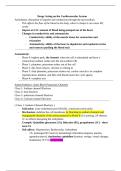
Drugs Acting on the Cardiovascular System: Part 2
Coronary Artery Disease: narrowing of the artery - do not have enough blood flow - peripheral
arterial disease - heart attack
- Lipid deposits of the plaque
- Liver: acetyl -CoA - HMG-CoA - Mevalonic Acid - Cholesterol
Cholesterol is a key component of cell membranes, providing structural
support and regulating the movement of substances in and out of cells.
Antilipidemic Drugs: HMG Reductase inhibitors
- Indication: HLD, prevention for CAD, Active CAD
- Mechanism: block the synthesis HMG-CoA of cholesterol which leads to the decrease in
serum cholesterol and LDL
- Examples: atorvastatin (lipitor), simvastatin (zocor), pravastatin (pravachol),
rosuvastatin (crestor)
- Primary: muscle soreness (stopping CQ10 - needed for muscle cells to have energy),
hepatotoxicity, GI: cramping, diarrhea/constipation, nausea, flatulence
- Wild: headache, dizzy, blurred vision, insomnia, cataracts
- Headache: possible explanation is the CQ10
- Dizzy: ANS
- Interfere with the retina and cause blurry vision
- Insomnia: melatonin increase more awake
- Life: LIVER, rhabdomyolysis (monitor creatine kinase- needs to be stopped)
- Patient: toxicity related to grapefruit, diet and exercise, report sudden muscle pain,
bedtime admin preferred
- Avoid dairy products because it contains a lot of cholesterol
- Nurse: avoid with acute liver disease, assess bowel function, monitor LFT (liver function
tests), renal function, creatine kinase
Bile Acid Sequestrants
- Indication: hypercholesterolemia
- Mechanism: traps bile in the intestine forcing the liver to make more bile acid with the
cholesterol reducing the amount in the blood.
- Ex: cholestyramine (questran)
- Primary: bleeding (binding with vitamin K in intestine), GI: nausea, constipation, fecal
impaction, and hemorrhoids (due to pushing out poop)
- Vitamin K: helps with the clotting factor
- Wild: headache, fatigue, joint pain
- Life: pancreatitis (tricking the liver can induce this)
- Patient: take before meals and take other oral meds 1 hr before or 4-6 hrs after, increase
fiber and fluid, diet and exercise
, - Nurse: contraindicated in patients with impaired intestinal function, perform abdominal
assessment, follow-up cholesterol and lipid levels
Cholesterol Absorption Inhibitors:
- Indication: hypercholesterolemia
- Mechanism: reduce the amount of cholesterol in the SI that the body absorbs normally
resulting in less cholesterol delivered to the liver
- Example: Ezetimibe (zetia)
- Primary: muscle weakness, diarrhea, fatigue, hepatotoxicity
- Wild: cold symptoms
- Life: rhabdomyolysis, angioedema
- Patient: lifestyle changes, avoid grapefruit, report muscle pain
- Nurse: monitor serum and cholesterol, monitor LFTs, monitor CK levels
Fibrates:
- Indication: elevated triglycerides, mixed dyslipidemia
- Mechanism: it increase lipolysis and elimination of triglycerides
- Ex: fenofibrate (tricor)
- Primary: GI: N/V/D, hepatotoxicity, muscle weak
- Life: cholelithiasis (gallstones) RUQ pain, abdominal pain, pancreatitis, rhabdo
- Patient: may take months for efficacy, diet and exercise, report inability to tolerate fried
(early signs of gallstones in gallbladder) foods, should be taken 30 min before breakfast
and dinner
- Nurse: monitor cholesterol, monitor creatine kinase, monitor gallbladder
Blood Coagulation: tendency to clot (coagulation) vs. the need to unclot
- Vasoconstriction, platelet aggregation, cascade of clotting factors (liver)
Once there is a injury they clot with collagen - platelet activation - hageman factor
activated - 12A - activate 10A
Coronary Artery Disease: narrowing of the artery - do not have enough blood flow - peripheral
arterial disease - heart attack
- Lipid deposits of the plaque
- Liver: acetyl -CoA - HMG-CoA - Mevalonic Acid - Cholesterol
Cholesterol is a key component of cell membranes, providing structural
support and regulating the movement of substances in and out of cells.
Antilipidemic Drugs: HMG Reductase inhibitors
- Indication: HLD, prevention for CAD, Active CAD
- Mechanism: block the synthesis HMG-CoA of cholesterol which leads to the decrease in
serum cholesterol and LDL
- Examples: atorvastatin (lipitor), simvastatin (zocor), pravastatin (pravachol),
rosuvastatin (crestor)
- Primary: muscle soreness (stopping CQ10 - needed for muscle cells to have energy),
hepatotoxicity, GI: cramping, diarrhea/constipation, nausea, flatulence
- Wild: headache, dizzy, blurred vision, insomnia, cataracts
- Headache: possible explanation is the CQ10
- Dizzy: ANS
- Interfere with the retina and cause blurry vision
- Insomnia: melatonin increase more awake
- Life: LIVER, rhabdomyolysis (monitor creatine kinase- needs to be stopped)
- Patient: toxicity related to grapefruit, diet and exercise, report sudden muscle pain,
bedtime admin preferred
- Avoid dairy products because it contains a lot of cholesterol
- Nurse: avoid with acute liver disease, assess bowel function, monitor LFT (liver function
tests), renal function, creatine kinase
Bile Acid Sequestrants
- Indication: hypercholesterolemia
- Mechanism: traps bile in the intestine forcing the liver to make more bile acid with the
cholesterol reducing the amount in the blood.
- Ex: cholestyramine (questran)
- Primary: bleeding (binding with vitamin K in intestine), GI: nausea, constipation, fecal
impaction, and hemorrhoids (due to pushing out poop)
- Vitamin K: helps with the clotting factor
- Wild: headache, fatigue, joint pain
- Life: pancreatitis (tricking the liver can induce this)
- Patient: take before meals and take other oral meds 1 hr before or 4-6 hrs after, increase
fiber and fluid, diet and exercise
, - Nurse: contraindicated in patients with impaired intestinal function, perform abdominal
assessment, follow-up cholesterol and lipid levels
Cholesterol Absorption Inhibitors:
- Indication: hypercholesterolemia
- Mechanism: reduce the amount of cholesterol in the SI that the body absorbs normally
resulting in less cholesterol delivered to the liver
- Example: Ezetimibe (zetia)
- Primary: muscle weakness, diarrhea, fatigue, hepatotoxicity
- Wild: cold symptoms
- Life: rhabdomyolysis, angioedema
- Patient: lifestyle changes, avoid grapefruit, report muscle pain
- Nurse: monitor serum and cholesterol, monitor LFTs, monitor CK levels
Fibrates:
- Indication: elevated triglycerides, mixed dyslipidemia
- Mechanism: it increase lipolysis and elimination of triglycerides
- Ex: fenofibrate (tricor)
- Primary: GI: N/V/D, hepatotoxicity, muscle weak
- Life: cholelithiasis (gallstones) RUQ pain, abdominal pain, pancreatitis, rhabdo
- Patient: may take months for efficacy, diet and exercise, report inability to tolerate fried
(early signs of gallstones in gallbladder) foods, should be taken 30 min before breakfast
and dinner
- Nurse: monitor cholesterol, monitor creatine kinase, monitor gallbladder
Blood Coagulation: tendency to clot (coagulation) vs. the need to unclot
- Vasoconstriction, platelet aggregation, cascade of clotting factors (liver)
Once there is a injury they clot with collagen - platelet activation - hageman factor
activated - 12A - activate 10A