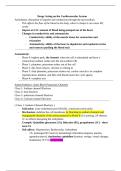
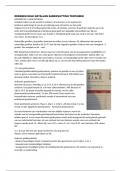
Drugs Acting on the Cardiovascular System
Arrhythmia: disruption of impulse and conduction through the myocardium
- This affects the flow of the blood to the body, when it clumps it can cause PE,
stroke
- Impact on CO: amount of blood being pumped out of the heart
- Changes in conductivity and automaticity
- Conductivity: ability of the muscle tissue for contraction and
relaxation
- Automaticity: ability of the heart to depolarize and repolarize (relax
and contract pushing the blood out)
Automaticity:
- Phase 0: highest peak, the Summit, when the cell is stimulated and have a
contraction (sodium rushes into the myocardial cell)
- Phase 1: plummet, potassium rushes out of the cell
- Phase 2: dip, heart relaxes, calcium is rushing in
- Phase 3: final plummet, potassium rushes out, cardiac muscle is in complete
repolarization, dilation, and fills with blood (starts the cycle again)
- Phase 4: complete rest
Antiarrhythmics: Some Block Potassium Channels
Class 1: Sodium channel Blockers
Class 2: beta blockers
Class 3: potassium channel blockers
Class 4: Calcium channel blockers
( Class 1: Sodium Channel Blockers )
- Indication: acute arrhythmia post MI (1B), ventricular tachycardia
- Mechanism: stabilize the cell membrane by blocking to sodium channels and
changing the duration of the action potential in Phase 0 (1A prolong, 1B shorten,
1C no effect) disrupting the arrhythmia
- Example: Quinidine gluconate (1A), lidocaine (B1), propafenone (1C) - short
term Tx
- Side effects: Hypotension, Bradycardia, Arrhythmia
- 1A: prolonged QT interval, hematologic (thrombocytopenia, anemia,
agranulocytosis), cinchonism: quinidine (tinnitus, vertigo, visual changes,
headaches), N/V/D, tachycardia
Arrhythmia: disruption of impulse and conduction through the myocardium
- This affects the flow of the blood to the body, when it clumps it can cause PE,
stroke
- Impact on CO: amount of blood being pumped out of the heart
- Changes in conductivity and automaticity
- Conductivity: ability of the muscle tissue for contraction and
relaxation
- Automaticity: ability of the heart to depolarize and repolarize (relax
and contract pushing the blood out)
Automaticity:
- Phase 0: highest peak, the Summit, when the cell is stimulated and have a
contraction (sodium rushes into the myocardial cell)
- Phase 1: plummet, potassium rushes out of the cell
- Phase 2: dip, heart relaxes, calcium is rushing in
- Phase 3: final plummet, potassium rushes out, cardiac muscle is in complete
repolarization, dilation, and fills with blood (starts the cycle again)
- Phase 4: complete rest
Antiarrhythmics: Some Block Potassium Channels
Class 1: Sodium channel Blockers
Class 2: beta blockers
Class 3: potassium channel blockers
Class 4: Calcium channel blockers
( Class 1: Sodium Channel Blockers )
- Indication: acute arrhythmia post MI (1B), ventricular tachycardia
- Mechanism: stabilize the cell membrane by blocking to sodium channels and
changing the duration of the action potential in Phase 0 (1A prolong, 1B shorten,
1C no effect) disrupting the arrhythmia
- Example: Quinidine gluconate (1A), lidocaine (B1), propafenone (1C) - short
term Tx
- Side effects: Hypotension, Bradycardia, Arrhythmia
- 1A: prolonged QT interval, hematologic (thrombocytopenia, anemia,
agranulocytosis), cinchonism: quinidine (tinnitus, vertigo, visual changes,
headaches), N/V/D, tachycardia