Nurs 251 exam Study Questions and Correct
Solutions
health
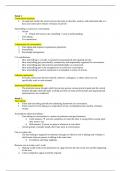
state of complete physical, mental, & social wellbeing
Descriptive vs analytic epidemiology
Descriptive Epidemiology - concerned with characterizing the amount and distribution of health
and disease within a population
Analytic Epidemiology - examines causal hypotheses regarding association between exposures
and health conditions
disparity
unequal treatment bc of an unfair advantage/disadvantage
population health
health status of specified population/community
public health
govt & community efforts to prevent disease & promote health
health equity
attainment of the highest level of health for all ppl
health disparity
,-specific health outcome seen to greater/lesser extent in diff pops
-health diff linked w/ social, economic, or environmental disadvantage
vulnerable populations
groups at increased risk for
1) developing health probs bc of exposure to risk
2) worse outcomes from health probs compared to pop
examples:
BIPOC, impoverished indiv, children, prisoners, elderly
health inequity
avoidable inequalities in health between groups of ppl
systematic & avoidable → unjust
focuses on "upstream" causes of factors that create vulnerability
Social determinants of health
conditions in which we live & the systems in place to deal with illness that affect health &
quality of life
these conditions are shaped by a wider set of forces (economics, social policies, politics)
10 categories of SDOH
, Work
Housing
Access to health services
Transportation
Stress
Social status
Social support
Place
Food
Education
(mneumonic: what should Sarah Summitt paint for everyone)
relationship between incidence and prevalence
incidence ↑ = prevalence ↑
Crude Rate
type of rate that has not been modified to take into account any other factors
Adjusted Rate
type of rate that has been modified to enable comparison
Exposure
any factor that may be associated with an outcome of interest
key factors underlying these 10 categories SDOH
money, SES, race
Solutions
health
state of complete physical, mental, & social wellbeing
Descriptive vs analytic epidemiology
Descriptive Epidemiology - concerned with characterizing the amount and distribution of health
and disease within a population
Analytic Epidemiology - examines causal hypotheses regarding association between exposures
and health conditions
disparity
unequal treatment bc of an unfair advantage/disadvantage
population health
health status of specified population/community
public health
govt & community efforts to prevent disease & promote health
health equity
attainment of the highest level of health for all ppl
health disparity
,-specific health outcome seen to greater/lesser extent in diff pops
-health diff linked w/ social, economic, or environmental disadvantage
vulnerable populations
groups at increased risk for
1) developing health probs bc of exposure to risk
2) worse outcomes from health probs compared to pop
examples:
BIPOC, impoverished indiv, children, prisoners, elderly
health inequity
avoidable inequalities in health between groups of ppl
systematic & avoidable → unjust
focuses on "upstream" causes of factors that create vulnerability
Social determinants of health
conditions in which we live & the systems in place to deal with illness that affect health &
quality of life
these conditions are shaped by a wider set of forces (economics, social policies, politics)
10 categories of SDOH
, Work
Housing
Access to health services
Transportation
Stress
Social status
Social support
Place
Food
Education
(mneumonic: what should Sarah Summitt paint for everyone)
relationship between incidence and prevalence
incidence ↑ = prevalence ↑
Crude Rate
type of rate that has not been modified to take into account any other factors
Adjusted Rate
type of rate that has been modified to enable comparison
Exposure
any factor that may be associated with an outcome of interest
key factors underlying these 10 categories SDOH
money, SES, race