Week 1:
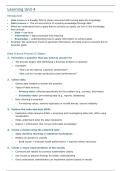
Conversation analysis:
An approach within the social sciences that aims to describe, analyze, and understand talk as a
basic and consecutive feature of human social life.
Storytelling as activity in conversation:
- Action.
o People tell stories to do something + issue of understanding.
- Turn taking.
- Co-construction.
3 dimensions of conversation:
1. Turn taking and sequence organization (position).
2. Storytelling.
3. Knowledge management.
CA contributions:
- How storytelling is a locally occasioned (contextualized and situated) activity.
- How storytelling gets procedurally, normatively, and sequentially organized in conversation.
- How storytelling gets interactively and multimodally co-constructed.
- How storytelling gets to be recognized as an activity in conversation.
- How storytelling is used in interaction to accomplish a variety of actions.
Ordinary interaction:
- Everyday interactions between friends, relatives, colleagues, or others which are not
specifically work or task oriented.
Institutional Talk-in-interaction:
- The principle means through which lay persons pursue various practical goals and the central
medium through which the daily working activities of many professionals and organizational
representatives are conducted.
Week 2:
Turn-taking:
Turns and turn-taking provide the underlying framework of conversation.
Some system for turn-taking is a requirement of any coordinated action and this of human
society.
Assumptions about turn-taking:
- Turn-taking in conversation is a matter of politeness and good manners.
o Good manners wait the completion of what the other is saying before saying what
they want to say.
o Bad manners prone to jump in whenever it suits them.
- Certain groups of people simply don’t take turns in conversation.
One-at-a-time rule:
- The turn-taking is organized to minimize the gaps in which no one is talking and overlaps in
which more than one person is talking at the same time.
o Exceptions: greeting, laughing
Reasons one-at-a-time won’t work:
1. Waiting would result in the production of a gap between the end of one turn and the beginning
of the next.
2. A turn-completion signal would be required.
, 14 features where turn-taking models should be able to account:
1. Speaker-change reoccurs. TRP.
2. 1 party talks at a time.
3. Occurrence of more than 1 speaker at a time are common.
4. Transitions with no gap and no overlap are common.
o The transitions are categorized by slight gap or overlap make up most transitions.
5. Turn order isn’t fixed.
6. Turn size isn’t fixed.
7. Length of conversation isn’t specified in advance.
8. What parties say isn’t specified in advance.
9. Relative distribution of turns are not specified in advance.
10. Number of parties can vary.
11. Talk can be continuous or discontinuous.
12. Turn-allocation techniques are used.
13. Various turn-constructional units are employed.
14. Repair mechanisms exist for dealing with turn-taking errors and violations.
Turn-taking system for conversation is locally managed and party-administered:
- Locally managed it organizes only current and next turn.
- Party-administered there is no referee to determine who should speak next and for
how long.
Turn construction:
How do people know when to begin a new turn?
o Listeners pay attention to how speakers structure their turns as they are talking to
figure out when the speaker is probably done.
Turns at talk are made up of grammatical units of a variety of lengths.
o Turn-Constructional Units TCUs
TCU:
Word. lexical.
Phrase.
Clause.
Sentence.
Transition relevance place (TRP):
A point of possible unit completion is a place for possible speaker transition.
3 things to consider when identifying a TRP:
- Prosodic features.
o Intonation, pauses, voice increase or decrease.
- Pragmatic features.
o Has the speaker concluded their words.
- Syntactic features.
Rules of speaker change:
1. If C selects N, then N must speak.
2. If C doesn’t select N, then any party may self-select.
3. If C doesn’t select N, and no other party self-selects then C may continue.
Current selects next:
1. Sequence initiating actions.
2. Repair initiators.
3. Tags.
4. Situational particulars.
Conversation analysis:
An approach within the social sciences that aims to describe, analyze, and understand talk as a
basic and consecutive feature of human social life.
Storytelling as activity in conversation:
- Action.
o People tell stories to do something + issue of understanding.
- Turn taking.
- Co-construction.
3 dimensions of conversation:
1. Turn taking and sequence organization (position).
2. Storytelling.
3. Knowledge management.
CA contributions:
- How storytelling is a locally occasioned (contextualized and situated) activity.
- How storytelling gets procedurally, normatively, and sequentially organized in conversation.
- How storytelling gets interactively and multimodally co-constructed.
- How storytelling gets to be recognized as an activity in conversation.
- How storytelling is used in interaction to accomplish a variety of actions.
Ordinary interaction:
- Everyday interactions between friends, relatives, colleagues, or others which are not
specifically work or task oriented.
Institutional Talk-in-interaction:
- The principle means through which lay persons pursue various practical goals and the central
medium through which the daily working activities of many professionals and organizational
representatives are conducted.
Week 2:
Turn-taking:
Turns and turn-taking provide the underlying framework of conversation.
Some system for turn-taking is a requirement of any coordinated action and this of human
society.
Assumptions about turn-taking:
- Turn-taking in conversation is a matter of politeness and good manners.
o Good manners wait the completion of what the other is saying before saying what
they want to say.
o Bad manners prone to jump in whenever it suits them.
- Certain groups of people simply don’t take turns in conversation.
One-at-a-time rule:
- The turn-taking is organized to minimize the gaps in which no one is talking and overlaps in
which more than one person is talking at the same time.
o Exceptions: greeting, laughing
Reasons one-at-a-time won’t work:
1. Waiting would result in the production of a gap between the end of one turn and the beginning
of the next.
2. A turn-completion signal would be required.
, 14 features where turn-taking models should be able to account:
1. Speaker-change reoccurs. TRP.
2. 1 party talks at a time.
3. Occurrence of more than 1 speaker at a time are common.
4. Transitions with no gap and no overlap are common.
o The transitions are categorized by slight gap or overlap make up most transitions.
5. Turn order isn’t fixed.
6. Turn size isn’t fixed.
7. Length of conversation isn’t specified in advance.
8. What parties say isn’t specified in advance.
9. Relative distribution of turns are not specified in advance.
10. Number of parties can vary.
11. Talk can be continuous or discontinuous.
12. Turn-allocation techniques are used.
13. Various turn-constructional units are employed.
14. Repair mechanisms exist for dealing with turn-taking errors and violations.
Turn-taking system for conversation is locally managed and party-administered:
- Locally managed it organizes only current and next turn.
- Party-administered there is no referee to determine who should speak next and for
how long.
Turn construction:
How do people know when to begin a new turn?
o Listeners pay attention to how speakers structure their turns as they are talking to
figure out when the speaker is probably done.
Turns at talk are made up of grammatical units of a variety of lengths.
o Turn-Constructional Units TCUs
TCU:
Word. lexical.
Phrase.
Clause.
Sentence.
Transition relevance place (TRP):
A point of possible unit completion is a place for possible speaker transition.
3 things to consider when identifying a TRP:
- Prosodic features.
o Intonation, pauses, voice increase or decrease.
- Pragmatic features.
o Has the speaker concluded their words.
- Syntactic features.
Rules of speaker change:
1. If C selects N, then N must speak.
2. If C doesn’t select N, then any party may self-select.
3. If C doesn’t select N, and no other party self-selects then C may continue.
Current selects next:
1. Sequence initiating actions.
2. Repair initiators.
3. Tags.
4. Situational particulars.