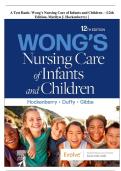
A Test Bank: Wong’s Nursing Care of Infants and Children – (12th
v v v v v v v v v v v
Edition, Marilyn J. Hockenberry) |
v v v v v v
, Chapter v01: vPerspectives vof vPediatric vNursing
Hockenberry: vWong’s vNursing vCare vof vInfants vand vChildren, v12th v vEdition
MULTIPLE vCHOICE
1. What vis vthe vmajor vcause vof vdeath vfor vchildren vin vthe vUnited vStates?
a. Heart vdisease
b. Childhood vcancer
c. Injuries
d. Congenital vanomalies
ANS: v C
Unintentional vinjuries v(accidents) vare vthe vleading vcause vof vdeath vafter vage v1 vyear vthrough
vadolescence. vThe vleading vcause vof vdeath vfor vthose vyounger vthan v1 vyear vis vcongenital vanomalies, vand
vchildhood vcancers vand vheart vdisease vcause va vsignificantly vlower vpercentage vof vdeaths vin vchildren
volder vthan v1 vyear vof vage.
DIF: Cognitive vLevel: vUnderstanding TOP: vNursing vProcess: vPlanning
vMSC: v Client vNeeds: vHealth vPromotion vand vMaintenance
2. Parents vof va vhospitalized vtoddler vask vthe vnurse, v―What vis vmeant vby vfamily-centered vcare?‖ vThe
nurse vshould vrespond vwith vwhich vstatement?
v
a. Family-centered vcare vreduces vthe veffect vof vcultural vdiversity von vthe vfamily.
b. Family-centered vcare vencourages vfamily vdependence von vthe vhealth vcare vsystem.
c. Family-centered vcare vrecognizes vthat vthe vfamily vis vthe vconstant vin va vchild‘s vlife.
d. Family-centered vcare vavoids vexpecting vfamilies vto vbe vpart vof vthe vdecision-making
vprocess.
ANS: v C
The vthree vkey vcomponents vof vfamily-centered vcare vare vrespect, vcollaboration, vand vsupport. vFamily-
vcentered vcare vrecognizes vthe vfamily vas vthe vconstant vin vthe vchild‘s vlife. vThe vfamily vshould vbe venabled
vand vempowered vto vwork vwith vthe vhealth vcare vsystem vand vis vexpected vto vbe vpart vof vthe vdecision-
making vprocess. vThe vnurse vshould valso vsupport vthe vfamily‘s vcultural vdiversity, vnot vreduce vits veffect.
DIF: Cognitive vLevel: vApplying TOP: vNursing vProcess: vImplementation
vMSC: v Client vNeeds: vHealth vPromotion vand vMaintenance
3. Evidence-based vpractice v(EBP), va vdecision-making vmodel, vis vbest vdescribed vas vwhich?
a. Using vinformation vin vtextbooks vto vguide vcare
b. Combining vknowledge vwith vclinical vexperience vand vintuition
c. Using va vprofessional vcode vof vethics vas va vmeans vfor vdecision vmaking
d. Gathering vall vevidence vthat vapplies vto vthe vchild‘s vhealth vand vfamily
situation
v
ANS: v B
EBP vhelps vfocus von vmeasurable voutcomes; vthe vuse vof vdemonstrated, veffective vinterventions; vand
vquestioning vthe vbest vapproach. vEBP vinvolves vdecision vmaking vbased von vthe vintegration vof vthe vbest
vresearch vevidence vcombined vwith vclinical vexpertise vand vpatient vvalues.
,Wong's vNursing vCare vof vInfants vand vChildren v12th vEdition vby vHockenberry vTest
Bank
DIF: Cognitive vLevel: vRemembering TOP: vNursing vProcess: vPlanning
vMSC: v Client vNeeds: vSafe vand vEffective vCare vEnvironment
4. The vnurse vis vtalking vto va vgroup vof vparents vof vschool-age vchildren vat van vafter-school vprogram
about vchildhood vhealth vproblems. vWhich vstatement vshould vthe vnurse vinclude vin vthe vteaching?
v
a. Childhood vobesity vis vthe vmost vcommon vnutritional vproblem vamong vchildren.
b. Immunization vrates vare vthe vsame vamong vchildren vof vdifferent vraces vand vethnicity.
c. Dental vcaries vis vnot va vproblem vcommonly vseen vin vchildren vsince vthe vintroduction
vof vfluorinated vwater.
d. Mental vhealth vproblems vare vtypically vnot vseen vin vschool-age vchildren vbut vmay vbe
vdiagnosed vin vadolescents.
ANS: v A
When vteaching vparents vof vschool-age vchildren vabout vchildhood vhealth vproblems, vthe vnurse vshould
vinclude vinformation vabout vchildhood vobesity vbecause vit vis vthe vmost vcommon vproblem vamong
vchildren vand vis vassociated vwith vtype v2 vdiabetes. vTeaching vparents vabout vways vto vprevent vobesity vis
vimportant vto vinclude. vImmunization vrates vdiffer vdepending von vthe vchild‘s vrace vand vethnicity; vdental
vcaries vcontinues vto vbe va vcommon vchronic vdisease vin vchildhood; vand vmental vhealth vproblems vare vseen
vin vchildren vas vyoung vas vschool vage, vnot vjust vin vadolescents.
DIF: Cognitive vLevel: vApplying TOP: vIntegrated vProcess: vTeaching/Learning
vMSC: v Client vNeeds: vHealth vPromotion vand vMaintenance
5. The vnurse vis vplanning vcare vfor va vhospitalized vpreschool-aged vchild. vWhich vshould vthe vnurse vplan
to vensure vatraumatic vcare?
v
a. Limit vexplanation vof vprocedures vbecause vthe vchild vis vpreschool vaged.
b. Ask vthat vall vfamily vmembers vleave vthe vroom vwhen vperforming vprocedures.
c. Allow vthe vchild vto vchoose vthe vtype vof vjuice vto vdrink vwith vthe vadministration vof
voral vmedications.
d. Explain vthat vEMLA vcream vcannot vbe vused vfor vthe vmorning vlab vdraw vbecause
vthere vis vnot vtime vfor vit vto vbe veffective.
ANS: v C
The voverriding vgoal vin vproviding vatraumatic vcare vis vfirst, vdo vno vharm. vAllowing vthe vchild, va vchoice vof
vjuice vto vdrink vwhen vtaking voral vmedications vprovides vthe vchild vwith va vsense vof vcontrol. vThe vpreschool
vchild vshould vbe vprepared vbefore vprocedures, vso vlimiting vexplanations vof vprocedures vwould vincrease
vanxiety. vThe vfamily vshould vbe vallowed vto vstay vwith vthe vchild vduring vprocedures, vminimizing vstress.
Lidocaine/prilocaine v(EMLA) vcream vis va vtopical vlocal vanesthetic. vThe vnurse vshould vplan vto vuse vthe
vprescribed vcream vin vtime vfor vmorning vlaboratory vdraws vto vminimize vpain.
DIF: Cognitive vLevel: vApplying TOP: vNursing vProcess: vPlanning
vMSC: v Client vNeeds: vHealth vPromotion vand vMaintenance
6. Which vsituation vdenotes va vnontherapeutic vnurse–patient–family vrelationship?
a. The vnurse vis vplanning vto vread va vfavorite vfairy vtale vto va vpatient.
b. During vshift vreport, vthe vnurse vis vcriticizing vparents vfor vnot vvisiting vtheir vchild.
c. The vnurse vis vdiscussing vwith va vfellow vnurse vthe vemotional vdraw vto va vcertain
vpatient.
d. The vnurse vis vworking vwith va vfamily vto vfind vways vto vdecrease vthe vfamily‘s
vdependence von vhealth vcare vproviders.
, Wong's vNursing vCare vof vInfants vand vChildren v12th vEdition vby vHockenberry vTest
Bank
ANS: v B
Criticizing vparents vfor vnot vvisiting vin vshift vreport vis vnontherapeutic vand vshows van vunder vinvolvement
vwith vthe vparents. vReading va vfairy vtale vis va vtherapeutic vand vage-appropriate vaction. vDiscussing
vfeelings vof van vemotional vdraw vwith va vfellow vnurse vis vtherapeutic vand vshows va vwillingness vto
vunderstand vfeelings. vWorking vwith vparents vto vdecrease vdependence von vhealth vcare vproviders vis
vtherapeutic vand vhelps vto vempower vthe vfamily.
DIF: Cognitive vLevel: vAnalyzing TOP: vIntegrated vProcess: vCaring
vMSC: v Client vNeeds: vPsychosocial vIntegrity
7. The vnurse vis vaware vthat vwhich vage-group vis vat vrisk vfor vchildhood vinjury vbecause vof vthe
cognitive vcharacteristic vof vmagical vand vegocentric vthinking?
v
a. Preschool
b. Young vschool vage
c. Middle vschool vage
d. Adolescent
ANS: v A
Preschool vchildren vhave vthe vcognitive vcharacteristic vof vmagical vand vegocentric vthinking, vmeaning
vthey vare vunable vto vcomprehend vdanger vto vself vor vothers. vYoung vand vmiddle vschool-aged vchildren
vhave vtransitional vcognitive vprocesses, vand vthey vmay vattempt vdangerous vacts vwithout vdetailed
vplanning vbut vrecognize vdanger vto vthemselves vor vothers. vAdolescents vhave vformal voperational
vcognitive vprocesses vand vare vpreoccupied vwith vabstract vthinking.
DIF: Cognitive vLevel: vUnderstanding TOP: v Nursing vProcess:
vAssessment vMSC: v Client vNeeds: vSafe vand vEffective vCare vEnvironment
8. The vschool vnurse vis vassessing vchildren vfor vrisk vfactors vrelated vto vchildhood vinjuries. vWhich vchild
has vthe vmost vrisk vfactors vrelated vto vchildhood vinjury?
v
a. Female, vmultiple vsiblings, vstable vhome vlife
b. Male, vhigh vactivity vlevel, vstressful vhome vlife
c. Male, veven vtempered, vhistory vof vprevious vinjuries
d. Female, vreacts vnegatively vto vnew vsituations, vno vserious vprevious
vinjuries
ANS: v B
Boys vhave va vpreponderance vfor vinjuries vover vgirls vbecause vof va vdifference vin vbehavioral
vcharacteristics, va vhigh vactivity vtemperament vis vassociated vwith vrisk-taking vbehaviors, vand vstress
vpredisposes vchildren vto vincreased vrisk vtaking vand vself-destructive vbehaviors. vTherefore, va vmale vchild
vwith va vhigh vactivity vlevel vand vliving vin va vstressful venvironment vhas vthe vhighest vnumber vof vrisk
vfactors. vA vgirl vwith vseveral vsiblings vand va vstable vhome vlife vis vlow vrisk. vA vboy vwith vprevious vinjuries
vhas vtwo vrisk vfactors, vbut van veven vtemper vis vnot va vrisk vfactor vfor vinjuries. vA vgirl vwho vreacts vnegatively
vto vnew vsituations vbut vhas vno vprevious vserious villnesses vhas vonly vone vrisk vfactor.
DIF: Cognitive vLevel: vAnalyzing TOP: v Nursing vProcess:
vAssessment vMSC: v Client vNeeds: vSafe vand vEffective vCare vEnvironment
9. An vadolescent vpatient vwants vto vmake vdecisions vabout vtreatment voptions, valong vwith vhis vparents.
Which vmoral vvalue vis vthe vnurse vdisplaying vwhen vsupporting vthe vadolescent vto vmake vdecisions?
v
a. Justice
v v v v v v v v v v v
Edition, Marilyn J. Hockenberry) |
v v v v v v
, Chapter v01: vPerspectives vof vPediatric vNursing
Hockenberry: vWong’s vNursing vCare vof vInfants vand vChildren, v12th v vEdition
MULTIPLE vCHOICE
1. What vis vthe vmajor vcause vof vdeath vfor vchildren vin vthe vUnited vStates?
a. Heart vdisease
b. Childhood vcancer
c. Injuries
d. Congenital vanomalies
ANS: v C
Unintentional vinjuries v(accidents) vare vthe vleading vcause vof vdeath vafter vage v1 vyear vthrough
vadolescence. vThe vleading vcause vof vdeath vfor vthose vyounger vthan v1 vyear vis vcongenital vanomalies, vand
vchildhood vcancers vand vheart vdisease vcause va vsignificantly vlower vpercentage vof vdeaths vin vchildren
volder vthan v1 vyear vof vage.
DIF: Cognitive vLevel: vUnderstanding TOP: vNursing vProcess: vPlanning
vMSC: v Client vNeeds: vHealth vPromotion vand vMaintenance
2. Parents vof va vhospitalized vtoddler vask vthe vnurse, v―What vis vmeant vby vfamily-centered vcare?‖ vThe
nurse vshould vrespond vwith vwhich vstatement?
v
a. Family-centered vcare vreduces vthe veffect vof vcultural vdiversity von vthe vfamily.
b. Family-centered vcare vencourages vfamily vdependence von vthe vhealth vcare vsystem.
c. Family-centered vcare vrecognizes vthat vthe vfamily vis vthe vconstant vin va vchild‘s vlife.
d. Family-centered vcare vavoids vexpecting vfamilies vto vbe vpart vof vthe vdecision-making
vprocess.
ANS: v C
The vthree vkey vcomponents vof vfamily-centered vcare vare vrespect, vcollaboration, vand vsupport. vFamily-
vcentered vcare vrecognizes vthe vfamily vas vthe vconstant vin vthe vchild‘s vlife. vThe vfamily vshould vbe venabled
vand vempowered vto vwork vwith vthe vhealth vcare vsystem vand vis vexpected vto vbe vpart vof vthe vdecision-
making vprocess. vThe vnurse vshould valso vsupport vthe vfamily‘s vcultural vdiversity, vnot vreduce vits veffect.
DIF: Cognitive vLevel: vApplying TOP: vNursing vProcess: vImplementation
vMSC: v Client vNeeds: vHealth vPromotion vand vMaintenance
3. Evidence-based vpractice v(EBP), va vdecision-making vmodel, vis vbest vdescribed vas vwhich?
a. Using vinformation vin vtextbooks vto vguide vcare
b. Combining vknowledge vwith vclinical vexperience vand vintuition
c. Using va vprofessional vcode vof vethics vas va vmeans vfor vdecision vmaking
d. Gathering vall vevidence vthat vapplies vto vthe vchild‘s vhealth vand vfamily
situation
v
ANS: v B
EBP vhelps vfocus von vmeasurable voutcomes; vthe vuse vof vdemonstrated, veffective vinterventions; vand
vquestioning vthe vbest vapproach. vEBP vinvolves vdecision vmaking vbased von vthe vintegration vof vthe vbest
vresearch vevidence vcombined vwith vclinical vexpertise vand vpatient vvalues.
,Wong's vNursing vCare vof vInfants vand vChildren v12th vEdition vby vHockenberry vTest
Bank
DIF: Cognitive vLevel: vRemembering TOP: vNursing vProcess: vPlanning
vMSC: v Client vNeeds: vSafe vand vEffective vCare vEnvironment
4. The vnurse vis vtalking vto va vgroup vof vparents vof vschool-age vchildren vat van vafter-school vprogram
about vchildhood vhealth vproblems. vWhich vstatement vshould vthe vnurse vinclude vin vthe vteaching?
v
a. Childhood vobesity vis vthe vmost vcommon vnutritional vproblem vamong vchildren.
b. Immunization vrates vare vthe vsame vamong vchildren vof vdifferent vraces vand vethnicity.
c. Dental vcaries vis vnot va vproblem vcommonly vseen vin vchildren vsince vthe vintroduction
vof vfluorinated vwater.
d. Mental vhealth vproblems vare vtypically vnot vseen vin vschool-age vchildren vbut vmay vbe
vdiagnosed vin vadolescents.
ANS: v A
When vteaching vparents vof vschool-age vchildren vabout vchildhood vhealth vproblems, vthe vnurse vshould
vinclude vinformation vabout vchildhood vobesity vbecause vit vis vthe vmost vcommon vproblem vamong
vchildren vand vis vassociated vwith vtype v2 vdiabetes. vTeaching vparents vabout vways vto vprevent vobesity vis
vimportant vto vinclude. vImmunization vrates vdiffer vdepending von vthe vchild‘s vrace vand vethnicity; vdental
vcaries vcontinues vto vbe va vcommon vchronic vdisease vin vchildhood; vand vmental vhealth vproblems vare vseen
vin vchildren vas vyoung vas vschool vage, vnot vjust vin vadolescents.
DIF: Cognitive vLevel: vApplying TOP: vIntegrated vProcess: vTeaching/Learning
vMSC: v Client vNeeds: vHealth vPromotion vand vMaintenance
5. The vnurse vis vplanning vcare vfor va vhospitalized vpreschool-aged vchild. vWhich vshould vthe vnurse vplan
to vensure vatraumatic vcare?
v
a. Limit vexplanation vof vprocedures vbecause vthe vchild vis vpreschool vaged.
b. Ask vthat vall vfamily vmembers vleave vthe vroom vwhen vperforming vprocedures.
c. Allow vthe vchild vto vchoose vthe vtype vof vjuice vto vdrink vwith vthe vadministration vof
voral vmedications.
d. Explain vthat vEMLA vcream vcannot vbe vused vfor vthe vmorning vlab vdraw vbecause
vthere vis vnot vtime vfor vit vto vbe veffective.
ANS: v C
The voverriding vgoal vin vproviding vatraumatic vcare vis vfirst, vdo vno vharm. vAllowing vthe vchild, va vchoice vof
vjuice vto vdrink vwhen vtaking voral vmedications vprovides vthe vchild vwith va vsense vof vcontrol. vThe vpreschool
vchild vshould vbe vprepared vbefore vprocedures, vso vlimiting vexplanations vof vprocedures vwould vincrease
vanxiety. vThe vfamily vshould vbe vallowed vto vstay vwith vthe vchild vduring vprocedures, vminimizing vstress.
Lidocaine/prilocaine v(EMLA) vcream vis va vtopical vlocal vanesthetic. vThe vnurse vshould vplan vto vuse vthe
vprescribed vcream vin vtime vfor vmorning vlaboratory vdraws vto vminimize vpain.
DIF: Cognitive vLevel: vApplying TOP: vNursing vProcess: vPlanning
vMSC: v Client vNeeds: vHealth vPromotion vand vMaintenance
6. Which vsituation vdenotes va vnontherapeutic vnurse–patient–family vrelationship?
a. The vnurse vis vplanning vto vread va vfavorite vfairy vtale vto va vpatient.
b. During vshift vreport, vthe vnurse vis vcriticizing vparents vfor vnot vvisiting vtheir vchild.
c. The vnurse vis vdiscussing vwith va vfellow vnurse vthe vemotional vdraw vto va vcertain
vpatient.
d. The vnurse vis vworking vwith va vfamily vto vfind vways vto vdecrease vthe vfamily‘s
vdependence von vhealth vcare vproviders.
, Wong's vNursing vCare vof vInfants vand vChildren v12th vEdition vby vHockenberry vTest
Bank
ANS: v B
Criticizing vparents vfor vnot vvisiting vin vshift vreport vis vnontherapeutic vand vshows van vunder vinvolvement
vwith vthe vparents. vReading va vfairy vtale vis va vtherapeutic vand vage-appropriate vaction. vDiscussing
vfeelings vof van vemotional vdraw vwith va vfellow vnurse vis vtherapeutic vand vshows va vwillingness vto
vunderstand vfeelings. vWorking vwith vparents vto vdecrease vdependence von vhealth vcare vproviders vis
vtherapeutic vand vhelps vto vempower vthe vfamily.
DIF: Cognitive vLevel: vAnalyzing TOP: vIntegrated vProcess: vCaring
vMSC: v Client vNeeds: vPsychosocial vIntegrity
7. The vnurse vis vaware vthat vwhich vage-group vis vat vrisk vfor vchildhood vinjury vbecause vof vthe
cognitive vcharacteristic vof vmagical vand vegocentric vthinking?
v
a. Preschool
b. Young vschool vage
c. Middle vschool vage
d. Adolescent
ANS: v A
Preschool vchildren vhave vthe vcognitive vcharacteristic vof vmagical vand vegocentric vthinking, vmeaning
vthey vare vunable vto vcomprehend vdanger vto vself vor vothers. vYoung vand vmiddle vschool-aged vchildren
vhave vtransitional vcognitive vprocesses, vand vthey vmay vattempt vdangerous vacts vwithout vdetailed
vplanning vbut vrecognize vdanger vto vthemselves vor vothers. vAdolescents vhave vformal voperational
vcognitive vprocesses vand vare vpreoccupied vwith vabstract vthinking.
DIF: Cognitive vLevel: vUnderstanding TOP: v Nursing vProcess:
vAssessment vMSC: v Client vNeeds: vSafe vand vEffective vCare vEnvironment
8. The vschool vnurse vis vassessing vchildren vfor vrisk vfactors vrelated vto vchildhood vinjuries. vWhich vchild
has vthe vmost vrisk vfactors vrelated vto vchildhood vinjury?
v
a. Female, vmultiple vsiblings, vstable vhome vlife
b. Male, vhigh vactivity vlevel, vstressful vhome vlife
c. Male, veven vtempered, vhistory vof vprevious vinjuries
d. Female, vreacts vnegatively vto vnew vsituations, vno vserious vprevious
vinjuries
ANS: v B
Boys vhave va vpreponderance vfor vinjuries vover vgirls vbecause vof va vdifference vin vbehavioral
vcharacteristics, va vhigh vactivity vtemperament vis vassociated vwith vrisk-taking vbehaviors, vand vstress
vpredisposes vchildren vto vincreased vrisk vtaking vand vself-destructive vbehaviors. vTherefore, va vmale vchild
vwith va vhigh vactivity vlevel vand vliving vin va vstressful venvironment vhas vthe vhighest vnumber vof vrisk
vfactors. vA vgirl vwith vseveral vsiblings vand va vstable vhome vlife vis vlow vrisk. vA vboy vwith vprevious vinjuries
vhas vtwo vrisk vfactors, vbut van veven vtemper vis vnot va vrisk vfactor vfor vinjuries. vA vgirl vwho vreacts vnegatively
vto vnew vsituations vbut vhas vno vprevious vserious villnesses vhas vonly vone vrisk vfactor.
DIF: Cognitive vLevel: vAnalyzing TOP: v Nursing vProcess:
vAssessment vMSC: v Client vNeeds: vSafe vand vEffective vCare vEnvironment
9. An vadolescent vpatient vwants vto vmake vdecisions vabout vtreatment voptions, valong vwith vhis vparents.
Which vmoral vvalue vis vthe vnurse vdisplaying vwhen vsupporting vthe vadolescent vto vmake vdecisions?
v
a. Justice