

Massage Therapy
ANATOMY & PHYSIOLOGY
Study Exam Questions
1. What is the primary function of the gallbladder? To store bile until it is needed
2. Which abdominal quadrant is located on the left side of the body, below the naval? Left
lower quadrant (LLQ)
3. Oxygenated blood returning from the lungs enters into which heart chamber? Left
atrium
4. Which endocrine gland is known as the “master gland” because it produces hormones
that control the function of other endocrine glands? Pituitary gland
5. What is the branch of biology that refers to the study of shape, size, form and structure
of an organism? Morphology
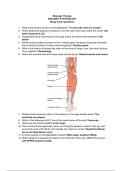
6. Which two muscles form the triceps surae muscle group? Gastrocnemius and soleus
7. Diastolic blood pressure refers to the pressure in the large arteries when? The
ventricles are relaxed
8. Which of the following is NOT one of the carpal bones of the wrist? Navicular
9. Where are the alveoli located? In the lungs
10.The common fibular (peroneal) nerve runs along the posterior aspect of the leg, and
around the neck of the fibula, then divides into what two nerves? Superficial fibular
nerve and deep fibular nerve
11.In which quadrant is the gallbladder located? Right upper quadrant (RUQ)
12.Which abdominal quadrant is located on the left side of the body, ABOVE the naval?
Left UPPER quadrant (LUQ)
, 13.What is the endocrine gland located below the hypothalamus in the brain that produces
multiple hormones including human growth hormone? Pituitary gland
14.What does the distal row of the carpals articulate with? Metacarpals
15.How many bones are in the appendicular skeletal system? 126
16.What is the primary function of the autonomic nervous system? Regulating involuntary
functions of the body
17.What is another name that the pituitary gland is frequently called? Hypophysis
18.Which cranial nerve innervates the sternocleidomastoid muscle and trapezius muscle?
Accessory nerve
19.Coronary arteries supply what structure with blood? The heart
20.What does pH refer to? Level of acidity or alkalinity
21.Which of the following is NOT an accessory organ of the gastrointestinal (GI) tract?
Kidney
22.What does the upper number of a blood pressure reading represent? Pressure in the
arteries when the ventricles contract
23.Which of the following is a small endocrine gland located in the brain? Pineal gland
24.Physiology is the study of? The normal processes and interactions within an
organism
25.What are the tiny air sacs in the lungs? Alveoli
26.Which of the following events occur when the “fight or flight” response is triggered?
Blood pressure, HR and muscle tension increase
Sympathetic Nervous System = Fight or flight (Adrenaline)
Parasympathetic Nervous System = Rest and digest (Autonomic)
27.Sexual arousal for males and females requires stimulation of which division of the
nervous system? Parasympathetic nervous system
28.What endocrine gland is located in the anterior superior mediastinum, behind the
sternum and in front of the heart? Thymus
29.Which of the following is NOT a primary characteristic of skeletal muscle tissue?
Conductivity
30.The ventricles contract during which phase of cardiac cycle? Ventricular systole
31.B cells are most important to which body system? Lymphatic/immune
32.What is the name of the valve that separates the small and large intestine, and prevents
backflow? Ileocecal valve
33.What is the organic molecule that is one of the body’s 3 sources of energy, and is
composed of a chain of amino acids? Protein
34.What is the structure at the end of the respiratory tree, where gas exchanges occurs?
Alveoli
35.The proximal row of the carpal bones articulates with the? Radius and articular disc
36.What term refers to the bronchi and their branching structures? Bronchial tree
37.Cranial nerve III controls movement of the eye, and is called the? Oculomotor nerve
38.What term means “taking in food and nutrients by mouth”? Ingestion
39.What is the gel-like material inside muscles cells called? Sarcoplasm
40.Acquired immunity provides what kind of protection for the body? Resistance to a
specific pathogen
ANATOMY & PHYSIOLOGY
Study Exam Questions
1. What is the primary function of the gallbladder? To store bile until it is needed
2. Which abdominal quadrant is located on the left side of the body, below the naval? Left
lower quadrant (LLQ)
3. Oxygenated blood returning from the lungs enters into which heart chamber? Left
atrium
4. Which endocrine gland is known as the “master gland” because it produces hormones
that control the function of other endocrine glands? Pituitary gland
5. What is the branch of biology that refers to the study of shape, size, form and structure
of an organism? Morphology
6. Which two muscles form the triceps surae muscle group? Gastrocnemius and soleus
7. Diastolic blood pressure refers to the pressure in the large arteries when? The
ventricles are relaxed
8. Which of the following is NOT one of the carpal bones of the wrist? Navicular
9. Where are the alveoli located? In the lungs
10.The common fibular (peroneal) nerve runs along the posterior aspect of the leg, and
around the neck of the fibula, then divides into what two nerves? Superficial fibular
nerve and deep fibular nerve
11.In which quadrant is the gallbladder located? Right upper quadrant (RUQ)
12.Which abdominal quadrant is located on the left side of the body, ABOVE the naval?
Left UPPER quadrant (LUQ)
, 13.What is the endocrine gland located below the hypothalamus in the brain that produces
multiple hormones including human growth hormone? Pituitary gland
14.What does the distal row of the carpals articulate with? Metacarpals
15.How many bones are in the appendicular skeletal system? 126
16.What is the primary function of the autonomic nervous system? Regulating involuntary
functions of the body
17.What is another name that the pituitary gland is frequently called? Hypophysis
18.Which cranial nerve innervates the sternocleidomastoid muscle and trapezius muscle?
Accessory nerve
19.Coronary arteries supply what structure with blood? The heart
20.What does pH refer to? Level of acidity or alkalinity
21.Which of the following is NOT an accessory organ of the gastrointestinal (GI) tract?
Kidney
22.What does the upper number of a blood pressure reading represent? Pressure in the
arteries when the ventricles contract
23.Which of the following is a small endocrine gland located in the brain? Pineal gland
24.Physiology is the study of? The normal processes and interactions within an
organism
25.What are the tiny air sacs in the lungs? Alveoli
26.Which of the following events occur when the “fight or flight” response is triggered?
Blood pressure, HR and muscle tension increase
Sympathetic Nervous System = Fight or flight (Adrenaline)
Parasympathetic Nervous System = Rest and digest (Autonomic)
27.Sexual arousal for males and females requires stimulation of which division of the
nervous system? Parasympathetic nervous system
28.What endocrine gland is located in the anterior superior mediastinum, behind the
sternum and in front of the heart? Thymus
29.Which of the following is NOT a primary characteristic of skeletal muscle tissue?
Conductivity
30.The ventricles contract during which phase of cardiac cycle? Ventricular systole
31.B cells are most important to which body system? Lymphatic/immune
32.What is the name of the valve that separates the small and large intestine, and prevents
backflow? Ileocecal valve
33.What is the organic molecule that is one of the body’s 3 sources of energy, and is
composed of a chain of amino acids? Protein
34.What is the structure at the end of the respiratory tree, where gas exchanges occurs?
Alveoli
35.The proximal row of the carpal bones articulates with the? Radius and articular disc
36.What term refers to the bronchi and their branching structures? Bronchial tree
37.Cranial nerve III controls movement of the eye, and is called the? Oculomotor nerve
38.What term means “taking in food and nutrients by mouth”? Ingestion
39.What is the gel-like material inside muscles cells called? Sarcoplasm
40.Acquired immunity provides what kind of protection for the body? Resistance to a
specific pathogen


