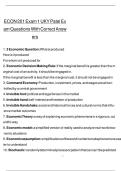
ECON 201 Exam 1 UKY Patel Ex ./ ./ ./ ./ ./ ./
am Questions With Correct Answ
./ ./ ./ ./
ers
1. 3 Economic Question: What is produced
./ ./ ./ ./ ./ ./
How is it produced ./ ./ ./
For whom is it produced for
./ ./ ./ ./ ./
2. Economic Decision Making Rule: If the marginal benefit is greater than the m ./ ./ ./ ./ ./ ./ ./ ./ ./ ./ ./ ./
arginal cost of an activity, it should be engaged in.
./ ./ ./ ./ ./ ./ ./ ./ ./
If the marginal benefit is less than the marginal cost, it should not be engaged in
./ ./ ./ ./ ./ ./ ./ ./ ./ ./ ./ ./ ./ ./ ./
3. Command Economy: Production, investment, prices, and wages are all con- ./ ./ ./ ./ ./ ./ ./ ./ ./
./ trolled by a central government ./ ./ ./ ./
4. Invisible foot: political and legal forces in the market ./ ./ ./ ./ ./ ./ ./ ./
5. Invisible hand: self-interest and freedom of production ./ ./ ./ ./ ./ ./
6. Invisible Handshake: social and historical forces and cultural norms that influ-
./ ./ ./ ./ ./ ./ ./ ./ ./ ./
./ ence market outcomes ./ ./
7. EconomicTheory: a way of explaining economic phenomena in a rigorous, sci ./ ./ ./ ./ ./ ./ ./ ./ ./ ./ ./
entific way ./
8. Economic model: a simplified version of reality used to analyze real-world eco- ./ ./ ./ ./ ./ ./ ./ ./ ./ ./ ./
./ nomic situations ./
9. Economic assumption: simplifications of the world in order to make phenomena eas ./ ./ ./ ./ ./ ./ ./ ./ ./ ./ ./
ier to understand
./ ./
10. Stochastic: randomly determined process or pattern that can can't be predicted ./ ./ ./ ./ ./ ./ ./ ./ ./ ./
am Questions With Correct Answ
./ ./ ./ ./
ers
1. 3 Economic Question: What is produced
./ ./ ./ ./ ./ ./
How is it produced ./ ./ ./
For whom is it produced for
./ ./ ./ ./ ./
2. Economic Decision Making Rule: If the marginal benefit is greater than the m ./ ./ ./ ./ ./ ./ ./ ./ ./ ./ ./ ./
arginal cost of an activity, it should be engaged in.
./ ./ ./ ./ ./ ./ ./ ./ ./
If the marginal benefit is less than the marginal cost, it should not be engaged in
./ ./ ./ ./ ./ ./ ./ ./ ./ ./ ./ ./ ./ ./ ./
3. Command Economy: Production, investment, prices, and wages are all con- ./ ./ ./ ./ ./ ./ ./ ./ ./
./ trolled by a central government ./ ./ ./ ./
4. Invisible foot: political and legal forces in the market ./ ./ ./ ./ ./ ./ ./ ./
5. Invisible hand: self-interest and freedom of production ./ ./ ./ ./ ./ ./
6. Invisible Handshake: social and historical forces and cultural norms that influ-
./ ./ ./ ./ ./ ./ ./ ./ ./ ./
./ ence market outcomes ./ ./
7. EconomicTheory: a way of explaining economic phenomena in a rigorous, sci ./ ./ ./ ./ ./ ./ ./ ./ ./ ./ ./
entific way ./
8. Economic model: a simplified version of reality used to analyze real-world eco- ./ ./ ./ ./ ./ ./ ./ ./ ./ ./ ./
./ nomic situations ./
9. Economic assumption: simplifications of the world in order to make phenomena eas ./ ./ ./ ./ ./ ./ ./ ./ ./ ./ ./
ier to understand
./ ./
10. Stochastic: randomly determined process or pattern that can can't be predicted ./ ./ ./ ./ ./ ./ ./ ./ ./ ./