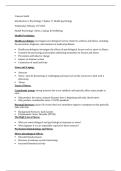
Vanessa Smith
Introduction to Psychology: Chapter 11 Health psychology
Wednesday February 19th,2025
Health Psychology: Stress, Coping, & Wellbeing:
Health Psychology:
Health psychology: investigates psychological factors related to wellness and illness, including
the prevention, diagnosis, and treatment of medical problems.
Health psychologists investigate the effects of psychological factors such as stress on illness.
Examine the psychological principles underlying treatments for disease and illness
Prevention and behavior change
Impact on immune system
Connection of mind and body
Stress and Coping:
Stressors
Stress- must be threatening or challenging and must lack all the resources to deal with it
effectively
Threat
Types of Stress:
Cataclysmic events: strong stressors that occur suddenly and typically affect many people at
once.
May produce less stress: (natural disasters have a beginning and end), shared stress
May produce considerable stress: COVID pandemic
Personal Stressors: major life events that have immediate negative consequences that generally
fade with time
Background Stressors: daily hassles
Posttraumatic Stress Disorder (PTSD)
The High Cost of Stress:
What are some biological and psychological responses to stress?
What happens if we are repeatedly exposed to these stressors?
Psychoneuroimmunology and Stress:
Direct physiological effects:
Elevated blood pressure
Decrease in immune system functioning
Increased hormonal activity
Introduction to Psychology: Chapter 11 Health psychology
Wednesday February 19th,2025
Health Psychology: Stress, Coping, & Wellbeing:
Health Psychology:
Health psychology: investigates psychological factors related to wellness and illness, including
the prevention, diagnosis, and treatment of medical problems.
Health psychologists investigate the effects of psychological factors such as stress on illness.
Examine the psychological principles underlying treatments for disease and illness
Prevention and behavior change
Impact on immune system
Connection of mind and body
Stress and Coping:
Stressors
Stress- must be threatening or challenging and must lack all the resources to deal with it
effectively
Threat
Types of Stress:
Cataclysmic events: strong stressors that occur suddenly and typically affect many people at
once.
May produce less stress: (natural disasters have a beginning and end), shared stress
May produce considerable stress: COVID pandemic
Personal Stressors: major life events that have immediate negative consequences that generally
fade with time
Background Stressors: daily hassles
Posttraumatic Stress Disorder (PTSD)
The High Cost of Stress:
What are some biological and psychological responses to stress?
What happens if we are repeatedly exposed to these stressors?
Psychoneuroimmunology and Stress:
Direct physiological effects:
Elevated blood pressure
Decrease in immune system functioning
Increased hormonal activity