

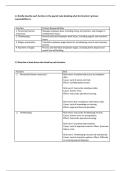
1.1 Briefly describe each function in the payroll cycle detailing what the function’s primary
responsibilities is.
Function Primary Responsibilities
1. Personnel (human Manage employee data, including hiring, termination, and changes in
resources) employment status.
2. Timekeeping Record and track employee work hours, including regular and overtime
hours.
3. Wages preparation Calculate employee wages based on timekeeping records and company
policies.
4. Payment of wages Process and distribute employee wages, including direct deposit and
payroll tax withholding.
1.2 Describe at least three risks faced by each function.
Function Risk
1. Personnel (human resources) Risk event: Unauthorized access to employee
data.
Cause: Lack of access controls.
Effect: Confidentiality breach.
Risk event: Inaccurate employee data.
Cause: Human error.
Effect: Inaccurate payroll processing.
Risk event: Non-compliance with labour laws.
Cause: Lack of knowledge or training.
Effect: Legal and financial penalties.
2. Timekeeping Risk event: Inaccurate timekeeping records.
Cause: Human error or manipulation.
Effect: Inaccurate payroll processing.
Risk event: Unauthorized overtime.
Cause: Lack of approval controls. Effect: Excessive
labour costs.
Risk event: Timekeeping records not maintained.
Cause: Lack of retention policies. Effect: Difficulty
in resolving payroll disputes.
, 3. Wages preparation Risk event: Calculation errors. Cause: Human
error or incorrect formulas.
Effect: Inaccurate payroll processing.
Risk event: Unauthorized changes to payroll data.
Cause: Lack of access controls. Effect: Inaccurate
payroll processing.
Risk event: Non-compliance with tax laws.
Cause: Lack of knowledge or training.
Effect: Legal and financial penalties.
4. Payment of wages Risk event: Unauthorized direct deposits.
Cause: Lack of access controls. Effect: Financial
loss.
Risk event: Payroll tax withholding errors.
Cause: Human error or incorrect formulas.
Effect: Legal and financial penalties.
Risk event: Payroll payments not made on time.
Cause: Lack of follow-up procedures.
Effect: Damage to employee relations and
potential legal penalties.
2.1 List six (6) planning steps you would need to undertake to properly plan the internal audit.
1. Understand the company's purchasing process: Review the company's purchasing policies,
procedures, and systems to understand how purchases are made.
2. Identify the audit scope and objectives: Determine the scope of the audit and the objectives to be
achieved.
3. Gather information about the buyers and farmers: Understand the relationships between the buyers
and farmers, and the extent of their discretionary power.
4. Review previous audit reports and identify potential risks: Review previous audit reports to identify
potential risks and areas of concern.
5. Develop an audit plan: Develop a detailed audit plan, including the audit procedures to be performed
and the resources required.
6. Determine the audit criteria: Determine the criteria against which the audit will be conducted,
including relevant laws, regulations, and industry standards.
2.2 Formulate four (4) audit objectives for the above internal audit.
responsibilities is.
Function Primary Responsibilities
1. Personnel (human Manage employee data, including hiring, termination, and changes in
resources) employment status.
2. Timekeeping Record and track employee work hours, including regular and overtime
hours.
3. Wages preparation Calculate employee wages based on timekeeping records and company
policies.
4. Payment of wages Process and distribute employee wages, including direct deposit and
payroll tax withholding.
1.2 Describe at least three risks faced by each function.
Function Risk
1. Personnel (human resources) Risk event: Unauthorized access to employee
data.
Cause: Lack of access controls.
Effect: Confidentiality breach.
Risk event: Inaccurate employee data.
Cause: Human error.
Effect: Inaccurate payroll processing.
Risk event: Non-compliance with labour laws.
Cause: Lack of knowledge or training.
Effect: Legal and financial penalties.
2. Timekeeping Risk event: Inaccurate timekeeping records.
Cause: Human error or manipulation.
Effect: Inaccurate payroll processing.
Risk event: Unauthorized overtime.
Cause: Lack of approval controls. Effect: Excessive
labour costs.
Risk event: Timekeeping records not maintained.
Cause: Lack of retention policies. Effect: Difficulty
in resolving payroll disputes.
, 3. Wages preparation Risk event: Calculation errors. Cause: Human
error or incorrect formulas.
Effect: Inaccurate payroll processing.
Risk event: Unauthorized changes to payroll data.
Cause: Lack of access controls. Effect: Inaccurate
payroll processing.
Risk event: Non-compliance with tax laws.
Cause: Lack of knowledge or training.
Effect: Legal and financial penalties.
4. Payment of wages Risk event: Unauthorized direct deposits.
Cause: Lack of access controls. Effect: Financial
loss.
Risk event: Payroll tax withholding errors.
Cause: Human error or incorrect formulas.
Effect: Legal and financial penalties.
Risk event: Payroll payments not made on time.
Cause: Lack of follow-up procedures.
Effect: Damage to employee relations and
potential legal penalties.
2.1 List six (6) planning steps you would need to undertake to properly plan the internal audit.
1. Understand the company's purchasing process: Review the company's purchasing policies,
procedures, and systems to understand how purchases are made.
2. Identify the audit scope and objectives: Determine the scope of the audit and the objectives to be
achieved.
3. Gather information about the buyers and farmers: Understand the relationships between the buyers
and farmers, and the extent of their discretionary power.
4. Review previous audit reports and identify potential risks: Review previous audit reports to identify
potential risks and areas of concern.
5. Develop an audit plan: Develop a detailed audit plan, including the audit procedures to be performed
and the resources required.
6. Determine the audit criteria: Determine the criteria against which the audit will be conducted,
including relevant laws, regulations, and industry standards.
2.2 Formulate four (4) audit objectives for the above internal audit.


