

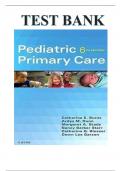
, Pediatric Primary Care 6th Edition Test Bankby Catherine E. Burns , Ardys M. Dunn , Margaret A. Brady
n n n n n n n n n n n n n n n n n n
, Nancy Barber Starr , Catherine G. Blosser , Dawn Lee Garzon Maaks
b n n n n n n n n n n n n n
Table of Content
n n
b Unit One: Pediatric Primary Care Foundations
n n n n n
1. Health Status of Children: Global and Local Perspectives
n n n n n n n
2. Child and Family Health Assessment
n n n n
3. Cultural Perspectives for Pediatric Primary Care
n n n n n
Unit Two: Management of Development
n n n n
4. Developmental Management in Pediatric Primary Care n n n n n
5. Developmental Management of Infants n n n
6. Developmental Management in Early Childhood n n n n
7. Developmental Management of School-Age Children n n n n
8. Developmental Management of Adolescents n n n
Unit Three: Approaches to Health Management in Pediatric Primary Care
n n n n n n n n n
9. Introduction to Functional Health Patterns and Health Promotion n n n n n n n
10. Breastfeeding
11. Nutrition
12. Elimination Patterns n
13. Physical Activity and Sports for Children and Adolescents
n n n n n n n
14. Sleep and Rest n n
15. Sexuality
16. Values and Beliefs n n
17. Role Relationships
n
18. Self-Perception Issues n
19. Coping and Stress Tolerance: Mental Health and Illness
n n n n n n n b b
20. Cognitive-PerceptualDisorders:Attention-Deficit/Hyperactivity Disorder,LearningProblems,Sensory n n n n n n
n Processing Disorder, Autism Spectrum Disorder, Blindness, and Deafness
n n n n n n n
,Unit Four: Approaches to Disease Management
n n n n n
21. Introduction to Disease Management n n n
22. Prescribing Medications in Pediatrics NEW! n n n n
23. Pediatric Pain Management
n n
24. Infectious Diseases and Immunizations
n n n b
25. Atopic and Rheumatic Disorders
n n n
26. Endocrine and Metabolic Disorders n n n
27. Hematologic Disorders n
28. Neurologic Disorders n
29. Eye Disorders
n
30. Ear Disorders
n
31. Cardiovascular Disorders n
32. Respiratory Disorders n
33. Gastrointestinal Disorders n
34. Dental and Oral Disorders
n n n
35. Genitourinary Disorders n
36. Gynecologic Disorders n
37. DermatologicDisorders n
38. Musculoskeletal Disorders n
39. Common Injuries n b
40. Perinatal Conditions n
41. Genetic Disorders n
42. Environmental Health Issues n nb
43. Complementary Medicine n
44. Strategies for Managing a Pediatric Health Care Practice
n n n n n n n
, Questions
1. A child who has attention-deficit/hyperactivity disorder (ADHD) has difficulty
n n n ID: 13348413834
n n n n n n
stopping activities to begin other activities at school. The primary care pediatric nurse
b
n n n n n n n n n n n n b
bpractitioner understandsthatthis isdue to difficulty with theself-regulation componentof
n n n n n n n n n n n n n
A. emotional control.
n n
B. flexibility. Correct
n n
b b
C. n inhibition.
D. n b problem-solving.
2. The primary care pediatric nurse practitioner cares for a preschool-age child
n n ID: 13348413832
n n n n n n n n n
who was exposed to drugs prenatally. The child bites other children and has tantrums when asked
n
b n
b n
b n
b n
b n
b n
b n
b n
b n
b n
b n
b n
b n
b b n
to stop but is able to state later why this behavior is wrong. This child most likely has a disorder of
n
b n
b b n b n b n b n n
b b n b n b n b n b n b n b n b n b n n
b b n n
b b n n
A. executive function. Correct
n n n
b b
B. nb information processing. n
C. sensory processing.
n n
D. social cognition.
n n
3. The primary care pediatric nurse practitioner uses the Neurodevelopmental
n n ID: 13348413842 n n n n n n n
Learning Framework to assess cognition and learning in an adolescent. When evaluating social
b
n n n n n n n n n n n n
cognition, the nurse practitioner will ask the adolescent
n
b n n n n n n n
A. aboutfriends and activities at school. Correct
n n n n n n b n b
B. ifbalancing sports andhomework is difficult.
n n n n n n n
C. tointerpret material from a pie chart.
n n n n n n n
D. torestate the content of something just read.
n n n n n n n n
4. The primary care pediatric nurse practitioner is evaluating a school-age child
n n n n n n n n n n ID: 13348413838
n
n who has been diagnosed with ADHD. Which plan will the nurse practitioner recommend asking the
n n n n n n n n n n n n n n b
b n child’s school about to help with academic performance?
n n n n n n n
A. n 504 Correct
B. n FAPE
C. n IDEA
D. nb IEP
5. The parent of a child diagnosed with ADHD tells the primary care pediatric
n n n n n n n n n n n n ID: 13348413844
n
n n n n n n n n n n n n n n n n n n
, Nancy Barber Starr , Catherine G. Blosser , Dawn Lee Garzon Maaks
b n n n n n n n n n n n n n
Table of Content
n n
b Unit One: Pediatric Primary Care Foundations
n n n n n
1. Health Status of Children: Global and Local Perspectives
n n n n n n n
2. Child and Family Health Assessment
n n n n
3. Cultural Perspectives for Pediatric Primary Care
n n n n n
Unit Two: Management of Development
n n n n
4. Developmental Management in Pediatric Primary Care n n n n n
5. Developmental Management of Infants n n n
6. Developmental Management in Early Childhood n n n n
7. Developmental Management of School-Age Children n n n n
8. Developmental Management of Adolescents n n n
Unit Three: Approaches to Health Management in Pediatric Primary Care
n n n n n n n n n
9. Introduction to Functional Health Patterns and Health Promotion n n n n n n n
10. Breastfeeding
11. Nutrition
12. Elimination Patterns n
13. Physical Activity and Sports for Children and Adolescents
n n n n n n n
14. Sleep and Rest n n
15. Sexuality
16. Values and Beliefs n n
17. Role Relationships
n
18. Self-Perception Issues n
19. Coping and Stress Tolerance: Mental Health and Illness
n n n n n n n b b
20. Cognitive-PerceptualDisorders:Attention-Deficit/Hyperactivity Disorder,LearningProblems,Sensory n n n n n n
n Processing Disorder, Autism Spectrum Disorder, Blindness, and Deafness
n n n n n n n
,Unit Four: Approaches to Disease Management
n n n n n
21. Introduction to Disease Management n n n
22. Prescribing Medications in Pediatrics NEW! n n n n
23. Pediatric Pain Management
n n
24. Infectious Diseases and Immunizations
n n n b
25. Atopic and Rheumatic Disorders
n n n
26. Endocrine and Metabolic Disorders n n n
27. Hematologic Disorders n
28. Neurologic Disorders n
29. Eye Disorders
n
30. Ear Disorders
n
31. Cardiovascular Disorders n
32. Respiratory Disorders n
33. Gastrointestinal Disorders n
34. Dental and Oral Disorders
n n n
35. Genitourinary Disorders n
36. Gynecologic Disorders n
37. DermatologicDisorders n
38. Musculoskeletal Disorders n
39. Common Injuries n b
40. Perinatal Conditions n
41. Genetic Disorders n
42. Environmental Health Issues n nb
43. Complementary Medicine n
44. Strategies for Managing a Pediatric Health Care Practice
n n n n n n n
, Questions
1. A child who has attention-deficit/hyperactivity disorder (ADHD) has difficulty
n n n ID: 13348413834
n n n n n n
stopping activities to begin other activities at school. The primary care pediatric nurse
b
n n n n n n n n n n n n b
bpractitioner understandsthatthis isdue to difficulty with theself-regulation componentof
n n n n n n n n n n n n n
A. emotional control.
n n
B. flexibility. Correct
n n
b b
C. n inhibition.
D. n b problem-solving.
2. The primary care pediatric nurse practitioner cares for a preschool-age child
n n ID: 13348413832
n n n n n n n n n
who was exposed to drugs prenatally. The child bites other children and has tantrums when asked
n
b n
b n
b n
b n
b n
b n
b n
b n
b n
b n
b n
b n
b n
b b n
to stop but is able to state later why this behavior is wrong. This child most likely has a disorder of
n
b n
b b n b n b n b n n
b b n b n b n b n b n b n b n b n b n n
b b n n
b b n n
A. executive function. Correct
n n n
b b
B. nb information processing. n
C. sensory processing.
n n
D. social cognition.
n n
3. The primary care pediatric nurse practitioner uses the Neurodevelopmental
n n ID: 13348413842 n n n n n n n
Learning Framework to assess cognition and learning in an adolescent. When evaluating social
b
n n n n n n n n n n n n
cognition, the nurse practitioner will ask the adolescent
n
b n n n n n n n
A. aboutfriends and activities at school. Correct
n n n n n n b n b
B. ifbalancing sports andhomework is difficult.
n n n n n n n
C. tointerpret material from a pie chart.
n n n n n n n
D. torestate the content of something just read.
n n n n n n n n
4. The primary care pediatric nurse practitioner is evaluating a school-age child
n n n n n n n n n n ID: 13348413838
n
n who has been diagnosed with ADHD. Which plan will the nurse practitioner recommend asking the
n n n n n n n n n n n n n n b
b n child’s school about to help with academic performance?
n n n n n n n
A. n 504 Correct
B. n FAPE
C. n IDEA
D. nb IEP
5. The parent of a child diagnosed with ADHD tells the primary care pediatric
n n n n n n n n n n n n ID: 13348413844
n


