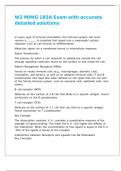
W2 MIMG 185A Exam with accurate |!! |!! |!! |!! |!! |!!
detailed solutions |!!
In every type of immune stimulation, the immune system cell must
|!! |!! |!! |!! |!! |!! |!! |!! |!! |!! |!!
receive a _______ to translate that signal into a meaningful cellular
|!! |!! |!! |!! |!! |!! |!! |!! |!! |!! |!!
response such as cell division or differentiation. |!! |!! |!! |!! |!! |!!
Molecular signal via a membrane bound or intracellular response |!! |!! |!! |!! |!! |!! |!! |!!
Signal Transduction |!!
The process by which a cell responds to substances outside the cell
|!! |!! |!! |!! |!! |!! |!! |!! |!! |!! |!! |!!
through signaling molecules found on the surface of and inside the cell.
|!! |!! |!! |!! |!! |!! |!! |!! |!! |!! |!!
Pattern Recognition Receptors (PRRs) |!! |!! |!!
Found on innate immune cells (e.g., macrophages, dendritic cells,
|!! |!! |!! |!! |!! |!! |!! |!! |!!
neutrophils, and others), as well as on adaptive immune cells (T and B |!! |!! |!! |!! |!! |!! |!! |!! |!! |!! |!! |!! |!!
lymphocytes) and have also been defined on cell types that are not part |!! |!! |!! |!! |!! |!! |!! |!! |!! |!! |!! |!! |!!
of the formal immune system, such as neuronal cells, epithelial cells, and
|!! |!! |!! |!! |!! |!! |!! |!! |!! |!! |!! |!!
others.
B cell receptor (BCR)
|!! |!! |!!
Molecule on the surface of a B cell that binds to a specific antigen. Found
|!! |!! |!! |!! |!! |!! |!! |!! |!! |!! |!! |!! |!! |!! |!!
exclusively on the B Lymphocytes. |!! |!! |!! |!!
T cell receptor (TCR)
|!! |!! |!!
Molecule on the surface of a T cell that can bind to a specific antigen.
|!! |!! |!! |!! |!! |!! |!! |!! |!! |!! |!! |!! |!! |!! |!!
Found exclusively on T Lymphocytes.
|!! |!! |!! |!!
Key Concept |!!
The dissociation constant, K d , provides a quantitative measure of the
|!! |!! |!! |!! |!! |!! |!! |!! |!! |!! |!! |!!
strength of ligand binding. The lower the K d , the higher the affinity of
|!! |!! |!! |!! |!! |!! |!! |!! |!! |!! |!! |!! |!! |!! |!!
the interaction. When the concentration of free ligand is equal to the K d ,
|!! |!! |!! |!! |!! |!! |!! |!! |!! |!! |!! |!! |!! |!!
50% of the ligand is bound to the receptor.
|!! |!! |!! |!! |!! |!! |!! |!! |!!
Interactions between Receptors and Ligands Can Be Multivalent |!! |!! |!! |!! |!! |!! |!!
Key Concepts |!!
, -Multivalent binding interactions have increased avidity compared with |!! |!! |!! |!! |!! |!! |!! |!!
monovalent interactions, leading to an increased time of occupancy of the |!! |!! |!! |!! |!! |!! |!! |!! |!! |!! |!!
ligand on the receptor. |!! |!! |!!
-Even monovalent receptors can form multivalent clusters when interacting
|!! |!! |!! |!! |!! |!! |!! |!!
with a membrane-bound multivalent ligand.
|!! |!! |!! |!! |!!
Cytokine receptors are made up of two protein chains ______ & _______
|!! |!! |!! |!! |!! |!! |!! |!! |!! |!! |!!
Alpha (a) Chains and Beta (B) Chains|!! |!! |!! |!! |!! |!!
Class 1 Cytokine Receptors |!! |!! |!!
Alpha (a) Chains bind Beta (B) Chains to form receptors for interleukins 3
|!! |!! |!! |!! |!! |!! |!! |!! |!! |!! |!! |!! |!!
and 5 (IL-3 and IL-5) and granulocyte-macrophage colony-stimulating
|!! |!! |!! |!! |!! |!! |!! |!!
factor (GM-CSF). |!!
The ____ chain can bind multiple cytokines, depending on the ____ chain
|!! |!! |!! |!! |!! |!! |!! |!! |!! |!! |!! |!!
with which it is paired.|!! |!! |!! |!!
Beta & alpha |!! |!!
Key Concept: Combinatorial Expression of Protein Chains Can Increase
|!! |!! |!! |!! |!! |!! |!! |!! |!!
Ligand-Binding Diversity |!!
• By using different combinations of protein chains, the immune system
|!! |!! |!! |!! |!! |!! |!! |!! |!! |!! |!!
can increase the variety of different receptor binding sites
|!! |!! |!! |!! |!! |!! |!! |!!
Key Concepts: Adaptive Immune Receptor Genes Undergo Rearrangement
|!! |!! |!! |!! |!! |!! |!! |!!
in Individual Lymphocytes
|!! |!!
• The number of different receptors in the adaptive immune system is
|!! |!! |!! |!! |!! |!! |!! |!! |!! |!! |!! |!!
strikingly large and measured in billions, as compared with the innate
|!! |!! |!! |!! |!! |!! |!! |!! |!! |!! |!!
immune receptor repertoire that numbers about 100. |!! |!! |!! |!! |!! |!!
• The diversity in the adaptive receptor repertoire is achieved by the
|!! |!! |!! |!! |!! |!! |!! |!! |!! |!! |!! |!!
unique strategy of recombination between DNA sequences encoding small
|!! |!! |!! |!! |!! |!! |!! |!! |!!
segments of receptor chains that are recombined in different ways in |!! |!! |!! |!! |!! |!! |!! |!! |!! |!! |!!
individual cells. |!!
Key Concepts: Many Immune Receptors Include Immunoglobulin Domains
|!! |!! |!! |!! |!! |!! |!!
• The immunoglobulin superfamily of proteins includes BCRs, TCRs,
|!! |!! |!! |!! |!! |!! |!! |!! |!!
adhesion molecules, and other receptors that function in the immune
|!! |!! |!! |!! |!! |!! |!! |!! |!! |!!
system. The immunoglobulin fold is composed of a pair of p sheets
|!! |!! |!! |!! |!! |!! |!! |!! |!! |!! |!! |!!
formed from p strands, which are connected by loops that define the
|!! |!! |!! |!! |!! |!! |!! |!! |!! |!! |!! |!!
protein-binding specificity. |!!
detailed solutions |!!
In every type of immune stimulation, the immune system cell must
|!! |!! |!! |!! |!! |!! |!! |!! |!! |!! |!!
receive a _______ to translate that signal into a meaningful cellular
|!! |!! |!! |!! |!! |!! |!! |!! |!! |!! |!!
response such as cell division or differentiation. |!! |!! |!! |!! |!! |!!
Molecular signal via a membrane bound or intracellular response |!! |!! |!! |!! |!! |!! |!! |!!
Signal Transduction |!!
The process by which a cell responds to substances outside the cell
|!! |!! |!! |!! |!! |!! |!! |!! |!! |!! |!! |!!
through signaling molecules found on the surface of and inside the cell.
|!! |!! |!! |!! |!! |!! |!! |!! |!! |!! |!!
Pattern Recognition Receptors (PRRs) |!! |!! |!!
Found on innate immune cells (e.g., macrophages, dendritic cells,
|!! |!! |!! |!! |!! |!! |!! |!! |!!
neutrophils, and others), as well as on adaptive immune cells (T and B |!! |!! |!! |!! |!! |!! |!! |!! |!! |!! |!! |!! |!!
lymphocytes) and have also been defined on cell types that are not part |!! |!! |!! |!! |!! |!! |!! |!! |!! |!! |!! |!! |!!
of the formal immune system, such as neuronal cells, epithelial cells, and
|!! |!! |!! |!! |!! |!! |!! |!! |!! |!! |!! |!!
others.
B cell receptor (BCR)
|!! |!! |!!
Molecule on the surface of a B cell that binds to a specific antigen. Found
|!! |!! |!! |!! |!! |!! |!! |!! |!! |!! |!! |!! |!! |!! |!!
exclusively on the B Lymphocytes. |!! |!! |!! |!!
T cell receptor (TCR)
|!! |!! |!!
Molecule on the surface of a T cell that can bind to a specific antigen.
|!! |!! |!! |!! |!! |!! |!! |!! |!! |!! |!! |!! |!! |!! |!!
Found exclusively on T Lymphocytes.
|!! |!! |!! |!!
Key Concept |!!
The dissociation constant, K d , provides a quantitative measure of the
|!! |!! |!! |!! |!! |!! |!! |!! |!! |!! |!! |!!
strength of ligand binding. The lower the K d , the higher the affinity of
|!! |!! |!! |!! |!! |!! |!! |!! |!! |!! |!! |!! |!! |!! |!!
the interaction. When the concentration of free ligand is equal to the K d ,
|!! |!! |!! |!! |!! |!! |!! |!! |!! |!! |!! |!! |!! |!!
50% of the ligand is bound to the receptor.
|!! |!! |!! |!! |!! |!! |!! |!! |!!
Interactions between Receptors and Ligands Can Be Multivalent |!! |!! |!! |!! |!! |!! |!!
Key Concepts |!!
, -Multivalent binding interactions have increased avidity compared with |!! |!! |!! |!! |!! |!! |!! |!!
monovalent interactions, leading to an increased time of occupancy of the |!! |!! |!! |!! |!! |!! |!! |!! |!! |!! |!!
ligand on the receptor. |!! |!! |!!
-Even monovalent receptors can form multivalent clusters when interacting
|!! |!! |!! |!! |!! |!! |!! |!!
with a membrane-bound multivalent ligand.
|!! |!! |!! |!! |!!
Cytokine receptors are made up of two protein chains ______ & _______
|!! |!! |!! |!! |!! |!! |!! |!! |!! |!! |!!
Alpha (a) Chains and Beta (B) Chains|!! |!! |!! |!! |!! |!!
Class 1 Cytokine Receptors |!! |!! |!!
Alpha (a) Chains bind Beta (B) Chains to form receptors for interleukins 3
|!! |!! |!! |!! |!! |!! |!! |!! |!! |!! |!! |!! |!!
and 5 (IL-3 and IL-5) and granulocyte-macrophage colony-stimulating
|!! |!! |!! |!! |!! |!! |!! |!!
factor (GM-CSF). |!!
The ____ chain can bind multiple cytokines, depending on the ____ chain
|!! |!! |!! |!! |!! |!! |!! |!! |!! |!! |!! |!!
with which it is paired.|!! |!! |!! |!!
Beta & alpha |!! |!!
Key Concept: Combinatorial Expression of Protein Chains Can Increase
|!! |!! |!! |!! |!! |!! |!! |!! |!!
Ligand-Binding Diversity |!!
• By using different combinations of protein chains, the immune system
|!! |!! |!! |!! |!! |!! |!! |!! |!! |!! |!!
can increase the variety of different receptor binding sites
|!! |!! |!! |!! |!! |!! |!! |!!
Key Concepts: Adaptive Immune Receptor Genes Undergo Rearrangement
|!! |!! |!! |!! |!! |!! |!! |!!
in Individual Lymphocytes
|!! |!!
• The number of different receptors in the adaptive immune system is
|!! |!! |!! |!! |!! |!! |!! |!! |!! |!! |!! |!!
strikingly large and measured in billions, as compared with the innate
|!! |!! |!! |!! |!! |!! |!! |!! |!! |!! |!!
immune receptor repertoire that numbers about 100. |!! |!! |!! |!! |!! |!!
• The diversity in the adaptive receptor repertoire is achieved by the
|!! |!! |!! |!! |!! |!! |!! |!! |!! |!! |!! |!!
unique strategy of recombination between DNA sequences encoding small
|!! |!! |!! |!! |!! |!! |!! |!! |!!
segments of receptor chains that are recombined in different ways in |!! |!! |!! |!! |!! |!! |!! |!! |!! |!! |!!
individual cells. |!!
Key Concepts: Many Immune Receptors Include Immunoglobulin Domains
|!! |!! |!! |!! |!! |!! |!!
• The immunoglobulin superfamily of proteins includes BCRs, TCRs,
|!! |!! |!! |!! |!! |!! |!! |!! |!!
adhesion molecules, and other receptors that function in the immune
|!! |!! |!! |!! |!! |!! |!! |!! |!! |!!
system. The immunoglobulin fold is composed of a pair of p sheets
|!! |!! |!! |!! |!! |!! |!! |!! |!! |!! |!! |!!
formed from p strands, which are connected by loops that define the
|!! |!! |!! |!! |!! |!! |!! |!! |!! |!! |!! |!!
protein-binding specificity. |!!