8/8/25, 8:13 PM WILD 3600 Exam 1
WILD 3600 Exam 1 COMPLETE QUESTIONS AND
ACCURATE DETAILED ANSWERS \VERIFIED 100%
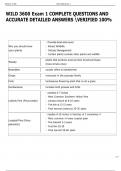
1. Provide food and cover
Why you should know 2. Attract Wildlife
your plants 3. Dictate Management
4. Certain plants exclude other plants and wildlife
plants that produce wood as their structural tissue
Woody
(trees shrubs vines)
Brambles usually refers to blackberries
Grass monocots in the poaceae family
Forb herbaceous flowering plant that is not a grass
Herbaceous includes both grasses and forbs
1. needles 4-7 inches
2. Most Common Southern Yellow Pine
Loblolly Pine (Pinus taeda) 3. canopy closure at 8-10 years
4. First thin at 12-15 years
5. Final harvest (clearcut) 25-35 years
1. needles 8-18 inches in fascicles of 3 sometimes 4
2. More common in lower coastal plain
Longleaf Pine (Pinus
3. Fire tolerant 2-3 years
palustris)
4. First thin 20-30
5. Final harvest 50-60 years
1/17
,8/8/25, 8:13 PM WILD 3600 Exam 1
1. mix of native and exotic species
2. trifoliate, single seeds, no pods
3. Native and important seed producers for turkeys
Lespedezas 4. Deer forage on the plant
5. worst exotics: sericea/chinese lespedezas, bicolor
lespedeza
6. Quail cannot digest seeds
1. butterfly pea, spurred butterfly pea, milk pea
2. Trifoliate, multiple seeds in pods
Native Peas
3. Important seed producers for quail/turkeys
4. Deer forage on the plant
1. holy grail of southeastern wildlife plants
2. cover, seeds, and high quality green forage all in
Annual Ragweed
one
3. promoted by disking during Nov-Dec
1. Important seed producer for turkeys/quail
2. 10-15 pairs of small narrow leaflets respond to touch
Partridge Pea by folding up
3. Multiple seeds in flatish pods
4. Promoted by disking in Nov-Dec
1. Trifoliate leaves
2. multiple seeds, linked together but no pods
Beggars Lice
3. Another important seed producer for game birds
4. Moderate deer forage
2/17
, 8/8/25, 8:13 PM WILD 3600 Exam 1
1. Leaves differ by species, typically serrated margins
2. thorns
Blackberry/Brambles 3. excellent cover
4. fruit in early summer, eaten by numerous species
5. leaves are preferred deer forage
1. round heart shaped leaves serrated margins
2. Vine
Muscadine
3. Fruit in late summer/early fall
4. Leaves moderate deer forage
1. long lance shaped leaves
2. purple/red stalk purple berries
Pokeweed 3. fruit/seeds important to quail/turkey/dove
4. Leaves high quality deer forage
5. Newly disturbed sites
1. Oval, paired leaves
2. Pseudo-evergreen
3. likes to take over hardwoods, especially in moist
Chinese Privet
areas
4. deer eat leaves
5. various wildlife eat berries
1. Slender leaves 1-4ft long
2. Flowers are silvery-white (spring-early summer)
Cogongrass
3. Super invasive excludes all other plants
4. burns hot
1. can completely take over areas even kill trees
2. ladder fuel
Japanese Climbing fern
3. Nothing eats it
4. actually vine
1. prolific seed head some specie shave thorns/spikes
2. common agricultural pest
Pigweed
3. stimulated by summer disking
4. some species roundup resistant
3/17
WILD 3600 Exam 1 COMPLETE QUESTIONS AND
ACCURATE DETAILED ANSWERS \VERIFIED 100%
1. Provide food and cover
Why you should know 2. Attract Wildlife
your plants 3. Dictate Management
4. Certain plants exclude other plants and wildlife
plants that produce wood as their structural tissue
Woody
(trees shrubs vines)
Brambles usually refers to blackberries
Grass monocots in the poaceae family
Forb herbaceous flowering plant that is not a grass
Herbaceous includes both grasses and forbs
1. needles 4-7 inches
2. Most Common Southern Yellow Pine
Loblolly Pine (Pinus taeda) 3. canopy closure at 8-10 years
4. First thin at 12-15 years
5. Final harvest (clearcut) 25-35 years
1. needles 8-18 inches in fascicles of 3 sometimes 4
2. More common in lower coastal plain
Longleaf Pine (Pinus
3. Fire tolerant 2-3 years
palustris)
4. First thin 20-30
5. Final harvest 50-60 years
1/17
,8/8/25, 8:13 PM WILD 3600 Exam 1
1. mix of native and exotic species
2. trifoliate, single seeds, no pods
3. Native and important seed producers for turkeys
Lespedezas 4. Deer forage on the plant
5. worst exotics: sericea/chinese lespedezas, bicolor
lespedeza
6. Quail cannot digest seeds
1. butterfly pea, spurred butterfly pea, milk pea
2. Trifoliate, multiple seeds in pods
Native Peas
3. Important seed producers for quail/turkeys
4. Deer forage on the plant
1. holy grail of southeastern wildlife plants
2. cover, seeds, and high quality green forage all in
Annual Ragweed
one
3. promoted by disking during Nov-Dec
1. Important seed producer for turkeys/quail
2. 10-15 pairs of small narrow leaflets respond to touch
Partridge Pea by folding up
3. Multiple seeds in flatish pods
4. Promoted by disking in Nov-Dec
1. Trifoliate leaves
2. multiple seeds, linked together but no pods
Beggars Lice
3. Another important seed producer for game birds
4. Moderate deer forage
2/17
, 8/8/25, 8:13 PM WILD 3600 Exam 1
1. Leaves differ by species, typically serrated margins
2. thorns
Blackberry/Brambles 3. excellent cover
4. fruit in early summer, eaten by numerous species
5. leaves are preferred deer forage
1. round heart shaped leaves serrated margins
2. Vine
Muscadine
3. Fruit in late summer/early fall
4. Leaves moderate deer forage
1. long lance shaped leaves
2. purple/red stalk purple berries
Pokeweed 3. fruit/seeds important to quail/turkey/dove
4. Leaves high quality deer forage
5. Newly disturbed sites
1. Oval, paired leaves
2. Pseudo-evergreen
3. likes to take over hardwoods, especially in moist
Chinese Privet
areas
4. deer eat leaves
5. various wildlife eat berries
1. Slender leaves 1-4ft long
2. Flowers are silvery-white (spring-early summer)
Cogongrass
3. Super invasive excludes all other plants
4. burns hot
1. can completely take over areas even kill trees
2. ladder fuel
Japanese Climbing fern
3. Nothing eats it
4. actually vine
1. prolific seed head some specie shave thorns/spikes
2. common agricultural pest
Pigweed
3. stimulated by summer disking
4. some species roundup resistant
3/17