

Chapter 10
Food Safety Management Systems
− Food Safety Management Systems
A group of practices and procedures intended to prevent foodborne illness
o Personal Hygiene
o Supplier selection and specification
o Cleaning and sanitizing
o Pest control
• Active Management Control
1. Identify Risks
2. Monitor Critical Activities
3. Take Corrective Action
4. Oversee Policies and Procedures
5. Train and Retrain Employees
6. Re-evaluate the System periodically
− The FDA’s Public Health Interventions
• The FDA food code provides five specific recommendations for controlling the
common risk factors for foodborne illness
o Demonstration of knowledge
o Staff health controls
o Controlling hands as a vehicle of contamination
o Time and temperature parameters for controlling pathogens
o Consumer advisories
− The Seven HACCP Principles
• A HACCP System is desgined to identify and reduce hazards within the flow of food
o Principles:
1. Conduct a hazard analysis
2. Determine critical control points
3. Establish critical limits
4. Establish monitoring procedures
5. Identify corrective action
6. Verify the system works
7. Establish procedures for record keeping and documentation
− Crisis Management
• First: Create a crisis management team
• Next: Prepare for a crisis
o Create an emergency contact list
o Develop a crisis-communication plan
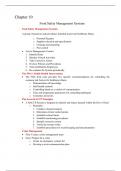
Food Safety Management Systems
− Food Safety Management Systems
A group of practices and procedures intended to prevent foodborne illness
o Personal Hygiene
o Supplier selection and specification
o Cleaning and sanitizing
o Pest control
• Active Management Control
1. Identify Risks
2. Monitor Critical Activities
3. Take Corrective Action
4. Oversee Policies and Procedures
5. Train and Retrain Employees
6. Re-evaluate the System periodically
− The FDA’s Public Health Interventions
• The FDA food code provides five specific recommendations for controlling the
common risk factors for foodborne illness
o Demonstration of knowledge
o Staff health controls
o Controlling hands as a vehicle of contamination
o Time and temperature parameters for controlling pathogens
o Consumer advisories
− The Seven HACCP Principles
• A HACCP System is desgined to identify and reduce hazards within the flow of food
o Principles:
1. Conduct a hazard analysis
2. Determine critical control points
3. Establish critical limits
4. Establish monitoring procedures
5. Identify corrective action
6. Verify the system works
7. Establish procedures for record keeping and documentation
− Crisis Management
• First: Create a crisis management team
• Next: Prepare for a crisis
o Create an emergency contact list
o Develop a crisis-communication plan


