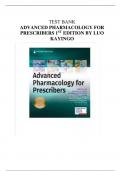
TEST BANK
ADVANCED PHARMACOLOGY FOR
PRESCRIBERS 1ST EDITION BY LUO
KAYINGO
, Table of Contents
Chapter 1: An Introduction to Evidence-Based Clinical Practice Guidelines ............................................. 3
Chapter 2: Pharmacokinetics /Chapter3: Pharmacodynamics .................................................................... 13
Chapter4: Pharmacogenetics and Pharmacogenomics................................................................................ 25
Chapter 5: Pharmacology Across the Life Span ......................................................................................... 30
Chapter 6: Drug-Therapy Prescribing in Special Populations .................................................................... 36
Chapter 7: Drug Development and Approval ............................................................................................. 45
Chapter 8-Chapter 10: Foundations of Prescription Writing Chapter 9: ResponsibleControlled-Substance
Prescribing Chapter 10: Antibiotic Stewardship ......................................................................................... 51
Chapter 11: Applied Calculations for Prescribing...................................................................................... 58
Chapter 12-: Promoting Adherence With Pharmacotherapy II: System-Specific and Patient-Focused
Prescribing Chapter 13: Pharmacotherapy for Ear, Nose, Mouth, andThroat Conditions /Chapter 14:
Pharmacotherapy for Eye Conditions ......................................................................................................... 67
Chapter 15: Pharmacotherapy for Skin Conditions .................................................................................... 74
Chapter 16: Pharmacotherapy for Neurologic Conditions ......................................................................... 81
Chapter 17: Pharmacotherapy for Cardiovascular Conditions ................................................................... 94
Chapter 18: Pharmacotherapy for Respiratory Conditions ...................................................................... 106
Chapter 19: Pharmacotherapy for Gastrointestinal Conditions and Conditions RequiringNutritional
Support ...................................................................................................................................................... 117
Chapter 20: Pharmacotherapy for Genitourinary Conditions ................................................................... 128
Chapter 21: Pharmacotherapy for Renal, Acid–Base, Fluid, and Electrolyte Disorders ......................... 133
Chapter 22: Pharmacotherapy for Musculoskeletal and Rheumatologic Conditions .............................. 146
Chapter 23: Therapeutic Applications of Immunology and Vaccines ..................................................... 158
Chapter 24: Pharmacotherapy for Endocrine Disorders ........................................................................... 163
Chapter 25: Pharmacotherapy for Hematologic Disorders....................................................................... 174
Chapter 26: Hematology/Oncology and Supportive Care for the Nononcologist.................................... 190
Chapter 27: Pharmacotherapy Related to Women’s Health Conditions .................................................. 196
Chapter 28: Pharmacotherapy Related to Men’s Health Conditions ....................................................... 211
Chapter 29: Pharmacotherapy Related to Transgender Care ................................................................... 217
Chapter 30: Antimicrobial Pharmacotherapy ........................................................................................... 224
Chapter 31: Antiretroviral Pharmacotherapy ............................................................................................ 235
Chapter 32: Psychopharmacology and Integrative Health: Combined Treatment ofPsychiatric and
Neurocognitive Conditions........................................................................................................................ 247
Chapter 33: Pharmacotherapy for Pain Management ............................................................................... 257
Chapter 34: Substance Use Disorder III: Health Promotion and Maintenance........................................ 267
Chapter 35: Over-the-Counter Medications ............................................................................................. 283
Chapter 36: Pharmacotherapy for Obesity................................................................................................ 291
,Chapter 1: An Introduction to Evidence-Based Clinical Practice Guidelines
MULTIPLE CHOICE
• What is the primary purpose of the nursing assessment?
A. Identifying underlying pathologic conditions
B. Assisting the physician in identifying medical conditions
C. Determining the patients mental status
D. Exploring patient responses to health problems
ANS: D
A nursing assessment is done to identify the patients response to health
problems. During the nursing assessment phase, a comprehensive
information base is developed through a physical examination, nursing
history, medication history, and professional observation. Identifying
underlying pathologic conditions and assisting the physician in identifying
medical conditions is not part of the nursing process. Determining the
patients mental status is one part of the nursing assessment, but it is not
the primary purpose.
DIF: Cognitive Level: Comprehension
REF: dm 36 OBJ: 1 | 3 TOP: Nursing
Process Step: Assessment
MSC: NCLEX Client Needs Category: Health Promotion and Maintenance
• What is the basis of the NANDA I taxonomy?
A. Functional health patterns
B. Human response patterns
C. Basic human needs
D. Pathophysiologic needs
ANS: B
The NANDA I taxonomy identifies human response patterns.
Functional components of health patterns are limited to activity, fluid
volume, nutrition, self care, and sensory perception. Basic human needs
comprise less than merely health patterns. Pathophysiologic needs are
not part of the scope of NANDA I.
, DIF: Cognitive Level: Knowledge
REF: pp. 37-38 OBJ: 5 TOP:
Nursing Process Step: Diagnosis
MSC: NCLEX Client Needs Category: Physiological Integrity
• Which task is included in the assessment step of the nursing process?
A. Establishing patient goals/outcomes
B. Implementing the nursing care plan (NCP)
C. Measuring goal/outcome achievement
D. Collecting and communicating data
ANS: D
Data are collected and communicated in the assessment phase of the
nursing process. Establishing goals is the function of planning.
Implementing the NCP is the function of implementation. Measuring
outcome achievement is the function of evaluation.
DIF: Cognitive Level: Comprehension
REF: dm 36 OBJ: 2 | 3 TOP: Nursing
Process Step: Assessment
MSC: NCLEX Client Needs Category: Health Promotion and Maintenance
• Which statement regarding nursing diagnoses is accurate?
a. Nursing diagnoses remain the same for as long as the disease is present.
b. Nursing diagnoses are written to identify disease states.
c. Nursing diagnoses describe patient problems that nurses treat.
d. Nursing diagnoses identify causes related to illness.
ANS: C
Diagnostic statements identify problems a nurse is independently able to
treat within the scope of professional practice. Nursing diagnoses vary
with the changing condition of the patient. The response patterns are
unique to the patient and are not disease specific. Nursing diagnoses
describe the patients human response pattern.
DIF: Cognitive Level: Comprehension
ADVANCED PHARMACOLOGY FOR
PRESCRIBERS 1ST EDITION BY LUO
KAYINGO
, Table of Contents
Chapter 1: An Introduction to Evidence-Based Clinical Practice Guidelines ............................................. 3
Chapter 2: Pharmacokinetics /Chapter3: Pharmacodynamics .................................................................... 13
Chapter4: Pharmacogenetics and Pharmacogenomics................................................................................ 25
Chapter 5: Pharmacology Across the Life Span ......................................................................................... 30
Chapter 6: Drug-Therapy Prescribing in Special Populations .................................................................... 36
Chapter 7: Drug Development and Approval ............................................................................................. 45
Chapter 8-Chapter 10: Foundations of Prescription Writing Chapter 9: ResponsibleControlled-Substance
Prescribing Chapter 10: Antibiotic Stewardship ......................................................................................... 51
Chapter 11: Applied Calculations for Prescribing...................................................................................... 58
Chapter 12-: Promoting Adherence With Pharmacotherapy II: System-Specific and Patient-Focused
Prescribing Chapter 13: Pharmacotherapy for Ear, Nose, Mouth, andThroat Conditions /Chapter 14:
Pharmacotherapy for Eye Conditions ......................................................................................................... 67
Chapter 15: Pharmacotherapy for Skin Conditions .................................................................................... 74
Chapter 16: Pharmacotherapy for Neurologic Conditions ......................................................................... 81
Chapter 17: Pharmacotherapy for Cardiovascular Conditions ................................................................... 94
Chapter 18: Pharmacotherapy for Respiratory Conditions ...................................................................... 106
Chapter 19: Pharmacotherapy for Gastrointestinal Conditions and Conditions RequiringNutritional
Support ...................................................................................................................................................... 117
Chapter 20: Pharmacotherapy for Genitourinary Conditions ................................................................... 128
Chapter 21: Pharmacotherapy for Renal, Acid–Base, Fluid, and Electrolyte Disorders ......................... 133
Chapter 22: Pharmacotherapy for Musculoskeletal and Rheumatologic Conditions .............................. 146
Chapter 23: Therapeutic Applications of Immunology and Vaccines ..................................................... 158
Chapter 24: Pharmacotherapy for Endocrine Disorders ........................................................................... 163
Chapter 25: Pharmacotherapy for Hematologic Disorders....................................................................... 174
Chapter 26: Hematology/Oncology and Supportive Care for the Nononcologist.................................... 190
Chapter 27: Pharmacotherapy Related to Women’s Health Conditions .................................................. 196
Chapter 28: Pharmacotherapy Related to Men’s Health Conditions ....................................................... 211
Chapter 29: Pharmacotherapy Related to Transgender Care ................................................................... 217
Chapter 30: Antimicrobial Pharmacotherapy ........................................................................................... 224
Chapter 31: Antiretroviral Pharmacotherapy ............................................................................................ 235
Chapter 32: Psychopharmacology and Integrative Health: Combined Treatment ofPsychiatric and
Neurocognitive Conditions........................................................................................................................ 247
Chapter 33: Pharmacotherapy for Pain Management ............................................................................... 257
Chapter 34: Substance Use Disorder III: Health Promotion and Maintenance........................................ 267
Chapter 35: Over-the-Counter Medications ............................................................................................. 283
Chapter 36: Pharmacotherapy for Obesity................................................................................................ 291
,Chapter 1: An Introduction to Evidence-Based Clinical Practice Guidelines
MULTIPLE CHOICE
• What is the primary purpose of the nursing assessment?
A. Identifying underlying pathologic conditions
B. Assisting the physician in identifying medical conditions
C. Determining the patients mental status
D. Exploring patient responses to health problems
ANS: D
A nursing assessment is done to identify the patients response to health
problems. During the nursing assessment phase, a comprehensive
information base is developed through a physical examination, nursing
history, medication history, and professional observation. Identifying
underlying pathologic conditions and assisting the physician in identifying
medical conditions is not part of the nursing process. Determining the
patients mental status is one part of the nursing assessment, but it is not
the primary purpose.
DIF: Cognitive Level: Comprehension
REF: dm 36 OBJ: 1 | 3 TOP: Nursing
Process Step: Assessment
MSC: NCLEX Client Needs Category: Health Promotion and Maintenance
• What is the basis of the NANDA I taxonomy?
A. Functional health patterns
B. Human response patterns
C. Basic human needs
D. Pathophysiologic needs
ANS: B
The NANDA I taxonomy identifies human response patterns.
Functional components of health patterns are limited to activity, fluid
volume, nutrition, self care, and sensory perception. Basic human needs
comprise less than merely health patterns. Pathophysiologic needs are
not part of the scope of NANDA I.
, DIF: Cognitive Level: Knowledge
REF: pp. 37-38 OBJ: 5 TOP:
Nursing Process Step: Diagnosis
MSC: NCLEX Client Needs Category: Physiological Integrity
• Which task is included in the assessment step of the nursing process?
A. Establishing patient goals/outcomes
B. Implementing the nursing care plan (NCP)
C. Measuring goal/outcome achievement
D. Collecting and communicating data
ANS: D
Data are collected and communicated in the assessment phase of the
nursing process. Establishing goals is the function of planning.
Implementing the NCP is the function of implementation. Measuring
outcome achievement is the function of evaluation.
DIF: Cognitive Level: Comprehension
REF: dm 36 OBJ: 2 | 3 TOP: Nursing
Process Step: Assessment
MSC: NCLEX Client Needs Category: Health Promotion and Maintenance
• Which statement regarding nursing diagnoses is accurate?
a. Nursing diagnoses remain the same for as long as the disease is present.
b. Nursing diagnoses are written to identify disease states.
c. Nursing diagnoses describe patient problems that nurses treat.
d. Nursing diagnoses identify causes related to illness.
ANS: C
Diagnostic statements identify problems a nurse is independently able to
treat within the scope of professional practice. Nursing diagnoses vary
with the changing condition of the patient. The response patterns are
unique to the patient and are not disease specific. Nursing diagnoses
describe the patients human response pattern.
DIF: Cognitive Level: Comprehension