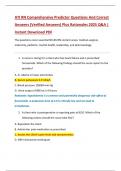
ATI RN Comprehensive Predictor Questions And Correct
Answers (Verified Answers) Plus Rationales 2025 Q&A |
Instant Download PDF
The questions cover essential NCLEX-RN content areas: medical-surgical,
maternity, pediatric, mental health, leadership, and pharmacology.
1. A nurse is caring for a client who has heart failure and is prescribed
furosemide. Which of the following findings should the nurse report to the
provider?
A. 2+ edema in lower extremities
B. Serum potassium 2.9 mEq/L
C. Blood pressure 138/84 mm Hg
D. Urine output of 800 mL in 8 hours
Rationale: Hypokalemia is a common and potentially dangerous side effect of
furosemide. A potassium level of 2.9 is critically low and can lead to
arrhythmias.
2. A client who is postoperative is reporting pain at 8/10. Which of the
following actions should the nurse take first?
A. Reposition the client
B. Administer pain medication as prescribed
C. Assess the client’s pain level and characteristics
D. Offer distraction techniques
,Rationale: The first step in pain management is always assessment.
Interventions should follow a complete evaluation.
3. A nurse is caring for a client with major depressive disorder. Which of the
following findings is the nurse’s priority?
A. Reports of fatigue
B. Expressions of hopelessness
C. Poor appetite
D. Lack of interest in hobbies
Rationale: Hopelessness is a major risk factor for suicide and should be
addressed immediately.
4. A nurse is teaching a client who has a new prescription for digoxin. Which
of the following statements by the client indicates an understanding of the
teaching?
A. "I should take this medication with an antacid."
B. "I will call my provider if my pulse is below 60."
C. "It’s okay to skip a dose if I feel fine."
D. "Blurred vision is an expected side effect."
Rationale: Clients should be instructed to monitor heart rate and not take
digoxin if the pulse is below 60 bpm.
5. A nurse is providing discharge teaching to a client following a total hip
arthroplasty. Which of the following instructions should the nurse include?
A. Cross your legs to improve circulation
B. Bend at the waist when picking up objects
C. Use a raised toilet seat
, D. Sit in low chairs
Rationale: A raised toilet seat prevents hip flexion greater than 90 degrees,
reducing dislocation risk.
6. A nurse is assessing a newborn 1 hour after birth. Which of the following
findings should be reported to the provider?
A. Respiratory rate of 50/min
B. Acrocyanosis
C. Sternal retractions
D. Positive Babinski reflex
Rationale: Sternal retractions indicate respiratory distress and should be
reported immediately.
7. A nurse is administering morphine IV to a client in pain. Which of the
following should the nurse monitor as the priority?
A. Urinary output
B. Nausea
C. Respiratory rate
D. Pain relief
Rationale: Respiratory depression is the most serious adverse effect of morphine
and must be monitored.
8. A nurse is teaching a client who has a new diagnosis of type 1 diabetes
mellitus. Which of the following statements by the client indicates an
understanding of the teaching?
A. "I will store my insulin in the freezer."
B. "I will inject insulin into my abdomen."
Answers (Verified Answers) Plus Rationales 2025 Q&A |
Instant Download PDF
The questions cover essential NCLEX-RN content areas: medical-surgical,
maternity, pediatric, mental health, leadership, and pharmacology.
1. A nurse is caring for a client who has heart failure and is prescribed
furosemide. Which of the following findings should the nurse report to the
provider?
A. 2+ edema in lower extremities
B. Serum potassium 2.9 mEq/L
C. Blood pressure 138/84 mm Hg
D. Urine output of 800 mL in 8 hours
Rationale: Hypokalemia is a common and potentially dangerous side effect of
furosemide. A potassium level of 2.9 is critically low and can lead to
arrhythmias.
2. A client who is postoperative is reporting pain at 8/10. Which of the
following actions should the nurse take first?
A. Reposition the client
B. Administer pain medication as prescribed
C. Assess the client’s pain level and characteristics
D. Offer distraction techniques
,Rationale: The first step in pain management is always assessment.
Interventions should follow a complete evaluation.
3. A nurse is caring for a client with major depressive disorder. Which of the
following findings is the nurse’s priority?
A. Reports of fatigue
B. Expressions of hopelessness
C. Poor appetite
D. Lack of interest in hobbies
Rationale: Hopelessness is a major risk factor for suicide and should be
addressed immediately.
4. A nurse is teaching a client who has a new prescription for digoxin. Which
of the following statements by the client indicates an understanding of the
teaching?
A. "I should take this medication with an antacid."
B. "I will call my provider if my pulse is below 60."
C. "It’s okay to skip a dose if I feel fine."
D. "Blurred vision is an expected side effect."
Rationale: Clients should be instructed to monitor heart rate and not take
digoxin if the pulse is below 60 bpm.
5. A nurse is providing discharge teaching to a client following a total hip
arthroplasty. Which of the following instructions should the nurse include?
A. Cross your legs to improve circulation
B. Bend at the waist when picking up objects
C. Use a raised toilet seat
, D. Sit in low chairs
Rationale: A raised toilet seat prevents hip flexion greater than 90 degrees,
reducing dislocation risk.
6. A nurse is assessing a newborn 1 hour after birth. Which of the following
findings should be reported to the provider?
A. Respiratory rate of 50/min
B. Acrocyanosis
C. Sternal retractions
D. Positive Babinski reflex
Rationale: Sternal retractions indicate respiratory distress and should be
reported immediately.
7. A nurse is administering morphine IV to a client in pain. Which of the
following should the nurse monitor as the priority?
A. Urinary output
B. Nausea
C. Respiratory rate
D. Pain relief
Rationale: Respiratory depression is the most serious adverse effect of morphine
and must be monitored.
8. A nurse is teaching a client who has a new diagnosis of type 1 diabetes
mellitus. Which of the following statements by the client indicates an
understanding of the teaching?
A. "I will store my insulin in the freezer."
B. "I will inject insulin into my abdomen."