

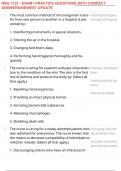
NSG 1125 - EXAM I PRACTICE QUESTIONS WITH CORRECT
NSG 1125 - Exam I Practice Questions
ANSWERS/NEWEST UPDATE
Study online at https://quizlet.com/_c7cpqs
1. The most common method of microorganism trans- Performing hand hygiene
fer from one person to another in a hospital is pre- thoroughly and frequently.
vented by:
1. Disinfecting instruments in special solutions.
2. Filtering the air in the hospital.
3. Changing bed linens daily.
4. Performing hand hygiene thoroughly and fre-
quently.
2. The nurse is caring for a patient and pays close atten- Providing an intact physical
tion to the condition of the skin. The skin is the first barrier.
line of defense and protects the body by: (Select all
that apply.) Secreting bactericidal sub-
stances.
1. Repelling microorganisms.
Releasing macrophages.
2. Providing an intact physical barrier.
3. Secreting bactericidal substances.
4. Releasing macrophages.
5. Shedding dead cells.
3. The nurse is caring for a newly admitted patient who Discouraging visitors who
was admitted for pneumonia. The nurse knows that have an infectious illness.
the means to decrease susceptibility of individuals to
infection include: (Select all that apply.) Using gloves and hand hy-
giene techniques properly.
1. Discouraging visitors who have an infectious ill-
, NSG 1125 - Exam I Practice Questions
Study online at https://quizlet.com/_c7cpqs
ness. Providing immunization as
available.
2. Using gloves and hand hygiene techniques prop-
erly. Promoting good nutrition
and adequate rest.
3. Giving antibiotics prophylactically at the time of
surgery.
4. Providing immunization as available.
5. Promoting good nutrition and adequate rest.
4. The nurse is caring for a patient with a wound in- Overprescription of antimi-
fected with a multidrug-resistant organism (MDRO). crobial agents by health care
Drug-resistant microorganisms are a problem within providers.
the community as well as within the hospital because
of: (Select all that apply.) Patients who stop taking an-
timicrobial agents as pre-
1. Overprescription of antimicrobial agents by health scribed.
care providers.
Overuse of inappropriate
2. Lack of proper sanitation within communities. antimicrobials, causing mu-
tations in the microorgan-
3. Discharging patients with infected wounds before isms.
treatment is complete.
4. Patients who stop taking antimicrobial agents as
prescribed.
5. Overuse of inappropriate antimicrobials, causing
mutations in the microorganisms.
5. The nurse is caring for a febrile patient in the hospital Patients with an open wound
and is concerned that they contracted an HAI. The or surgical incisions.
, NSG 1125 - Exam I Practice Questions
Study online at https://quizlet.com/_c7cpqs
nurse knows that all hospitalized patients are at risk
for HAIs, but which are at the highest risk? (Select all Patients on chemotherapy.
that apply.)
Patients with an indewelling
1. Patients with an open wound or surgical incisions. catheter.
2. Patients on chemotherapy.
3. Patients with an indewelling catheter.
4. Patients with a chronic illness.
5. Patients hospitalized more than twice in a month.
6. Medical asepsis differs from surgical asepsis in that Aims to prevent transmission
surgical aseptic technique: of all microorganisms.
1. Is used only in the operating room.
2. Kills all microorganisms.
3. Aims to prevent transmission of all microorgan-
isms.
4. Aims to prevent transmission of only disease-pro-
ducing microorganisms.
7. Considering the chain of infection, a vector might be: A tick carrying Lyme disease.
1. An uninfected patient.
2. Staphylococcus bacteria.
3. A tick carrying Lyme disease.
4. A contaminated water supply.
8. An older adult may need to be reeducated on how to Muscles and bones lose
lift safely because: (Select all that apply.) strength as one ages.
1. Muscles and bones lose strength as one ages. Bone density is decreased.
NSG 1125 - Exam I Practice Questions
ANSWERS/NEWEST UPDATE
Study online at https://quizlet.com/_c7cpqs
1. The most common method of microorganism trans- Performing hand hygiene
fer from one person to another in a hospital is pre- thoroughly and frequently.
vented by:
1. Disinfecting instruments in special solutions.
2. Filtering the air in the hospital.
3. Changing bed linens daily.
4. Performing hand hygiene thoroughly and fre-
quently.
2. The nurse is caring for a patient and pays close atten- Providing an intact physical
tion to the condition of the skin. The skin is the first barrier.
line of defense and protects the body by: (Select all
that apply.) Secreting bactericidal sub-
stances.
1. Repelling microorganisms.
Releasing macrophages.
2. Providing an intact physical barrier.
3. Secreting bactericidal substances.
4. Releasing macrophages.
5. Shedding dead cells.
3. The nurse is caring for a newly admitted patient who Discouraging visitors who
was admitted for pneumonia. The nurse knows that have an infectious illness.
the means to decrease susceptibility of individuals to
infection include: (Select all that apply.) Using gloves and hand hy-
giene techniques properly.
1. Discouraging visitors who have an infectious ill-
, NSG 1125 - Exam I Practice Questions
Study online at https://quizlet.com/_c7cpqs
ness. Providing immunization as
available.
2. Using gloves and hand hygiene techniques prop-
erly. Promoting good nutrition
and adequate rest.
3. Giving antibiotics prophylactically at the time of
surgery.
4. Providing immunization as available.
5. Promoting good nutrition and adequate rest.
4. The nurse is caring for a patient with a wound in- Overprescription of antimi-
fected with a multidrug-resistant organism (MDRO). crobial agents by health care
Drug-resistant microorganisms are a problem within providers.
the community as well as within the hospital because
of: (Select all that apply.) Patients who stop taking an-
timicrobial agents as pre-
1. Overprescription of antimicrobial agents by health scribed.
care providers.
Overuse of inappropriate
2. Lack of proper sanitation within communities. antimicrobials, causing mu-
tations in the microorgan-
3. Discharging patients with infected wounds before isms.
treatment is complete.
4. Patients who stop taking antimicrobial agents as
prescribed.
5. Overuse of inappropriate antimicrobials, causing
mutations in the microorganisms.
5. The nurse is caring for a febrile patient in the hospital Patients with an open wound
and is concerned that they contracted an HAI. The or surgical incisions.
, NSG 1125 - Exam I Practice Questions
Study online at https://quizlet.com/_c7cpqs
nurse knows that all hospitalized patients are at risk
for HAIs, but which are at the highest risk? (Select all Patients on chemotherapy.
that apply.)
Patients with an indewelling
1. Patients with an open wound or surgical incisions. catheter.
2. Patients on chemotherapy.
3. Patients with an indewelling catheter.
4. Patients with a chronic illness.
5. Patients hospitalized more than twice in a month.
6. Medical asepsis differs from surgical asepsis in that Aims to prevent transmission
surgical aseptic technique: of all microorganisms.
1. Is used only in the operating room.
2. Kills all microorganisms.
3. Aims to prevent transmission of all microorgan-
isms.
4. Aims to prevent transmission of only disease-pro-
ducing microorganisms.
7. Considering the chain of infection, a vector might be: A tick carrying Lyme disease.
1. An uninfected patient.
2. Staphylococcus bacteria.
3. A tick carrying Lyme disease.
4. A contaminated water supply.
8. An older adult may need to be reeducated on how to Muscles and bones lose
lift safely because: (Select all that apply.) strength as one ages.
1. Muscles and bones lose strength as one ages. Bone density is decreased.


