SPAUD 508 Exam 1 questions well answered to
pass graded A+ updated
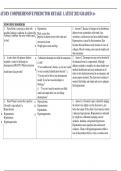
1. Etiology of
-no known cause
SSD:
-phonology (linguistic aspects)
Functional
-articulation (motor aspects)
2. Etiology of SSD: Or- - developmental or acquired
ganic (motor, structural, sensory/perceptual)
3. Etiology -execution (dysarthria)
of
SSD: Motor/Neuro- - planning (apraxia)
logical
4. Etiology of - Boys:Girls
SSD:
Structural 9. Percentage of SSD with co-occurring
language impair- ment
5. Etiology or
SSD:
Sensory/Per-
ceptual
6. What % of
school-age
chil-
dren have a
speech delay or
SSD?
7. Percentage of
per- sistent SSD
8. Ratio of SSD
,SPAUD 508 Exam 1 questions well answered to
pass graded A+ updated
-clef palate or other orofacial
anomalies
-structural deficits due to
trauma or surgery
-hearing impairment
2.3-24.6%
1-2%
1.5:1
11-40%
, SPAUD 508 Exam 1 questions well answered to
pass graded A+ updated
10. Phonology the study of sound systems, including the phonotactic rules of
communication.
-how we are allowed to arrange and organize sounds to make words.
11. Phonemes The individual speech sounds, consonants, and vowels.
12. Phonetics The study of speech sound productions.
-acoustic properties of phonemes.
-learn not only phonemes, but phonotactic rules and articulatory
movements to create sounds.
13. Phonemes Ditterences in production of the same graphemes.
vs. -plural -s in "hats" vs. "bags."
Graphemes -the -ed in "helped" vs. "folded."
14. Articulation The way that children acquire and produce speech sounds.
-motor learning that occurs for children to plan and execute speech
sounds.
-motor production of speech sounds.
15. Articulation An impairment regarding motor planning and motor execution of
disor- der speech sounds.
-trouble producing the articulatory patterns necessary to produce
certain speech sounds.
16. SODA substitution, omission, distortion, addition
17. Phonological articula- tors
dis- order
19. Immovable articu- lators
18. Movable
pass graded A+ updated
1. Etiology of
-no known cause
SSD:
-phonology (linguistic aspects)
Functional
-articulation (motor aspects)
2. Etiology of SSD: Or- - developmental or acquired
ganic (motor, structural, sensory/perceptual)
3. Etiology -execution (dysarthria)
of
SSD: Motor/Neuro- - planning (apraxia)
logical
4. Etiology of - Boys:Girls
SSD:
Structural 9. Percentage of SSD with co-occurring
language impair- ment
5. Etiology or
SSD:
Sensory/Per-
ceptual
6. What % of
school-age
chil-
dren have a
speech delay or
SSD?
7. Percentage of
per- sistent SSD
8. Ratio of SSD
,SPAUD 508 Exam 1 questions well answered to
pass graded A+ updated
-clef palate or other orofacial
anomalies
-structural deficits due to
trauma or surgery
-hearing impairment
2.3-24.6%
1-2%
1.5:1
11-40%
, SPAUD 508 Exam 1 questions well answered to
pass graded A+ updated
10. Phonology the study of sound systems, including the phonotactic rules of
communication.
-how we are allowed to arrange and organize sounds to make words.
11. Phonemes The individual speech sounds, consonants, and vowels.
12. Phonetics The study of speech sound productions.
-acoustic properties of phonemes.
-learn not only phonemes, but phonotactic rules and articulatory
movements to create sounds.
13. Phonemes Ditterences in production of the same graphemes.
vs. -plural -s in "hats" vs. "bags."
Graphemes -the -ed in "helped" vs. "folded."
14. Articulation The way that children acquire and produce speech sounds.
-motor learning that occurs for children to plan and execute speech
sounds.
-motor production of speech sounds.
15. Articulation An impairment regarding motor planning and motor execution of
disor- der speech sounds.
-trouble producing the articulatory patterns necessary to produce
certain speech sounds.
16. SODA substitution, omission, distortion, addition
17. Phonological articula- tors
dis- order
19. Immovable articu- lators
18. Movable