

Psyc 435 final
Study online at https://quizlet.com/_8lxlwu
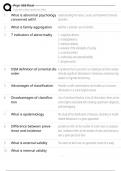
1. What is abnormal psychology understanding the nature, causes and treatment of mental
concerned with? disorders
2. What is family aggregation whether a disorder runs in families
3. 7 indicators of abnormailty 1. subjective distress
2. maladaptiveness
3. statistical delivery
4. violation of the standards of society
5. social discomfort
6. irrationality and unpredictability
7. dangerousness
4. DSM definition of a mental dis- A syndrome that is present in an individual and that involves
order clinically significant disturbance in behaviour, emotional reg-
ulation or cognitive functioning
5. Advantages of classification Provides us with nomenclature and enable us to structure
information in a more helpful manner
6. Disadvantages of classifica- Use of shorthand leads to a loss of information, there can be
tion some stigma associated with a having a psychiatric diagnosis,
and stereotyping
7. What is epidemiology the study of the distribution of diseases, disorders or health
related behaviours in a given population
8. Difference between preva- prevalence refers to the number of active cases in a popula-
lence and incidence tion, incidence refers to the number of new cases that occur
over a given period of time
9. What is external validity The extent to which we can generalize results of a study
10. What is internal validity
, Psyc 435 final
Study online at https://quizlet.com/_8lxlwu
The degree of confidence we can have in the results of a
particular study
11. What is a correlation coeffi- the strength of a correlation
cient?
12. What is statistical significance? probability that results are due to chance
13. What is a meta analysis? Statistical approach which calculates and then combines the
effect sizes from studies
14. what is a longitudinal design? a study that follows people over time and tries to identify
factors that predate the onset of a disorder
15. what is an experimental re- A study where researchers control all factors except one
search approach?
16. What is an ABAB design? A design that starts with controlled conditions, introduces
treatment, removes the treatment, and then reintroduces the
treatment. Recommended form of practice. Has more com-
parisons which allows for greater confidence in findings.
17. 3 general categories of men- 1. mania
tal disorders according to hip- 2. melancholia
pocrates 3. phrenitis (brain fever)
18. hippocrates belief on mental Denied that demons intervened, instead insisted that mental
disorders disorders had natural causes. Believed that mental disorders
were due to brain pathology.
19. Mahers four element theory Four elements:
1. blood (sanguis)
2. phlem
3. bile (choler)
, Psyc 435 final
Study online at https://quizlet.com/_8lxlwu
4. black bile (melancholia)
These fluids combined in different proportions in different
individuals, and determines a person's temperament
20. plato's opinion on mental ill- Responses of the whole organism, reflecting its internal state.
ness Such persons were not responsible for their acts and should
not receive normal punishment.
21. aristotle's opinion on mental agreed with aristotles theory of the bile, and thought very hot
illness bile generated amorous desires, verbal fluency, and suicidal
impulses
22. what country was the earliest china, but then regressed to a belief in supernatural forces as
civilization to attend to mental causal agents
disorders
23. what is mass madness the widespread occurrence of group behaviour disorders that
were apparently cases of hysteria
24. what is tarantism groups of people would suddenly start to jump, dance, and
go into convulsions
25. What is lycanthropy? A condition in which people believe themselves to be pos-
sessed by wolves
26. what is pinel's experiment tested his views that patients with mental illness should be
treated with kindness. removed chains from patients, provid-
ed sunny rooms and permitted exercise
27. what is moral management? emphasized the patients' moral and spiritual development
and rehabilitation of their character rather than their disor-
ders
28.
, Psyc 435 final
Study online at https://quizlet.com/_8lxlwu
what is the mental hygiene advocated the physical well being of patients, received no
movement? help for mental problems, created by Dorothy Dix
29. what is neurasthenisia an old condition that involved pervasive feelings of low mood,
lack of energy, and physical symptoms related to demands of
civilization
30. what is the deinstitutionaliza- during the latter of the 20th century vigorous efforts were
tion movement? made to close down mental hospitals and return people who
were psychiatrically disabled to the community, considered a
more humane treatment
31. 4 major themes in abnormal 1. biological discoveries
psychology in the 20th century 2. the development of a classification system for mental dis-
orders
3. the emergence of psychological causation views
4. experimental psychological research developments
32. paresis-syphilis of the brain produced paralysis and insanity, typically caused death within
2-5 years as a result of brain deterioration, treatment discov-
ered in 1917
33. what are lobotomies and an ice pick was used to sever the neural connections in the
when were they used brain after entering through the eye sockets, used in 1920s
34. mesmer's opinion on mental believed the planets affected a universal magnetic fluid in the
illness body, the distribution of which determined health or disease
35. what 2 methods enabled freud free association and dream analysis
to explore unconscious
36. necessary cause, sufficient necessary: a character must exist for a disorder to occur,
cause, contributory cause sufficient: a condition that guarantees the occurrence of a
Study online at https://quizlet.com/_8lxlwu
1. What is abnormal psychology understanding the nature, causes and treatment of mental
concerned with? disorders
2. What is family aggregation whether a disorder runs in families
3. 7 indicators of abnormailty 1. subjective distress
2. maladaptiveness
3. statistical delivery
4. violation of the standards of society
5. social discomfort
6. irrationality and unpredictability
7. dangerousness
4. DSM definition of a mental dis- A syndrome that is present in an individual and that involves
order clinically significant disturbance in behaviour, emotional reg-
ulation or cognitive functioning
5. Advantages of classification Provides us with nomenclature and enable us to structure
information in a more helpful manner
6. Disadvantages of classifica- Use of shorthand leads to a loss of information, there can be
tion some stigma associated with a having a psychiatric diagnosis,
and stereotyping
7. What is epidemiology the study of the distribution of diseases, disorders or health
related behaviours in a given population
8. Difference between preva- prevalence refers to the number of active cases in a popula-
lence and incidence tion, incidence refers to the number of new cases that occur
over a given period of time
9. What is external validity The extent to which we can generalize results of a study
10. What is internal validity
, Psyc 435 final
Study online at https://quizlet.com/_8lxlwu
The degree of confidence we can have in the results of a
particular study
11. What is a correlation coeffi- the strength of a correlation
cient?
12. What is statistical significance? probability that results are due to chance
13. What is a meta analysis? Statistical approach which calculates and then combines the
effect sizes from studies
14. what is a longitudinal design? a study that follows people over time and tries to identify
factors that predate the onset of a disorder
15. what is an experimental re- A study where researchers control all factors except one
search approach?
16. What is an ABAB design? A design that starts with controlled conditions, introduces
treatment, removes the treatment, and then reintroduces the
treatment. Recommended form of practice. Has more com-
parisons which allows for greater confidence in findings.
17. 3 general categories of men- 1. mania
tal disorders according to hip- 2. melancholia
pocrates 3. phrenitis (brain fever)
18. hippocrates belief on mental Denied that demons intervened, instead insisted that mental
disorders disorders had natural causes. Believed that mental disorders
were due to brain pathology.
19. Mahers four element theory Four elements:
1. blood (sanguis)
2. phlem
3. bile (choler)
, Psyc 435 final
Study online at https://quizlet.com/_8lxlwu
4. black bile (melancholia)
These fluids combined in different proportions in different
individuals, and determines a person's temperament
20. plato's opinion on mental ill- Responses of the whole organism, reflecting its internal state.
ness Such persons were not responsible for their acts and should
not receive normal punishment.
21. aristotle's opinion on mental agreed with aristotles theory of the bile, and thought very hot
illness bile generated amorous desires, verbal fluency, and suicidal
impulses
22. what country was the earliest china, but then regressed to a belief in supernatural forces as
civilization to attend to mental causal agents
disorders
23. what is mass madness the widespread occurrence of group behaviour disorders that
were apparently cases of hysteria
24. what is tarantism groups of people would suddenly start to jump, dance, and
go into convulsions
25. What is lycanthropy? A condition in which people believe themselves to be pos-
sessed by wolves
26. what is pinel's experiment tested his views that patients with mental illness should be
treated with kindness. removed chains from patients, provid-
ed sunny rooms and permitted exercise
27. what is moral management? emphasized the patients' moral and spiritual development
and rehabilitation of their character rather than their disor-
ders
28.
, Psyc 435 final
Study online at https://quizlet.com/_8lxlwu
what is the mental hygiene advocated the physical well being of patients, received no
movement? help for mental problems, created by Dorothy Dix
29. what is neurasthenisia an old condition that involved pervasive feelings of low mood,
lack of energy, and physical symptoms related to demands of
civilization
30. what is the deinstitutionaliza- during the latter of the 20th century vigorous efforts were
tion movement? made to close down mental hospitals and return people who
were psychiatrically disabled to the community, considered a
more humane treatment
31. 4 major themes in abnormal 1. biological discoveries
psychology in the 20th century 2. the development of a classification system for mental dis-
orders
3. the emergence of psychological causation views
4. experimental psychological research developments
32. paresis-syphilis of the brain produced paralysis and insanity, typically caused death within
2-5 years as a result of brain deterioration, treatment discov-
ered in 1917
33. what are lobotomies and an ice pick was used to sever the neural connections in the
when were they used brain after entering through the eye sockets, used in 1920s
34. mesmer's opinion on mental believed the planets affected a universal magnetic fluid in the
illness body, the distribution of which determined health or disease
35. what 2 methods enabled freud free association and dream analysis
to explore unconscious
36. necessary cause, sufficient necessary: a character must exist for a disorder to occur,
cause, contributory cause sufficient: a condition that guarantees the occurrence of a


