HCB - TEST 2 EXAM WITH ACCURATE SOLUTIONS
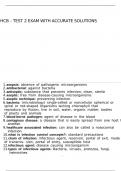
1.asepsis: nabsence nof npathogenic nmicroorganisms
2.antibacterial: nagainst nbacteria
3.antiseptic: nsubstance nthat nprevents ninfection; nclean, nsterile
4.aseptic: nfree nfrom ndisease-causing nmicroorganisms
5.aseptic ntechnique: npreventing ninfection
6.bacteria: n(microbiology) nsingle-celled nor nnoncellular nspherical nor
nspiral nor nrod-shaped norganisms nlacking nchlorophyll nthat
nreproduce nby nfission, nlive nin nsoil, nwater, norganic nmatter, nbodies
nof nplants nand nanimals
7.blood-borne npathogen: nagent nof ndisease nin nthe nblood
8.contagious ndisease: na ndisease nthat nis neasily nspread nfrom none nhost nt
nanother
9.healthcare nassociated ninfection: ncan nalso nbe ncalled na nnosocomial
ninfection
10.what nis ninfection ncontrol nconcepts?: nstandard nprecautions
11.chain nof ninfection: ninfectious nagent, nreservoir, nportal nof nexit, nmode
nof ntransmis- nsion, nportal nof nentry, nsusceptible nhost
12.infectious nagent: ndisease ncausing nmicroorganism
13.types nof ninfectious nagents: nBacteria, nviruses, nprotozoa, nfungi,
nhelminthes
1 n/
n9
, 14.reservoir: na nplace nwhere nthe npathogen ngrows; nmay nor nmay nnot
nmultiply; npatient, nstaff nmember
15.portal nof nexit: nexit nroute nfor npathogens nto nleave nhost; nblood, nskin
16.mode nof ntransmission: nmanner nof nwhich nthe ninfectious nagent
nmoves nfrom none nsource. nto nanother; ntouch, nairborne ndroplets
17.portal nof nentry: nplace nwhere na npathogen nenters nthe nbody; nbreak
nin nthe nskin, nmouth/nose
18.susceptible nhost: na nperson nwho nbecomes nill nafter na npathogen
nenters nthe nbody nbecause nthey ncannot nfight noff nthe npathogen
19.direct ncontact: na nperson nto nperson nor nphysical ncontact nbetween
nsource nand nsusceptible nhost; nfecal, noral
20.indirect ncontact: ninvolves ncontact nwith ncontaminated ninanimate
nobjects; nnee- ndles, nhospital nequipment, nutensils
21.what nis nthe nmost neffective nbarrier nto ninfection?: nintact nskin
22.PPE nequipment nuse: nairborne nprecautions, ncontact nprecautions,
nand ndroplet nprecautions
23.preforming ninfection ncontrol nprocedures: naseptic ntechniques nand
nmedical nasepsis; nthese ntechniques nhelp nreduce nand nprevent nthe
nspread nof nmicroorganisms, nreducing nthe nrisk nof ninfection
24.four nrules nof nsurgical nasepsis: n1. nKnow nwhat nis nsterile
2.Know nwhat nis nnot nsterile
3.Separate nsterile nfrom nunsterile
4.Remedy ncontamination nimmediately
2 n/
n9
1.asepsis: nabsence nof npathogenic nmicroorganisms
2.antibacterial: nagainst nbacteria
3.antiseptic: nsubstance nthat nprevents ninfection; nclean, nsterile
4.aseptic: nfree nfrom ndisease-causing nmicroorganisms
5.aseptic ntechnique: npreventing ninfection
6.bacteria: n(microbiology) nsingle-celled nor nnoncellular nspherical nor
nspiral nor nrod-shaped norganisms nlacking nchlorophyll nthat
nreproduce nby nfission, nlive nin nsoil, nwater, norganic nmatter, nbodies
nof nplants nand nanimals
7.blood-borne npathogen: nagent nof ndisease nin nthe nblood
8.contagious ndisease: na ndisease nthat nis neasily nspread nfrom none nhost nt
nanother
9.healthcare nassociated ninfection: ncan nalso nbe ncalled na nnosocomial
ninfection
10.what nis ninfection ncontrol nconcepts?: nstandard nprecautions
11.chain nof ninfection: ninfectious nagent, nreservoir, nportal nof nexit, nmode
nof ntransmis- nsion, nportal nof nentry, nsusceptible nhost
12.infectious nagent: ndisease ncausing nmicroorganism
13.types nof ninfectious nagents: nBacteria, nviruses, nprotozoa, nfungi,
nhelminthes
1 n/
n9
, 14.reservoir: na nplace nwhere nthe npathogen ngrows; nmay nor nmay nnot
nmultiply; npatient, nstaff nmember
15.portal nof nexit: nexit nroute nfor npathogens nto nleave nhost; nblood, nskin
16.mode nof ntransmission: nmanner nof nwhich nthe ninfectious nagent
nmoves nfrom none nsource. nto nanother; ntouch, nairborne ndroplets
17.portal nof nentry: nplace nwhere na npathogen nenters nthe nbody; nbreak
nin nthe nskin, nmouth/nose
18.susceptible nhost: na nperson nwho nbecomes nill nafter na npathogen
nenters nthe nbody nbecause nthey ncannot nfight noff nthe npathogen
19.direct ncontact: na nperson nto nperson nor nphysical ncontact nbetween
nsource nand nsusceptible nhost; nfecal, noral
20.indirect ncontact: ninvolves ncontact nwith ncontaminated ninanimate
nobjects; nnee- ndles, nhospital nequipment, nutensils
21.what nis nthe nmost neffective nbarrier nto ninfection?: nintact nskin
22.PPE nequipment nuse: nairborne nprecautions, ncontact nprecautions,
nand ndroplet nprecautions
23.preforming ninfection ncontrol nprocedures: naseptic ntechniques nand
nmedical nasepsis; nthese ntechniques nhelp nreduce nand nprevent nthe
nspread nof nmicroorganisms, nreducing nthe nrisk nof ninfection
24.four nrules nof nsurgical nasepsis: n1. nKnow nwhat nis nsterile
2.Know nwhat nis nnot nsterile
3.Separate nsterile nfrom nunsterile
4.Remedy ncontamination nimmediately
2 n/
n9