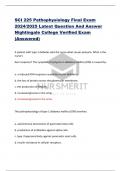
SCI 225 Pathophysiology Final Exam
2024/2025 Latest Question And Answer
Nightingale College Verified Exam
(Answered)
A patient with type 1 diabetes asks the nurse what causes polyuria. What is the
nurse's
best response? The symptom of polyuria in diabetes mellitus (DM) is caused by:
a. a reduced ADH response caused by insulin deficiency.
b. the loss of protein across the glomerular membrane.
c. the production of ketones.
d. increased glucose in the urine.
d. increased glucose in the urine.
The pathophysiology of type 1 diabetes mellitus (DM) involves:
a. autoimmune destruction of pancreatic beta cells
b. production of antibodies against alpha cells.
c. type I hypersensitivity against pancreatic mast cells.
d. insulin resistance in cellular receptors.
,a. autoimmune destruction of pancreatic beta cells
Which is the appropriate method for diagnosis of type 1 diabetes?
a. Measuring urine output
b. Evaluating fasting plasma glucose levels
c. Performing a battery of genetic tests
d. The presence of symptoms is the only definitive method.
b. Evaluating fasting plasma glucose levels
Which of the following statements indicates that the nurse needs more teaching?
Hyperglycemia can lead to chronic complications of diabetes through:
a. activation of protein kinase C
b. induction of the polyol pathway
c. glycosylation
d. suppression of oxidative stress
d. suppression of oxidative stress
, Graves disease is an example of a:
a. type I hypersensitivity.
b. type II hypersensitivity.
c. type III hypersensitivity.
d. type IV hypersensitivity.
b. type II hypersensitivity.
A patient asks the nurse about the best treatment for multiple myeloma? How
should
the nurse respond?
a. Anticoagulants
b. Antibiotics
c. Chemotherapy
d. Chelation
c. Chemotherapy
2024/2025 Latest Question And Answer
Nightingale College Verified Exam
(Answered)
A patient with type 1 diabetes asks the nurse what causes polyuria. What is the
nurse's
best response? The symptom of polyuria in diabetes mellitus (DM) is caused by:
a. a reduced ADH response caused by insulin deficiency.
b. the loss of protein across the glomerular membrane.
c. the production of ketones.
d. increased glucose in the urine.
d. increased glucose in the urine.
The pathophysiology of type 1 diabetes mellitus (DM) involves:
a. autoimmune destruction of pancreatic beta cells
b. production of antibodies against alpha cells.
c. type I hypersensitivity against pancreatic mast cells.
d. insulin resistance in cellular receptors.
,a. autoimmune destruction of pancreatic beta cells
Which is the appropriate method for diagnosis of type 1 diabetes?
a. Measuring urine output
b. Evaluating fasting plasma glucose levels
c. Performing a battery of genetic tests
d. The presence of symptoms is the only definitive method.
b. Evaluating fasting plasma glucose levels
Which of the following statements indicates that the nurse needs more teaching?
Hyperglycemia can lead to chronic complications of diabetes through:
a. activation of protein kinase C
b. induction of the polyol pathway
c. glycosylation
d. suppression of oxidative stress
d. suppression of oxidative stress
, Graves disease is an example of a:
a. type I hypersensitivity.
b. type II hypersensitivity.
c. type III hypersensitivity.
d. type IV hypersensitivity.
b. type II hypersensitivity.
A patient asks the nurse about the best treatment for multiple myeloma? How
should
the nurse respond?
a. Anticoagulants
b. Antibiotics
c. Chemotherapy
d. Chelation
c. Chemotherapy