Chapter 14 – The Autonomic Nervous System and Homeostasis
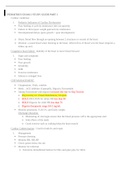
1. What is an autonomic reflex and what are the components of a visceral reflex arc?
An autonomic reflex is an involuntary response that regulates physiological functions
like heart rate or digestion. The components of a visceral reflex arc are: receptor,
sensory neuron, integration center, motor neuron, and effector.
- Visceral reflex arc: a series of events in which a sensory stimulus in an organ
leads to a predictable visceral motor response mediated by ANS.
1. Sensory signals from the Viscera and skin are sent by afferent Sensory
neurons to the brain or spinal cord
2. the stimuli are then integrated by the central nervous system
3. motor impulses from the central nervous system are sent out via efferent
neurons in cranial and spinal nerves these nerves usually lead to ganglia
in the pns called autonomic ganglia
4. the automatic ganglia send the impulses via other efferent neurons to
various Target organs, where they trigger a motor response in the target
cell.
2. What are the similarities and differences between the somatic nervous system
(SNS) and the autonomic nervous system (ANS)?
a) Somatic Nervous System
- Targets skeletal muscle fibers and has voluntary control
b) Autonomic Nervous System
- Targets smooth and cardiac muscles as well as glands; involuntary
movement
○ Functions: SNS controls voluntary movements; ANS controls involuntary
functions.
○ Sensory info: SNS carries info from skin and muscles; ANS from internal
organs.
○ Control center: SNS is regulated by the motor cortex; ANS by the hypothalamus
and brainstem.
○ Motor pathway: SNS uses one motor neuron; ANS uses two (preganglionic and
postganglionic).
○ Neurotransmitters: SNS uses acetylcholine; ANS uses acetylcholine or
norepinephrine.
, ○ Effectors: SNS targets skeletal muscle; ANS targets cardiac muscle, smooth
muscle, and glands.
3. What are the general functions of the parasympathetic and sympathetic divisions?
○ Sympathetic or thoracolumbar division: Prepares the body for fight-or-flight
(increases HR, dilates pupils, etc.). Maintains homeostasis when the body is
engaged in any physical work, mediates the body’s visceral response to emotion.
- Preganglionic axons are short and postganglionic axons are long
○ Parasympathetic or craniosacral division: Promotes rest-and-digest functions
(lowers HR, increases digestion, etc.).
- Preganglionic are short and postganglionic are long
4. Where are the preganglionic neurons of the sympathetic division located?
In the thoracic and upper lumbar segments (T1–L2) of the spinal cord.
5. What is the difference between the sympathetic chain ganglia and the collateral
ganglia?
○ Sympathetic chain ganglia: Located near the spinal cord.
○ Collateral (prevertebral) ganglia: Located anterior to the vertebral column and
closer to target organs.
6. How does the adrenal medulla prolong sympathetic effects?
It releases epinephrine and norepinephrine into the bloodstream, extending the
fight-or-flight response.
7. How do the sympathetic and parasympathetic divisions differ in degree of
response?
The sympathetic system causes widespread, long-lasting effects, while the
parasympathetic system produces localized, short-lived effects.
8. Where are the preganglionic neurons of the parasympathetic division located?
In the brainstem and sacral spinal cord segments (S2–S4).
9. What is the difference between terminal and intramural ganglia in the
parasympathetic division?
○ Terminal ganglia: Near target organs.
○ Intramural ganglia: Within the walls of target organs.
1. What is an autonomic reflex and what are the components of a visceral reflex arc?
An autonomic reflex is an involuntary response that regulates physiological functions
like heart rate or digestion. The components of a visceral reflex arc are: receptor,
sensory neuron, integration center, motor neuron, and effector.
- Visceral reflex arc: a series of events in which a sensory stimulus in an organ
leads to a predictable visceral motor response mediated by ANS.
1. Sensory signals from the Viscera and skin are sent by afferent Sensory
neurons to the brain or spinal cord
2. the stimuli are then integrated by the central nervous system
3. motor impulses from the central nervous system are sent out via efferent
neurons in cranial and spinal nerves these nerves usually lead to ganglia
in the pns called autonomic ganglia
4. the automatic ganglia send the impulses via other efferent neurons to
various Target organs, where they trigger a motor response in the target
cell.
2. What are the similarities and differences between the somatic nervous system
(SNS) and the autonomic nervous system (ANS)?
a) Somatic Nervous System
- Targets skeletal muscle fibers and has voluntary control
b) Autonomic Nervous System
- Targets smooth and cardiac muscles as well as glands; involuntary
movement
○ Functions: SNS controls voluntary movements; ANS controls involuntary
functions.
○ Sensory info: SNS carries info from skin and muscles; ANS from internal
organs.
○ Control center: SNS is regulated by the motor cortex; ANS by the hypothalamus
and brainstem.
○ Motor pathway: SNS uses one motor neuron; ANS uses two (preganglionic and
postganglionic).
○ Neurotransmitters: SNS uses acetylcholine; ANS uses acetylcholine or
norepinephrine.
, ○ Effectors: SNS targets skeletal muscle; ANS targets cardiac muscle, smooth
muscle, and glands.
3. What are the general functions of the parasympathetic and sympathetic divisions?
○ Sympathetic or thoracolumbar division: Prepares the body for fight-or-flight
(increases HR, dilates pupils, etc.). Maintains homeostasis when the body is
engaged in any physical work, mediates the body’s visceral response to emotion.
- Preganglionic axons are short and postganglionic axons are long
○ Parasympathetic or craniosacral division: Promotes rest-and-digest functions
(lowers HR, increases digestion, etc.).
- Preganglionic are short and postganglionic are long
4. Where are the preganglionic neurons of the sympathetic division located?
In the thoracic and upper lumbar segments (T1–L2) of the spinal cord.
5. What is the difference between the sympathetic chain ganglia and the collateral
ganglia?
○ Sympathetic chain ganglia: Located near the spinal cord.
○ Collateral (prevertebral) ganglia: Located anterior to the vertebral column and
closer to target organs.
6. How does the adrenal medulla prolong sympathetic effects?
It releases epinephrine and norepinephrine into the bloodstream, extending the
fight-or-flight response.
7. How do the sympathetic and parasympathetic divisions differ in degree of
response?
The sympathetic system causes widespread, long-lasting effects, while the
parasympathetic system produces localized, short-lived effects.
8. Where are the preganglionic neurons of the parasympathetic division located?
In the brainstem and sacral spinal cord segments (S2–S4).
9. What is the difference between terminal and intramural ganglia in the
parasympathetic division?
○ Terminal ganglia: Near target organs.
○ Intramural ganglia: Within the walls of target organs.