DR ERIC DR ERIC DR ERIC
TEST BANK
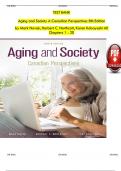
Aging and Society A Canadian Perspectives 8th Edition
by Mark Novak, Herbert C. Northcott, Karen Kobayashi All
Chapters 1 - 20
DR ERIC DR ERIC DR ERIC
,DR ERIC DR ERIC DR ERIC
Table of Contents
Chapter 1: Aging Today
Chapter 2: Theories and Methods
Chapter 3: Population Aging
Chapter 4: Aging and Ethnicity
Chapter 5: Personal Health and Wellness
Chapter 6: The Psychology of Aging
Chapter 7: Healthcare
Chapter 8: Finances and Economics
Chapter 9: Retirement and Work
Chapter 10: Leisure, Recreation, and Service
Chapter 11: Housing and Transportation
Chapter 12: Family Life
Chapter 13: Social Support and Caregiving
Chapter 14: Dying, Death, and Bereavement
DR ERIC DR ERIC DR ERIC
,DR ERIC DR ERIC DR ERIC
CHAPTER 1: AGING TODAY
MULTIPLE CHOICE
1. Which of the following is given in the text as a reason for studying aging?
a. to help oneself live the best old age possible
b. to enable people to avoid or reverse the effects of aging
c. to enable people to make old age as inexpensive a time of life as it can be
d. to learn how to work with elderly clients
ANSWER: D REF: 2-3 BLM: REM
2. As of 2011, what percentage of the population comprised older
Canadians?a. 16.0%
b. 15%
c. 9.1%
d. 6.8%
ANSWER: B REF: 2 BLM: REM
3. By 2036, approximately what percentage of the population will comprise older Canadians as
predicted by Statistics Canada?
a. 9%
b.19
c.%
25
d.34
%
%
ANSWER: C REF: 2 BLM: REM
4. As society ages, what will change in the Canadian social structure?
a. Poverty will increase as more people enter old age.
b. The government will face economic crisis as pension costs rise.
c. The mass media will promote ageism.
d. The healthcare system will add programs to prevent illness before it
occurs. ANSWER: D REF: 2 BLM: HO
5. Which of the following is an example of a social structure?
a. the education system
b. the aging process
c. the government
d. the police
ANSWER: A REF: 2 BLM: HO
6. What effect does an aging society have on the Canadian family?
a. an increase in the number of people living in three- and four-generation families
b. a decrease in the number of people who become grandparents during their lifetime
c. an erosion of values as extended family structures fragment
d. an increase in financial responsibility placed on elder family
members ANSWER: A REF: 2 BLM: HO
DR ERIC DR ERIC DR ERIC
, DR ERIC DR ERIC DR ERIC
7. How will the healthcare system have to adapt as Canadian society ages?
a. by decreasing the attention given to chronic ailments such as diabetes and arthritis
b. by favouring the treatment of more acute illnesses
c. by changing public opinion about old age
d. by trying to prevent illness before it happens
ANSWER: D REF: 2 BLM: HO
8. Dr. Clarke is conducting a research experiment that is studying the process of aging
among older Canadians. What is the name for this social science?
a.tautology
b.ageism
c.gerontology
d.aeonology
ANSWER: C REF: 2 BLM: HO
9. What are the two points of view that gerontologists use to study aging?
a. economics and social structures
b. the family and the education system
c. bioethics and economics
d. the individual and society
ANSWER: D REF: 2 BLM: REM
10. What did Unwin and colleagues’ (2008) research find out about perceptions of aging?
a. People know little about aging.
b. Old age is seen as a time of weakness and death.
c. Some attitudes towards the elderly have possibly worsened.
d. Most people’s knowledge about older people is based on
myth or fear. ANSWER: C REF: 3 BLM: REM
11. Your uncle Ken has just retired from the workforce, and he needs to find an activity that will keep
him in touch with his community. According to recent research found in your textbook, which of
the following activities would be a beneficial activity for your uncle?
a. reading books to his grandchildren
b. baking cookies
c. working in his woodshop
d. playing cards at a local library
ANSWER: D REF: 4 BLM: HO
12. Which of the following accurately describes stereotypes?
a. They prevent discrimination and ageism.
b. They force people to confront the truth about the elderly.
c. They often have some basis in reality.
d. They exaggerate and distort the bad, while ignoring the good qualities of
a group of people.
ANSWER: C REF: 5 BLM: HO
13. Which of the following presents a negative stereotype of aging?
a. an elderly 84 year-old gentleman who plays with his grandchildren
DR ERIC DR ERIC DR ERIC
TEST BANK
Aging and Society A Canadian Perspectives 8th Edition
by Mark Novak, Herbert C. Northcott, Karen Kobayashi All
Chapters 1 - 20
DR ERIC DR ERIC DR ERIC
,DR ERIC DR ERIC DR ERIC
Table of Contents
Chapter 1: Aging Today
Chapter 2: Theories and Methods
Chapter 3: Population Aging
Chapter 4: Aging and Ethnicity
Chapter 5: Personal Health and Wellness
Chapter 6: The Psychology of Aging
Chapter 7: Healthcare
Chapter 8: Finances and Economics
Chapter 9: Retirement and Work
Chapter 10: Leisure, Recreation, and Service
Chapter 11: Housing and Transportation
Chapter 12: Family Life
Chapter 13: Social Support and Caregiving
Chapter 14: Dying, Death, and Bereavement
DR ERIC DR ERIC DR ERIC
,DR ERIC DR ERIC DR ERIC
CHAPTER 1: AGING TODAY
MULTIPLE CHOICE
1. Which of the following is given in the text as a reason for studying aging?
a. to help oneself live the best old age possible
b. to enable people to avoid or reverse the effects of aging
c. to enable people to make old age as inexpensive a time of life as it can be
d. to learn how to work with elderly clients
ANSWER: D REF: 2-3 BLM: REM
2. As of 2011, what percentage of the population comprised older
Canadians?a. 16.0%
b. 15%
c. 9.1%
d. 6.8%
ANSWER: B REF: 2 BLM: REM
3. By 2036, approximately what percentage of the population will comprise older Canadians as
predicted by Statistics Canada?
a. 9%
b.19
c.%
25
d.34
%
%
ANSWER: C REF: 2 BLM: REM
4. As society ages, what will change in the Canadian social structure?
a. Poverty will increase as more people enter old age.
b. The government will face economic crisis as pension costs rise.
c. The mass media will promote ageism.
d. The healthcare system will add programs to prevent illness before it
occurs. ANSWER: D REF: 2 BLM: HO
5. Which of the following is an example of a social structure?
a. the education system
b. the aging process
c. the government
d. the police
ANSWER: A REF: 2 BLM: HO
6. What effect does an aging society have on the Canadian family?
a. an increase in the number of people living in three- and four-generation families
b. a decrease in the number of people who become grandparents during their lifetime
c. an erosion of values as extended family structures fragment
d. an increase in financial responsibility placed on elder family
members ANSWER: A REF: 2 BLM: HO
DR ERIC DR ERIC DR ERIC
, DR ERIC DR ERIC DR ERIC
7. How will the healthcare system have to adapt as Canadian society ages?
a. by decreasing the attention given to chronic ailments such as diabetes and arthritis
b. by favouring the treatment of more acute illnesses
c. by changing public opinion about old age
d. by trying to prevent illness before it happens
ANSWER: D REF: 2 BLM: HO
8. Dr. Clarke is conducting a research experiment that is studying the process of aging
among older Canadians. What is the name for this social science?
a.tautology
b.ageism
c.gerontology
d.aeonology
ANSWER: C REF: 2 BLM: HO
9. What are the two points of view that gerontologists use to study aging?
a. economics and social structures
b. the family and the education system
c. bioethics and economics
d. the individual and society
ANSWER: D REF: 2 BLM: REM
10. What did Unwin and colleagues’ (2008) research find out about perceptions of aging?
a. People know little about aging.
b. Old age is seen as a time of weakness and death.
c. Some attitudes towards the elderly have possibly worsened.
d. Most people’s knowledge about older people is based on
myth or fear. ANSWER: C REF: 3 BLM: REM
11. Your uncle Ken has just retired from the workforce, and he needs to find an activity that will keep
him in touch with his community. According to recent research found in your textbook, which of
the following activities would be a beneficial activity for your uncle?
a. reading books to his grandchildren
b. baking cookies
c. working in his woodshop
d. playing cards at a local library
ANSWER: D REF: 4 BLM: HO
12. Which of the following accurately describes stereotypes?
a. They prevent discrimination and ageism.
b. They force people to confront the truth about the elderly.
c. They often have some basis in reality.
d. They exaggerate and distort the bad, while ignoring the good qualities of
a group of people.
ANSWER: C REF: 5 BLM: HO
13. Which of the following presents a negative stereotype of aging?
a. an elderly 84 year-old gentleman who plays with his grandchildren
DR ERIC DR ERIC DR ERIC