1
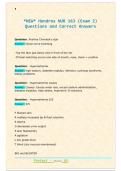
*NEW* Hondros NUR 163 (Exam 2)
Questions and Correct Answers
Question: Positive Chovstek's sign
Answer: Facial nerve twitching
-Tap the face just below and in front of the ear
-If facial twitching occurs one side of mouth, nose, check = positive
Question: Hypernatremia
Answer: high sodium, diabetes inspidus, infection, cushings syndrome,
kidney problems
Question: Hypernatremia causes
Answer: Causes: Excess water loss, excess sodium administration,
diabetes insipidus, heat stroke, hypertonic IV solutions
Question: Hypernatremia S/S
Answer: S/S
F flushed skin
R restless increased bp & fluid retention
E edema
D decreased urine output
S skin flushed/dry
A agitation
L low grade fever
T thirst (dry mucous membranes)
BIG and BLOATED
Pretest - Stuvia US
,2
Question: Hypernatremia treatment
Answer: Treatment:
- IV treatment of hypotonic solution
- encourage fluids
- decrease sodium in diet (sodium restriction)
- monitor daily weight
- diuretics
Question: Hyperkalemia
Answer: high potassium >5, metabolic acidosis, DKA, kidney disease
Question: Hyperkalemia causes
Answer: Causes:
M - Medications - ACE inhibitors, NSAIDS
A - Acidosis - Metabolic and respiratory
C - Cellular destruction - Burns, traumatic injury
H - Hypoaldosteronism, hemolysis
I - Intake - Excesssive
N - Nephrons, renal failure
E - Excretion - Impaired
Question: Hypernatremia nursing interventions
Answer: Interventions: monitor I&O, behavior changes, lab findings,
monitor diet, vitals, encourage fluids as ordered
Question: Hyperkalemia S/S
Answer: S/S:
M - Muscle weakness
U - Urine, oliguria, anuria
R- Respiratory distress
D - Decreased cardiac contractility
Pretest - Stuvia US
, 3
E - ECG changes
R - Reflexes, hyperreflexia, or areflexia (flaccid)
Question: Hyperkalemia treatment
Answer: iv calcium gluconate and insulin and glucose
Question: identifying the cause of the fear
Answer: What will help when having difficulty coping with stress
Question: physically, mentally, cognitively
Answer: How does depression effect the body
Question: elevated pulse, hyperventilation, headaches, hypertension
Answer: Physiologic signs of stress
Question: small amounts of liquids and identify what beverages the
resident prefers
Answer: Nursing interventions for dehydration in elderly
Question: no transportation, lack of motivation, cost of food, unable to
read labels
Answer: What prevents a resident from meeting nutritional needs
Question: eliminate the cause of stress
Answer: Problem focused coping intends to
Question: lonely, powerless, helpless
Answer: Disruptive living situations can make the elderly feel
Question: neuro, cardio, musculoskeletal, and respiratory
Answer: What body systems participate in physical activity
Pretest - Stuvia US
*NEW* Hondros NUR 163 (Exam 2)
Questions and Correct Answers
Question: Positive Chovstek's sign
Answer: Facial nerve twitching
-Tap the face just below and in front of the ear
-If facial twitching occurs one side of mouth, nose, check = positive
Question: Hypernatremia
Answer: high sodium, diabetes inspidus, infection, cushings syndrome,
kidney problems
Question: Hypernatremia causes
Answer: Causes: Excess water loss, excess sodium administration,
diabetes insipidus, heat stroke, hypertonic IV solutions
Question: Hypernatremia S/S
Answer: S/S
F flushed skin
R restless increased bp & fluid retention
E edema
D decreased urine output
S skin flushed/dry
A agitation
L low grade fever
T thirst (dry mucous membranes)
BIG and BLOATED
Pretest - Stuvia US
,2
Question: Hypernatremia treatment
Answer: Treatment:
- IV treatment of hypotonic solution
- encourage fluids
- decrease sodium in diet (sodium restriction)
- monitor daily weight
- diuretics
Question: Hyperkalemia
Answer: high potassium >5, metabolic acidosis, DKA, kidney disease
Question: Hyperkalemia causes
Answer: Causes:
M - Medications - ACE inhibitors, NSAIDS
A - Acidosis - Metabolic and respiratory
C - Cellular destruction - Burns, traumatic injury
H - Hypoaldosteronism, hemolysis
I - Intake - Excesssive
N - Nephrons, renal failure
E - Excretion - Impaired
Question: Hypernatremia nursing interventions
Answer: Interventions: monitor I&O, behavior changes, lab findings,
monitor diet, vitals, encourage fluids as ordered
Question: Hyperkalemia S/S
Answer: S/S:
M - Muscle weakness
U - Urine, oliguria, anuria
R- Respiratory distress
D - Decreased cardiac contractility
Pretest - Stuvia US
, 3
E - ECG changes
R - Reflexes, hyperreflexia, or areflexia (flaccid)
Question: Hyperkalemia treatment
Answer: iv calcium gluconate and insulin and glucose
Question: identifying the cause of the fear
Answer: What will help when having difficulty coping with stress
Question: physically, mentally, cognitively
Answer: How does depression effect the body
Question: elevated pulse, hyperventilation, headaches, hypertension
Answer: Physiologic signs of stress
Question: small amounts of liquids and identify what beverages the
resident prefers
Answer: Nursing interventions for dehydration in elderly
Question: no transportation, lack of motivation, cost of food, unable to
read labels
Answer: What prevents a resident from meeting nutritional needs
Question: eliminate the cause of stress
Answer: Problem focused coping intends to
Question: lonely, powerless, helpless
Answer: Disruptive living situations can make the elderly feel
Question: neuro, cardio, musculoskeletal, and respiratory
Answer: What body systems participate in physical activity
Pretest - Stuvia US