

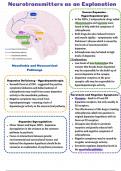
Neurotransmitters as an Explanation
Excess Dopamine -
Hyperdopaminergia:
In the 1950s, 2 antipsychotic drugs called
chlorpromazine and reserpine were
found to help with the symptoms of
schizophrenia.
Both drugs also also induced tremors
and muscle rigidity - symptomatic with
Parkinson’s disease which is caused by
low levels of neurotransmitter
dopamine.
Schizophrenia may be linked to high
levels of dopamine.
2 Explanations:
Low levels of beta hydroxylase (the
Mesolimbic and Mesocortical enzyme that breaks down dopamine)
Pathways may be responsible for the build-up of
excess dopamine in the synapse.
Dopamine receptors on the post-
Dopamine Deficiency - Hypodopaminergia: synaptic cells may be responsible for
Kenneth Davis et al 1991 - suggested the positive hyperdopaminergic activity.
symptoms (delusions and hallucinations) of
schizophrenia may result from excess dopamine
activity in the mesolimbic pathway. Serotonin and Negative Symptoms:
Negative symptoms may result from Clozapine - binds to D1 and D4
hypodopaminergia - meaning a lack of dopamine receptors, but only weakly to
dopaminergic activity in the mesocortical pathway. D2 receptors.
The effectiveness of this drug in treating
schizophrenia called into question in
original dopamine hypothesis with its
focus on D2 receptors.
Dopamine Dysregulation:
Oliver Howes and Kapur 2009 - dopamine Clozapine also binds to serotonin
dysregulation in the striatum as the common receptors and greatly reduces both
pathway to psychosis. positive and negative symptoms of
Focus on interactions between genetic, schizophrenia.
environmental and sociocultural factors and Negative symptoms may be caused by
believed the dopamine hypothesis should be be irregular serotonergic activity.
viewed as an explanation of psychosis proneness. Serotonin regulates dopamine levels in
the mesolimbic pathway.
Excess Dopamine -
Hyperdopaminergia:
In the 1950s, 2 antipsychotic drugs called
chlorpromazine and reserpine were
found to help with the symptoms of
schizophrenia.
Both drugs also also induced tremors
and muscle rigidity - symptomatic with
Parkinson’s disease which is caused by
low levels of neurotransmitter
dopamine.
Schizophrenia may be linked to high
levels of dopamine.
2 Explanations:
Low levels of beta hydroxylase (the
Mesolimbic and Mesocortical enzyme that breaks down dopamine)
Pathways may be responsible for the build-up of
excess dopamine in the synapse.
Dopamine receptors on the post-
Dopamine Deficiency - Hypodopaminergia: synaptic cells may be responsible for
Kenneth Davis et al 1991 - suggested the positive hyperdopaminergic activity.
symptoms (delusions and hallucinations) of
schizophrenia may result from excess dopamine
activity in the mesolimbic pathway. Serotonin and Negative Symptoms:
Negative symptoms may result from Clozapine - binds to D1 and D4
hypodopaminergia - meaning a lack of dopamine receptors, but only weakly to
dopaminergic activity in the mesocortical pathway. D2 receptors.
The effectiveness of this drug in treating
schizophrenia called into question in
original dopamine hypothesis with its
focus on D2 receptors.
Dopamine Dysregulation:
Oliver Howes and Kapur 2009 - dopamine Clozapine also binds to serotonin
dysregulation in the striatum as the common receptors and greatly reduces both
pathway to psychosis. positive and negative symptoms of
Focus on interactions between genetic, schizophrenia.
environmental and sociocultural factors and Negative symptoms may be caused by
believed the dopamine hypothesis should be be irregular serotonergic activity.
viewed as an explanation of psychosis proneness. Serotonin regulates dopamine levels in
the mesolimbic pathway.


