

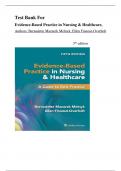
Test Bank For
Evidence-Based Practice in Nursing & Healthcare,
Authors: Bernadette Mazurek Melnyk, Ellen Fineout-Overholt
5th edition
,Table of Content
Chapter 1: Making the Case for Evidence-Based Practice and Cultivating a Spirit of Inquiry
Chapter 2: Asking Compelling Clinical Questions
Chapter 3: Finding Relevant Evidence to Answer Clinical Questions
Chapter 4: Critically Appraising Knowledge for Clinical Decision Making
Chapter 5: Clinician Expertise and Patient-Valued Preferences as Context for Critical Appraisal
for Evidence-Based Decision Making
Chapter 6: Critically Appraising Quantitative Evidence for Clinical Decision Making
Chapter 7; Critically Appraising Qualitative and Mixed Methods Evidence for Clinical Decision
Making
Chapter 8: Advancing Optimal Care With Robust Clinical Practice Guidelines
Chapter 9; Key Strategies for Implementing Evidence in Real-World Clinical Settings
Chapter 10: The Role of Quality Improvement and Evidence-Based Quality Improvement in
Practice Change
Chapter 11: Implementing the Evidence-Based Practice Competencies in Clinical and Academic
Settings to Enhance Healthcare Quality, Safety, and Patient Outcomes
Chapter 12: Leadership Strategies for Creating and Sustaining Evidence-Based Practice
Organizations
Chapter 13: Innovation and Evidence: A Partnership in Advancing Best Practice and High-
Quality Care
Chapter 14 :Models to Guide Implementation and Sustainability of Evidence-Based Practice
Chapter 15: Implementation Science to Clinical Practice Settings: Accelerating the Uptake of
Evidence Into Practice for Best Outcomes
Chapter 16: Evidence-Based Practice Mentors: The Key to Sustaining Evidence-Based Practice
in Clinical and Educational Settings
Chapter 17: Creating a Vision and Motivating a Change to Evidence-Based Practice in
Individuals, Teams, and Organizations
Chapter 18: Teaching Evidence-Based Practice in Academic Settings
Chapter 19: Teaching Evidence-Based Practice in Clinical Settings
Chapter 20: Using Evidence to Influence Health and Organizational Policy
Chapter 21: Disseminating Evidence Through Presentations, Publications, Health Policy Briefs,
and the Media
Chapter 22: Generating Evidence Through Quantitative and Qualitative Research
Chapter 23; Writing a Successful Grant Proposal to Fund Research and Evidence-Based Practice
,Chapter 1 Making The Case For Evidence-Based Practice And Cultivating A Spirit Of Inquiry
1. In The Hospital Where Nurse L. Provides Care, Tradition Dictates That Oral Temperatures Be
Included In Every Set Of Patient Vital Signs, Regardless Of Patient Diagnosis Or Acuity. This Is Most
Likely An Example Of Which Of The Following Phenomena?
A) The Prioritization Of Internal Evidence Over External Evidence
B) Practice That Lacks Evidence To Support Its Application
C) The Integration Of Personal Expertise Into Nursing Care
D) Evidence-Based Practice
2. The Clinical Nurse Educator (CNE) On A Postsurgical Unit Has Recently Completed A Patient
Chart Review After The Implementation Of A Pilot Program Aimed At Promoting Early Ambulation
Following Surgery. Which Of The Following Components Of EBP Is The Nurse Putting Into Practice?
A) Patient Preferences
B) Research Utilization
C) Experience
D) Internal Evidence
3. Nurse R. Has Observed That Reorienting Demented Patients As Frequently As Possible Tends To
Minimize The Patients' Level Of Agitation In The Evening. The Nurse Has Shared This Observation
With A Colleague, Who Is Skeptical, Stating That, “It's Best To Stick To Evidence-Based Practice.” How
Can Nurse R. Best Respond?
A) “EBP Can Include Clinicians' Personal Expertise.”
B) “Personal Experience Is Often More Sound Than Formal Evidence-Based Practice.”
C) “Traditional Practice And EBP Are Usually Shown To Be The Same.”
D) “My Years Of Experience Can Be Just As Valuable As Any Literature Review Or Randomized
Trial.”
4. Which Of The Following Factors Provides The Most Important Rationale For The Consistent
Implementation Of EBP?
, A) EBP Provides For The Most Cost-Effective Patient Care.
B) EBP Is Accessible To All Healthcare Clinicians.
C) EBP Provides Consistency In Care Across Healthcare Settings.
D) EBP Improves Patient Outcomes.
5. The Institute Of Medicine's Roundtable On Evidence-Based Medicine Has Been Established To
Address EBP. Which Of The Following Issues Is The Roundtable Emphasizing?
A) Ensuring That External Evidence, Rather Than Internal Evidence, Is Integrated Into Care
B) Fostering The Level Of Learning That Exists In The American Healthcare System
C) Issuing Clinical Guidelines To Ensure Best Nursing Practice
D) Comparing The Implementation Of EBP In The United States With That Of Other Western
Countries
6. You Have Become Frustrated With Some Aspects Of Patient Care That You Believe Are
Outdated And Ineffective At The Long-Term Care Facility Where You Have Recently Begun Practicing.
Consequently, You Have Resolved To Examine Some Of These Practices In Light Of Evidence. Which
Of The Following Should Occur First In The Steps Of EBP?
A) Conducting An Electronic Search Of The Literature And Ranking Individual Sources
B) Creating “Buy-In” From The Other Clinicians Who Provide Care At The Facility
C) Developing An Inquisitive And Curious Mindset
D) Assessing Whether The Practices In Question May, In Fact, Be Evidence-Based
7. Which Of The Following Clinical Questions Best Exemplifies The PICOT Format?
A) What Effect Does Parents' Smoking Have On The Smoking Habits Of Their Children, Ages 13
To 16?
B) Among Cancer Patients, What Role Does Meditation, Rather Than Benzodiazepines, Have On
Anxiety Levels During The 7 Days Following Hospital Admission?
C) Among Undergraduate College Students, What Is The Effectiveness Of A Sexual Health
Campaign Undertaken During The First 4 Weeks Of The Fall Semester As Measured By Incidence Of
New Gonorrheal And Chlamydial Infections Reported To The Campus Medical Center?
D) In Patients Aged 8 To 12, Is The Effectiveness Of A Pain Scale Using Faces Superior To A
Numeric Rating Scale In The Emergency Room Context?
Evidence-Based Practice in Nursing & Healthcare,
Authors: Bernadette Mazurek Melnyk, Ellen Fineout-Overholt
5th edition
,Table of Content
Chapter 1: Making the Case for Evidence-Based Practice and Cultivating a Spirit of Inquiry
Chapter 2: Asking Compelling Clinical Questions
Chapter 3: Finding Relevant Evidence to Answer Clinical Questions
Chapter 4: Critically Appraising Knowledge for Clinical Decision Making
Chapter 5: Clinician Expertise and Patient-Valued Preferences as Context for Critical Appraisal
for Evidence-Based Decision Making
Chapter 6: Critically Appraising Quantitative Evidence for Clinical Decision Making
Chapter 7; Critically Appraising Qualitative and Mixed Methods Evidence for Clinical Decision
Making
Chapter 8: Advancing Optimal Care With Robust Clinical Practice Guidelines
Chapter 9; Key Strategies for Implementing Evidence in Real-World Clinical Settings
Chapter 10: The Role of Quality Improvement and Evidence-Based Quality Improvement in
Practice Change
Chapter 11: Implementing the Evidence-Based Practice Competencies in Clinical and Academic
Settings to Enhance Healthcare Quality, Safety, and Patient Outcomes
Chapter 12: Leadership Strategies for Creating and Sustaining Evidence-Based Practice
Organizations
Chapter 13: Innovation and Evidence: A Partnership in Advancing Best Practice and High-
Quality Care
Chapter 14 :Models to Guide Implementation and Sustainability of Evidence-Based Practice
Chapter 15: Implementation Science to Clinical Practice Settings: Accelerating the Uptake of
Evidence Into Practice for Best Outcomes
Chapter 16: Evidence-Based Practice Mentors: The Key to Sustaining Evidence-Based Practice
in Clinical and Educational Settings
Chapter 17: Creating a Vision and Motivating a Change to Evidence-Based Practice in
Individuals, Teams, and Organizations
Chapter 18: Teaching Evidence-Based Practice in Academic Settings
Chapter 19: Teaching Evidence-Based Practice in Clinical Settings
Chapter 20: Using Evidence to Influence Health and Organizational Policy
Chapter 21: Disseminating Evidence Through Presentations, Publications, Health Policy Briefs,
and the Media
Chapter 22: Generating Evidence Through Quantitative and Qualitative Research
Chapter 23; Writing a Successful Grant Proposal to Fund Research and Evidence-Based Practice
,Chapter 1 Making The Case For Evidence-Based Practice And Cultivating A Spirit Of Inquiry
1. In The Hospital Where Nurse L. Provides Care, Tradition Dictates That Oral Temperatures Be
Included In Every Set Of Patient Vital Signs, Regardless Of Patient Diagnosis Or Acuity. This Is Most
Likely An Example Of Which Of The Following Phenomena?
A) The Prioritization Of Internal Evidence Over External Evidence
B) Practice That Lacks Evidence To Support Its Application
C) The Integration Of Personal Expertise Into Nursing Care
D) Evidence-Based Practice
2. The Clinical Nurse Educator (CNE) On A Postsurgical Unit Has Recently Completed A Patient
Chart Review After The Implementation Of A Pilot Program Aimed At Promoting Early Ambulation
Following Surgery. Which Of The Following Components Of EBP Is The Nurse Putting Into Practice?
A) Patient Preferences
B) Research Utilization
C) Experience
D) Internal Evidence
3. Nurse R. Has Observed That Reorienting Demented Patients As Frequently As Possible Tends To
Minimize The Patients' Level Of Agitation In The Evening. The Nurse Has Shared This Observation
With A Colleague, Who Is Skeptical, Stating That, “It's Best To Stick To Evidence-Based Practice.” How
Can Nurse R. Best Respond?
A) “EBP Can Include Clinicians' Personal Expertise.”
B) “Personal Experience Is Often More Sound Than Formal Evidence-Based Practice.”
C) “Traditional Practice And EBP Are Usually Shown To Be The Same.”
D) “My Years Of Experience Can Be Just As Valuable As Any Literature Review Or Randomized
Trial.”
4. Which Of The Following Factors Provides The Most Important Rationale For The Consistent
Implementation Of EBP?
, A) EBP Provides For The Most Cost-Effective Patient Care.
B) EBP Is Accessible To All Healthcare Clinicians.
C) EBP Provides Consistency In Care Across Healthcare Settings.
D) EBP Improves Patient Outcomes.
5. The Institute Of Medicine's Roundtable On Evidence-Based Medicine Has Been Established To
Address EBP. Which Of The Following Issues Is The Roundtable Emphasizing?
A) Ensuring That External Evidence, Rather Than Internal Evidence, Is Integrated Into Care
B) Fostering The Level Of Learning That Exists In The American Healthcare System
C) Issuing Clinical Guidelines To Ensure Best Nursing Practice
D) Comparing The Implementation Of EBP In The United States With That Of Other Western
Countries
6. You Have Become Frustrated With Some Aspects Of Patient Care That You Believe Are
Outdated And Ineffective At The Long-Term Care Facility Where You Have Recently Begun Practicing.
Consequently, You Have Resolved To Examine Some Of These Practices In Light Of Evidence. Which
Of The Following Should Occur First In The Steps Of EBP?
A) Conducting An Electronic Search Of The Literature And Ranking Individual Sources
B) Creating “Buy-In” From The Other Clinicians Who Provide Care At The Facility
C) Developing An Inquisitive And Curious Mindset
D) Assessing Whether The Practices In Question May, In Fact, Be Evidence-Based
7. Which Of The Following Clinical Questions Best Exemplifies The PICOT Format?
A) What Effect Does Parents' Smoking Have On The Smoking Habits Of Their Children, Ages 13
To 16?
B) Among Cancer Patients, What Role Does Meditation, Rather Than Benzodiazepines, Have On
Anxiety Levels During The 7 Days Following Hospital Admission?
C) Among Undergraduate College Students, What Is The Effectiveness Of A Sexual Health
Campaign Undertaken During The First 4 Weeks Of The Fall Semester As Measured By Incidence Of
New Gonorrheal And Chlamydial Infections Reported To The Campus Medical Center?
D) In Patients Aged 8 To 12, Is The Effectiveness Of A Pain Scale Using Faces Superior To A
Numeric Rating Scale In The Emergency Room Context?


