6/4/25, 9:40 AM
ADC ICRC NEWEST EXAM 2025 \LATEST UPDATE WITH
COMPLETE QUESTIONS AND ACCURATE DETAILED
ANSWERS \REAL EXAM WITH VERIFIED ANSWERS
\GRADED A
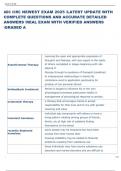
Learning the open and appropriate expression of
thoughts and feelings, with due regard to the rights
Assertiveness Therapy of others completed in stages beginning with role
playing in
therapy through he guidance of therapist transfered
to interpersonal relationships in clients life.
Limitations exist to application particularly for
phobias of non personal stimuli.
biofeedback treatment Person is taught to influence his or her own
physiological processes particularly helpful in
management of physiological response to anxiety.
existential therapy a therapy that encourages clients to accept
responsibility for their lives and to live with greater
meaning and value
individual stay temporarily with others or have a
transient homeless living pattern rotating among groups of friends ,
family, etc at high risk of suddenly finding
themselves on the street
recently displaced some people may be employed but have been
homeless evicted from their homes their
housing instability may be related to financial
problems resulting from substance use
these individuals may have severe substance use
disorders and mental disorders and are difficult to
/ 1/34
,6/4/25, 9:40 AM
Chronically homeless attract to traditional treatment settings Reaching
these individuals
requires the program to bring its services to the
homeless through a variety of creative outreach and
programming initiatives.
1. cultural destructiveness
2. cultural incapacity
3. cultural blindness
4. cultural pre-competence
Stages of cultural
competence 5. cultural competence
6. cultural proficiency
Independent effect The effect of individual drug is not changed when
combined with another drug. Neither drug affects
the other.
antagonistic effect one drug interferes with the action of another
tetracycline + antacid = decreased absorption of the
tetracycline
addictive effect when two drugs with similar action are
administered; it is the sum of the effects of the two
drugs
The combination of two or more drugs produce an
exaggerated effect - one that goes above and
Potentiation or beyond what might be expected from simply adding
Synergistic Effect the effect of one drug to another. In other words,
the effect is greater than the sum of the parts. The
effect is potentially the most dangerous, especially if
one of the drugs present is alcohol (1 + 1 = 11)
experimental and social use of occasional frequency
Process of addiction: stage sometimes as a result of curiosity, obtaining social
one
acceptance, and thrill seeking. The experience is
eutrophic and there are little noticeable changes.
abuse use becomes regular happening without friends
process of addiction: stage sometimes alone or during the day time. Use may be a
two
result of stress, anxiety, and trying to maintain eutrophic
feeling. Changes in personality, conflict in relationships,
lying.
/ 2/34
,6/4/25, 9:40 AM
dependency/addiction daily use and any means
process of addiction: stage necessary to obtain. result of motivation to avoid pain
three
and escape reality. guilt shame possible suicidal
ideation. Physical deterioration of health. Chance of
overdose.
in early remission, in sustained remission, on
Substance use disorder
specifiers maintenance therapy, and in a controlled
environment
assessment, patient-treatment matching, comprehensive
Five components of effective
treatment services, relapse prevention, accountability
central nervous system consists of the brain and spinal cord
the sensory and motor neurons that connect the
peripheral nervous system
central nervous system to the rest of the body
the division of the peripheral nervous system that
somatic nervous system
controls the body's skeletal muscles
the part of the peripheral nervous system that controls
autonomic nervous system the glands and the muscles of the internal organs
(such as the heart). Its sympathetic division arouses;
its
parasympathetic division calms.
part of the autonomic system that controls the "flight-
sympathetic nervous system
or-fight" response in organisms.
the division of the autonomic nervous system that calms
parasympathetic nervous
system the body, conserving its energy
/ 3/34
, 6/4/25, 9:40 AM
A neurotransmitter associated with movement, attention
Dopamine
and learning and the brain's pleasure and reward
system.
A neurotransmitter that enables learning and memory
Acetylcholine
and also triggers muscle contraction
Norepinephrine A neurotransmitter involved in arousal, as well as in learning and
mood regulation
Serotonin A neurotransmitter that affects hunger,sleep, arousal, and mood.
Neurotransmitter that reduces activity across the
Gamma-aminobutyric acid
(GABA) synaptic cleft and thus inhibits a range of behaviors
and emotions, especially generalized anxiety.
Glycine an inhibitory neurotransmitter found in the spine.
enkephalins and endorphins pain killing properties extracted from brain and pituitary gland.
A process in which neurotransmitters are sponged up
Reuptake
from the synaptic cleft by the presynaptic membrane.
Part of the brainstem that controls vital life-sustaining
medulla oblongata
functions such as heartbeat, breathing, blood
pressure, and digestion.
Pons A brain structure that relays information from the cerebellum to
the rest of the brain
A small part of the brain above the pons that integrates
Midbrain
sensory information and relays it upward.
Cerebellum A large structure of the hindbrain that controls fine motor skills.
the brain's sensory switchboard, located on top of the
Thalamus brainstem; it directs messages to the sensory receiving
areas in the cortex and transmits replies to the
cerebellum and medulla
Involved in control of several functional pathways for
Subthalamus
sensory, motor, and reticular function
A neural structure lying below the thalamus; it directs
Hypothalamus several maintenance activities (eating, drinking, body
temperature), helps govern the endocrine system via
the
pituitary gland, and is linked to emotion and reward.
neural system located below the cerebral hemispheres;
limbic system
associated with emotions and drives
/ 4/34
ADC ICRC NEWEST EXAM 2025 \LATEST UPDATE WITH
COMPLETE QUESTIONS AND ACCURATE DETAILED
ANSWERS \REAL EXAM WITH VERIFIED ANSWERS
\GRADED A
Learning the open and appropriate expression of
thoughts and feelings, with due regard to the rights
Assertiveness Therapy of others completed in stages beginning with role
playing in
therapy through he guidance of therapist transfered
to interpersonal relationships in clients life.
Limitations exist to application particularly for
phobias of non personal stimuli.
biofeedback treatment Person is taught to influence his or her own
physiological processes particularly helpful in
management of physiological response to anxiety.
existential therapy a therapy that encourages clients to accept
responsibility for their lives and to live with greater
meaning and value
individual stay temporarily with others or have a
transient homeless living pattern rotating among groups of friends ,
family, etc at high risk of suddenly finding
themselves on the street
recently displaced some people may be employed but have been
homeless evicted from their homes their
housing instability may be related to financial
problems resulting from substance use
these individuals may have severe substance use
disorders and mental disorders and are difficult to
/ 1/34
,6/4/25, 9:40 AM
Chronically homeless attract to traditional treatment settings Reaching
these individuals
requires the program to bring its services to the
homeless through a variety of creative outreach and
programming initiatives.
1. cultural destructiveness
2. cultural incapacity
3. cultural blindness
4. cultural pre-competence
Stages of cultural
competence 5. cultural competence
6. cultural proficiency
Independent effect The effect of individual drug is not changed when
combined with another drug. Neither drug affects
the other.
antagonistic effect one drug interferes with the action of another
tetracycline + antacid = decreased absorption of the
tetracycline
addictive effect when two drugs with similar action are
administered; it is the sum of the effects of the two
drugs
The combination of two or more drugs produce an
exaggerated effect - one that goes above and
Potentiation or beyond what might be expected from simply adding
Synergistic Effect the effect of one drug to another. In other words,
the effect is greater than the sum of the parts. The
effect is potentially the most dangerous, especially if
one of the drugs present is alcohol (1 + 1 = 11)
experimental and social use of occasional frequency
Process of addiction: stage sometimes as a result of curiosity, obtaining social
one
acceptance, and thrill seeking. The experience is
eutrophic and there are little noticeable changes.
abuse use becomes regular happening without friends
process of addiction: stage sometimes alone or during the day time. Use may be a
two
result of stress, anxiety, and trying to maintain eutrophic
feeling. Changes in personality, conflict in relationships,
lying.
/ 2/34
,6/4/25, 9:40 AM
dependency/addiction daily use and any means
process of addiction: stage necessary to obtain. result of motivation to avoid pain
three
and escape reality. guilt shame possible suicidal
ideation. Physical deterioration of health. Chance of
overdose.
in early remission, in sustained remission, on
Substance use disorder
specifiers maintenance therapy, and in a controlled
environment
assessment, patient-treatment matching, comprehensive
Five components of effective
treatment services, relapse prevention, accountability
central nervous system consists of the brain and spinal cord
the sensory and motor neurons that connect the
peripheral nervous system
central nervous system to the rest of the body
the division of the peripheral nervous system that
somatic nervous system
controls the body's skeletal muscles
the part of the peripheral nervous system that controls
autonomic nervous system the glands and the muscles of the internal organs
(such as the heart). Its sympathetic division arouses;
its
parasympathetic division calms.
part of the autonomic system that controls the "flight-
sympathetic nervous system
or-fight" response in organisms.
the division of the autonomic nervous system that calms
parasympathetic nervous
system the body, conserving its energy
/ 3/34
, 6/4/25, 9:40 AM
A neurotransmitter associated with movement, attention
Dopamine
and learning and the brain's pleasure and reward
system.
A neurotransmitter that enables learning and memory
Acetylcholine
and also triggers muscle contraction
Norepinephrine A neurotransmitter involved in arousal, as well as in learning and
mood regulation
Serotonin A neurotransmitter that affects hunger,sleep, arousal, and mood.
Neurotransmitter that reduces activity across the
Gamma-aminobutyric acid
(GABA) synaptic cleft and thus inhibits a range of behaviors
and emotions, especially generalized anxiety.
Glycine an inhibitory neurotransmitter found in the spine.
enkephalins and endorphins pain killing properties extracted from brain and pituitary gland.
A process in which neurotransmitters are sponged up
Reuptake
from the synaptic cleft by the presynaptic membrane.
Part of the brainstem that controls vital life-sustaining
medulla oblongata
functions such as heartbeat, breathing, blood
pressure, and digestion.
Pons A brain structure that relays information from the cerebellum to
the rest of the brain
A small part of the brain above the pons that integrates
Midbrain
sensory information and relays it upward.
Cerebellum A large structure of the hindbrain that controls fine motor skills.
the brain's sensory switchboard, located on top of the
Thalamus brainstem; it directs messages to the sensory receiving
areas in the cortex and transmits replies to the
cerebellum and medulla
Involved in control of several functional pathways for
Subthalamus
sensory, motor, and reticular function
A neural structure lying below the thalamus; it directs
Hypothalamus several maintenance activities (eating, drinking, body
temperature), helps govern the endocrine system via
the
pituitary gland, and is linked to emotion and reward.
neural system located below the cerebral hemispheres;
limbic system
associated with emotions and drives
/ 4/34