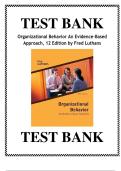
Organizational
,Behavior An Evidence-Based Approach, 14 Edition Fred Luthans Test Bank
t i t i t i t i t i t i t i t i t i
Table of Content
t i t i
Chapter t i 1: Introduction to Organizational Behavior: An Evidence-Based Approach
t i ti t i t i t i ti t i
Chapter t i 2: Environmental Context: Globalization, Diversity, and Ethics
t i t i t i ti ti t i
Chapter t i 3: Organizational Context: Design and Culture
t i t i ti ti t i
Chapter ti 4: Organizational Context: Reward Systems
t i t i ti t i
Chapter t i 5: Personality, Perception, and Employee Attitudes
t i t i ti t i t i
Chapter t i 6: Motivational Needs, Processes, and Applications
t i ti ti ti t i
Chapter t i 7: Positive Organizational Behavior and Psychological Capital
t i t i t i t i t i t i
Chapter t i 8: Communication and Decision Making
t i t i ti t i
Chapter t i 9: Stress and Conflict
t i t i t i
Chapter t i 10: Power and Politics
t i t i t i
Chapter t i 11: Groups and Teams
t i t i t i
Chapter t i 12: Behavioral Performance Management
t i ti t i
Chapter t i 13: Effective Leadership Processes
t i ti t i
Chapter t i 14: Great Leaders: An Evidenced-Based Approach
t i t i t i t i t i
, Chapter
01Introduction to Organizational Behavior:An Evidence-
ti t i t i t i ti t i
Based Approach ti
Truet i /t i Falset i Questions
1. The major challenge and critical competitive advantage for any organization is t
t i t i t i t i t i t i t i t i t i t i t i
he humanresource of that company.
ti yi t i t i t i
True False
2. Casey, a relationship manager in a bank creates value for her organization throug
t i t i t i t i t i t i t i t i t i t i t i t i
h her networks, connections, and friends. These values can be referred to as "positi
t i t i t i t i t i t i t i t i t i t i t i t i t i
ve psychologicalcapital."
ti yi
True False
3. Roger, a sales manager for Heust Pvt. Ltd., is impressed with his new sales exec
t i t i t i t i t i t i t i t i t i t i t i t i t i t i
utive, Tim. According to Roger, Tim is optimistic, can perform well under pressure,
t i yiuy t i t i ti t i t i t i t i t i t i ti t
iand is very confidentabout what he does. These qualities can be referred to as "pos
t i t i t i yi t i t i t i t i t i t i t i t i t i ti t i
itive psychological capital." True False
t i t i t i t i
4. The problems with human organizations and the solutions over the ages ha
t i t i t i t i t i t i t i t i t i t i t i
ve undergonedrastic changes compared to their emphasis and surrounding envir
ti t i t i t i t i t i t i t i ti
onmental context. t i
True False
5. A paradigm establishes only writte
t i t i t i t i
n rules.True False
ti yi
6. ‘Paradigm shift' refers to the situation in which those in the existing paradigm m
t i t i t i t i t i t i t i t i t i t i t i t i t i
ay not even see the changes that are occurring, and therefore, cannot analyze the c
ti t i yiuy t i t i t i t i t i t i t i t i t i t i ti
hanges.
True False
, 7. Reasons for considerable resistance to change and difficulty to move fro
t i t i t i t i t i t i t i t i t i t i
m the old management paradigm to the new can be explained by the "para
ti t i yiuy t i t i t i t i t i t i t i t i ti t i
digm effect." ti
True False
8. The fact that today's managers are competent in their functional specialization is sufficient
ti ti ti ti ti ti ti ti ti ti ti t i ti
to reiterate that most of them paid close attention to the conceptual and human dim
t i t i t i t i t i t i t i t i t i t i t i t i ti t i
ensions oft heir jobs. t i yi t i
True False
9. According to Theory X, if employees were kept happy, they woul
t i ti t i t i t i t i t i t i t i t i
d become highperformers.
ti t i yi
True False
10. Theory X is the natural choice for most organizations in today
t i t i t i t i t i t i t i t i t i t i
's environment.True False
ti yi
11. Most of the practicing managers and their organizations cultures believe,
t i t i t i t i t i t i t i t i t i t i
fully implement,and consistently adhere to a full-
ti yi t i t i t i t i t i
fledged HPWPs approach to management. True False
t i t i t i t i ti
12. The movement to not only recognize, but also do something about the
t i t i t i t i t i t i t i t i t i t i t i t i
"Knowing-Doing Gap" is the movement towards evidence- yiuy t i t i t i t i t i
based management. True
t i False ti
13. Most of the "new management practices" are essentially a readapted version
t i t i t i t i t i t i t i t i t i t i t i
of existing "old management truths."
ti yiuy t i t i
True False
,Behavior An Evidence-Based Approach, 14 Edition Fred Luthans Test Bank
t i t i t i t i t i t i t i t i t i
Table of Content
t i t i
Chapter t i 1: Introduction to Organizational Behavior: An Evidence-Based Approach
t i ti t i t i t i ti t i
Chapter t i 2: Environmental Context: Globalization, Diversity, and Ethics
t i t i t i ti ti t i
Chapter t i 3: Organizational Context: Design and Culture
t i t i ti ti t i
Chapter ti 4: Organizational Context: Reward Systems
t i t i ti t i
Chapter t i 5: Personality, Perception, and Employee Attitudes
t i t i ti t i t i
Chapter t i 6: Motivational Needs, Processes, and Applications
t i ti ti ti t i
Chapter t i 7: Positive Organizational Behavior and Psychological Capital
t i t i t i t i t i t i
Chapter t i 8: Communication and Decision Making
t i t i ti t i
Chapter t i 9: Stress and Conflict
t i t i t i
Chapter t i 10: Power and Politics
t i t i t i
Chapter t i 11: Groups and Teams
t i t i t i
Chapter t i 12: Behavioral Performance Management
t i ti t i
Chapter t i 13: Effective Leadership Processes
t i ti t i
Chapter t i 14: Great Leaders: An Evidenced-Based Approach
t i t i t i t i t i
, Chapter
01Introduction to Organizational Behavior:An Evidence-
ti t i t i t i ti t i
Based Approach ti
Truet i /t i Falset i Questions
1. The major challenge and critical competitive advantage for any organization is t
t i t i t i t i t i t i t i t i t i t i t i
he humanresource of that company.
ti yi t i t i t i
True False
2. Casey, a relationship manager in a bank creates value for her organization throug
t i t i t i t i t i t i t i t i t i t i t i t i
h her networks, connections, and friends. These values can be referred to as "positi
t i t i t i t i t i t i t i t i t i t i t i t i t i
ve psychologicalcapital."
ti yi
True False
3. Roger, a sales manager for Heust Pvt. Ltd., is impressed with his new sales exec
t i t i t i t i t i t i t i t i t i t i t i t i t i t i
utive, Tim. According to Roger, Tim is optimistic, can perform well under pressure,
t i yiuy t i t i ti t i t i t i t i t i t i ti t
iand is very confidentabout what he does. These qualities can be referred to as "pos
t i t i t i yi t i t i t i t i t i t i t i t i t i ti t i
itive psychological capital." True False
t i t i t i t i
4. The problems with human organizations and the solutions over the ages ha
t i t i t i t i t i t i t i t i t i t i t i
ve undergonedrastic changes compared to their emphasis and surrounding envir
ti t i t i t i t i t i t i t i ti
onmental context. t i
True False
5. A paradigm establishes only writte
t i t i t i t i
n rules.True False
ti yi
6. ‘Paradigm shift' refers to the situation in which those in the existing paradigm m
t i t i t i t i t i t i t i t i t i t i t i t i t i
ay not even see the changes that are occurring, and therefore, cannot analyze the c
ti t i yiuy t i t i t i t i t i t i t i t i t i t i ti
hanges.
True False
, 7. Reasons for considerable resistance to change and difficulty to move fro
t i t i t i t i t i t i t i t i t i t i
m the old management paradigm to the new can be explained by the "para
ti t i yiuy t i t i t i t i t i t i t i t i ti t i
digm effect." ti
True False
8. The fact that today's managers are competent in their functional specialization is sufficient
ti ti ti ti ti ti ti ti ti ti ti t i ti
to reiterate that most of them paid close attention to the conceptual and human dim
t i t i t i t i t i t i t i t i t i t i t i t i ti t i
ensions oft heir jobs. t i yi t i
True False
9. According to Theory X, if employees were kept happy, they woul
t i ti t i t i t i t i t i t i t i t i
d become highperformers.
ti t i yi
True False
10. Theory X is the natural choice for most organizations in today
t i t i t i t i t i t i t i t i t i t i
's environment.True False
ti yi
11. Most of the practicing managers and their organizations cultures believe,
t i t i t i t i t i t i t i t i t i t i
fully implement,and consistently adhere to a full-
ti yi t i t i t i t i t i
fledged HPWPs approach to management. True False
t i t i t i t i ti
12. The movement to not only recognize, but also do something about the
t i t i t i t i t i t i t i t i t i t i t i t i
"Knowing-Doing Gap" is the movement towards evidence- yiuy t i t i t i t i t i
based management. True
t i False ti
13. Most of the "new management practices" are essentially a readapted version
t i t i t i t i t i t i t i t i t i t i t i
of existing "old management truths."
ti yiuy t i t i
True False