1|Page
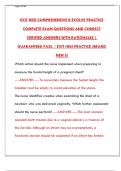
TMC EXAM PRACTICE|| LATEST AND
COMPLETE UPDATE WITH QUESTIONS AND
100% CORRECT ANSWERS ALREADY GRADED
A+|| NEWEST VERSION
The following data are collected on a 55-year-old, 80 kg (176 lb) patient with
COPD receiving volume-controlled ventilation:
ModeAssist-contro
lVentilator rate 10 breaths/min
Tidal volume 600 mL
FIO2 0.32
PEEP8 cm H2O
ABGs
pH7.34
PaCO2 64 mm Hg
PaO2 60 mm Hg
HCO3 36 mEq/L
BE+11
Which of the following ventilator changes should the respiratory therapist
recommend?
A. Maintain the current settings.
B. Increase the FIO2 to 0.40.
C. Increase the rate to 15 breaths/min.
D. Increase the tidal volume to 650 mL - ANSWER: Maintain the current settings
Rationale: These ABG results are normal for a patient with severe COPD. It is not
necessary to increase the rate, volume, or FIO2 level.
,2|Page
Which of the values below represents the normal value for CVP?
A. 2 to 6 mm Hg
B. 8 to 10 mm Hg
C. 10 to 15 mm Hg
D. 15 to 18 mm Hg - ANSWER: A. 2 to 6 mm Hg
CVP is the measurement of right atrial pressure, with a normal value of 2 to 6 mm
Hg.
The respiratory therapist has been administering PEP therapy at 10 cm H2O to a
patient with cystic fibrosis. Secretion clearance has not improved. Which of the
following should the therapist recommend at this time?
A. Discontinue the therapy.
B. Decrease the PEP level to 5 cm H2O.
C. Increase the PEP level to 15 cm H2O.
D. Increase the PEP level to 25 cm H2O. - ANSWER: C. Increase the PEP level to
15 cm H2O
Normal PEP levels for treatment of retained secretions are 10 to 20 cm H2O. If
secretion removal is not improving, the PEP level should be increased, generally in
5-cm H2O increments.
Which of the following indicates that a patient is not ready to be weaned from the
ventilator?
A. P/F ratio of 275
B. Spontaneous VT of 175 mL
C. VD/VT ratio of 0.35
D. VC of 1.75 L - ANSWER: B. Spontaneous VT of 175 mL
An adult's spontaneous VT should be at least 250 to 300 mL before weaning is
considered.
,3|Page
The physician has ordered the I:E ratio on an ARDS patient receiving PC
ventilation to be changed from 1:2 to 2:1. Which of the following ventilator
changes should be made?
A. decrease peak flow
B. decrease PIP.
C. decrease mandatory rate
D. increase PEEP - ANSWER: A. decrease peak flow
Decreasing the peak flow (inspiratory flow) makes the inspiratory time longer to
achieve an inverse I:E ratio. This can help increase the PaO2 on ARDS patients
already on high levels of oxygen and PEEP by increasing mean airway pressure.
The patient is generally sedated and paralyzed to better tolerate this type of
ventilator pattern. It's important to monitor for air trapping and hemodynamic
changes.
During a routine ventilator check, the high-pressure alarm begins to sound. The
respiratory therapist should do which of the following to determine why the alarm
is sounding?
A. Check to see whether the patient has become disconnected from the ventilator.
B. Ensure that the expiratory drive line is properly connected.
C. Listen to the patient's breath sounds to determine whether the patient needs to be
suctioned.
D. Increase the high-pressure limit. - ANSWER: C. Listen to the patient's breath
sounds to determine whether the patient needs to be suctioned
Secretions in the airway increase airway resistance, resulting in higher peak
inspiratory pressures. Increasing the pressure limit does not correct the increased
airway resistance. The first two choices would result in the low-pressure and low-
volume alarms being triggered.
, 4|Page
The respiratory therapist has completed suctioning a patient's ET tube and the
patient continues to cough repeatedly triggering the high pressure alarm on the
ventilator. Which of the following should the therapist recommend?
A. Increase the oxygen to 100% and repeat suctioning.
B. Instill Lidocaine down the ET tube.
C. Recommend a neuromuscular blocker.
D. Instill Atropine down the ET tube. - ANSWER: B. Instill Lidocaine down the
ET tube
The coughing is the result of irritation to the tracheal mucosa. Lidocaine instilled
down the ET tube numbs the airway which causes the coughing to subside.
A patient has just arrived in the emergency department after being pulled from a
burning house. Which of the following values best determine this patient's
oxygenation status?
A. Sao2
B. PaO2
C. Hb
D. CaO2 - ANSWER: D. CaO2
Arterial O2 content (CaO2) takes into account both O2 dissolved in the plasma and
that which is bound to Hb. This value gives us a much better picture of the
oxygenation status than observing only one value. Arterial O2 content is the total
amount of O2 bound to Hb plus the amount of O2 dissolved in the plasma:
O2 bound to Hb = 1.34 × Hb × Sao2O2 dissolved in plasma = 0.003 × PaO2
Note: Use the fractional concentration of the Sao2.Example: For Sao2 of 97%, use
0.97 in the equation.
A patient with asthma is being discharged from the hospital. Which of the
following medications should be recommended to help prevent further attacks?
A. Theophylline (Aminophylline)
TMC EXAM PRACTICE|| LATEST AND
COMPLETE UPDATE WITH QUESTIONS AND
100% CORRECT ANSWERS ALREADY GRADED
A+|| NEWEST VERSION
The following data are collected on a 55-year-old, 80 kg (176 lb) patient with
COPD receiving volume-controlled ventilation:
ModeAssist-contro
lVentilator rate 10 breaths/min
Tidal volume 600 mL
FIO2 0.32
PEEP8 cm H2O
ABGs
pH7.34
PaCO2 64 mm Hg
PaO2 60 mm Hg
HCO3 36 mEq/L
BE+11
Which of the following ventilator changes should the respiratory therapist
recommend?
A. Maintain the current settings.
B. Increase the FIO2 to 0.40.
C. Increase the rate to 15 breaths/min.
D. Increase the tidal volume to 650 mL - ANSWER: Maintain the current settings
Rationale: These ABG results are normal for a patient with severe COPD. It is not
necessary to increase the rate, volume, or FIO2 level.
,2|Page
Which of the values below represents the normal value for CVP?
A. 2 to 6 mm Hg
B. 8 to 10 mm Hg
C. 10 to 15 mm Hg
D. 15 to 18 mm Hg - ANSWER: A. 2 to 6 mm Hg
CVP is the measurement of right atrial pressure, with a normal value of 2 to 6 mm
Hg.
The respiratory therapist has been administering PEP therapy at 10 cm H2O to a
patient with cystic fibrosis. Secretion clearance has not improved. Which of the
following should the therapist recommend at this time?
A. Discontinue the therapy.
B. Decrease the PEP level to 5 cm H2O.
C. Increase the PEP level to 15 cm H2O.
D. Increase the PEP level to 25 cm H2O. - ANSWER: C. Increase the PEP level to
15 cm H2O
Normal PEP levels for treatment of retained secretions are 10 to 20 cm H2O. If
secretion removal is not improving, the PEP level should be increased, generally in
5-cm H2O increments.
Which of the following indicates that a patient is not ready to be weaned from the
ventilator?
A. P/F ratio of 275
B. Spontaneous VT of 175 mL
C. VD/VT ratio of 0.35
D. VC of 1.75 L - ANSWER: B. Spontaneous VT of 175 mL
An adult's spontaneous VT should be at least 250 to 300 mL before weaning is
considered.
,3|Page
The physician has ordered the I:E ratio on an ARDS patient receiving PC
ventilation to be changed from 1:2 to 2:1. Which of the following ventilator
changes should be made?
A. decrease peak flow
B. decrease PIP.
C. decrease mandatory rate
D. increase PEEP - ANSWER: A. decrease peak flow
Decreasing the peak flow (inspiratory flow) makes the inspiratory time longer to
achieve an inverse I:E ratio. This can help increase the PaO2 on ARDS patients
already on high levels of oxygen and PEEP by increasing mean airway pressure.
The patient is generally sedated and paralyzed to better tolerate this type of
ventilator pattern. It's important to monitor for air trapping and hemodynamic
changes.
During a routine ventilator check, the high-pressure alarm begins to sound. The
respiratory therapist should do which of the following to determine why the alarm
is sounding?
A. Check to see whether the patient has become disconnected from the ventilator.
B. Ensure that the expiratory drive line is properly connected.
C. Listen to the patient's breath sounds to determine whether the patient needs to be
suctioned.
D. Increase the high-pressure limit. - ANSWER: C. Listen to the patient's breath
sounds to determine whether the patient needs to be suctioned
Secretions in the airway increase airway resistance, resulting in higher peak
inspiratory pressures. Increasing the pressure limit does not correct the increased
airway resistance. The first two choices would result in the low-pressure and low-
volume alarms being triggered.
, 4|Page
The respiratory therapist has completed suctioning a patient's ET tube and the
patient continues to cough repeatedly triggering the high pressure alarm on the
ventilator. Which of the following should the therapist recommend?
A. Increase the oxygen to 100% and repeat suctioning.
B. Instill Lidocaine down the ET tube.
C. Recommend a neuromuscular blocker.
D. Instill Atropine down the ET tube. - ANSWER: B. Instill Lidocaine down the
ET tube
The coughing is the result of irritation to the tracheal mucosa. Lidocaine instilled
down the ET tube numbs the airway which causes the coughing to subside.
A patient has just arrived in the emergency department after being pulled from a
burning house. Which of the following values best determine this patient's
oxygenation status?
A. Sao2
B. PaO2
C. Hb
D. CaO2 - ANSWER: D. CaO2
Arterial O2 content (CaO2) takes into account both O2 dissolved in the plasma and
that which is bound to Hb. This value gives us a much better picture of the
oxygenation status than observing only one value. Arterial O2 content is the total
amount of O2 bound to Hb plus the amount of O2 dissolved in the plasma:
O2 bound to Hb = 1.34 × Hb × Sao2O2 dissolved in plasma = 0.003 × PaO2
Note: Use the fractional concentration of the Sao2.Example: For Sao2 of 97%, use
0.97 in the equation.
A patient with asthma is being discharged from the hospital. Which of the
following medications should be recommended to help prevent further attacks?
A. Theophylline (Aminophylline)