

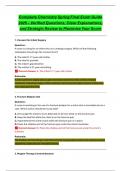
Complete Chemistry Spring Final Exam Guide
2025 – Verified Questions, Clear Explanations,
and Strategic Review to Maximize Your Score
1. Consent for Infant Surgery
Question:
A nurse is caring for an infant who is to undergo surgery. Which of the following
individuals should sign the consent form?
A. The infant's 17-year-old mother
B. The infant's provider
C. The infant's grandmother
D. The mother's 21-year-old sibling
✅ Correct Answer: A. The infant's 17-year-old mother
Rationale:
A minor parent is legally able to give informed consent for their child’s medical
treatment, including surgery. Other relatives cannot provide legal consent unless they
have legal guardianship.
2. Fracture Bedpan Use
Question:
A nurse is assisting in the use of a fracture bedpan for a client who is immobile due to a
cast. Which action should the nurse take?
A. Encourage the client to try to defecate for 20 min while on the fracture pan
B. Keep the bed flat while the client is on the fracture pan
C. Hyperextend the client’s back while the fracture pan is in place
D. Place the shallow end of the fracture pan under the client's buttocks
✅ Correct Answer: D. Place the shallow end of the fracture pan under the client's
buttocks
Rationale:
The shallow end should go under the buttocks to avoid discomfort and maintain proper
alignment, especially for immobile clients.
3. Magnet Therapy Contraindication
,Question:
A nurse is reviewing a client’s record before recommending magnet therapy. Which
condition is a contraindication?
A. Allergy to penicillin
B. Prescription for metoprolol
C. History of alcohol use disorder
D. Implanted defibrillator
✅ Correct Answer: D. Implanted defibrillator
Rationale:
Magnet therapy can interfere with implanted devices like defibrillators or pacemakers
and is therefore contraindicated.
4. Airborne Precautions: PPE Removal
Question:
A nurse is leaving an airborne precautions room after a dressing change. Which item
should be removed first?
A. Gloves
B. Eyewear
C. Gown
D. Mask
✅ Correct Answer: A. Gloves
Rationale:
Gloves are the most contaminated item and should be removed first to prevent
transmission.
5. MRSA Precautions
Question:
A nurse is teaching a newly licensed nurse about MRSA infection precautions. Which
statement indicates understanding?
A. I will wear an N95 respirator mask
B. Visitors must wear masks within 3 feet
C. I will place the client in a private room
D. I will remove my gown before my gloves
✅ Correct Answer: C. I will place the client in a private room
,Rationale:
Clients with MRSA require contact precautions, including a private room. N95 masks
are not necessary unless airborne precautions are needed.
6. Delirium Education
Question:
A charge nurse is teaching about delirium. Which statement should be included?
A. Delirium has an abrupt onset
✅ Correct Answer: A. Delirium has an abrupt onset
Rationale:
Delirium presents suddenly and is often reversible. It differs from dementia, which has a
gradual onset.
7. IV Insertion
Question:
Which action should the nurse take when inserting an IV catheter?
A. Choose the most proximal site
B. Apply a cool compress before insertion
C. Place the tourniquet below the insertion site
D. Place the extremity in a dependent position
✅ Correct Answer: D. Place the extremity in a dependent position
Rationale:
A dependent position promotes venous filling, which makes the veins easier to locate
and cannulate.
8. Advance Directives
Question:
What instruction should a nurse give when teaching about advance directives?
A. Partner must be present
B. You will receive written information before signing
C. You are required to sign before surgery
D. Provider must sign before surgery
✅ Correct Answer: B. You will receive written information before signing
, Rationale:
Clients must be informed and educated before making decisions about advance
directives.
9. Restraint Protocol
Question:
A nurse is caring for a restrained client. What is the appropriate action?
A. Remove one restraint at a time
✅ Correct Answer: A. Remove one restraint at a time
Rationale:
Removing one restraint at a time prevents injury and allows for reassessment while
maintaining safety.
10. Med Admin via NG Tube
Question:
Which action is appropriate when giving meds via NG tube during continuous feeding?
A. Dilute each med with sterile water
B. Mix meds in a single syringe
C. Flush tube with 5 mL sterile water prior
D. Mix meds with formula in feeding bag
✅ Correct Answer: C. Flush tube with 5 mL sterile water prior
Rationale:
Flushing ensures tube patency and prevents clogging before medication administration.
11. Urinary Incontinence
Question:
What should be included in a care plan for urinary incontinence?
A. Toilet every 4 hr
B. Thick layer of moisture barrier
C. Use hot water and antibacterial soap
D. Reduce fluid intake
✅ Correct Answer: B. Apply a moisture barrier in a thick layer
2025 – Verified Questions, Clear Explanations,
and Strategic Review to Maximize Your Score
1. Consent for Infant Surgery
Question:
A nurse is caring for an infant who is to undergo surgery. Which of the following
individuals should sign the consent form?
A. The infant's 17-year-old mother
B. The infant's provider
C. The infant's grandmother
D. The mother's 21-year-old sibling
✅ Correct Answer: A. The infant's 17-year-old mother
Rationale:
A minor parent is legally able to give informed consent for their child’s medical
treatment, including surgery. Other relatives cannot provide legal consent unless they
have legal guardianship.
2. Fracture Bedpan Use
Question:
A nurse is assisting in the use of a fracture bedpan for a client who is immobile due to a
cast. Which action should the nurse take?
A. Encourage the client to try to defecate for 20 min while on the fracture pan
B. Keep the bed flat while the client is on the fracture pan
C. Hyperextend the client’s back while the fracture pan is in place
D. Place the shallow end of the fracture pan under the client's buttocks
✅ Correct Answer: D. Place the shallow end of the fracture pan under the client's
buttocks
Rationale:
The shallow end should go under the buttocks to avoid discomfort and maintain proper
alignment, especially for immobile clients.
3. Magnet Therapy Contraindication
,Question:
A nurse is reviewing a client’s record before recommending magnet therapy. Which
condition is a contraindication?
A. Allergy to penicillin
B. Prescription for metoprolol
C. History of alcohol use disorder
D. Implanted defibrillator
✅ Correct Answer: D. Implanted defibrillator
Rationale:
Magnet therapy can interfere with implanted devices like defibrillators or pacemakers
and is therefore contraindicated.
4. Airborne Precautions: PPE Removal
Question:
A nurse is leaving an airborne precautions room after a dressing change. Which item
should be removed first?
A. Gloves
B. Eyewear
C. Gown
D. Mask
✅ Correct Answer: A. Gloves
Rationale:
Gloves are the most contaminated item and should be removed first to prevent
transmission.
5. MRSA Precautions
Question:
A nurse is teaching a newly licensed nurse about MRSA infection precautions. Which
statement indicates understanding?
A. I will wear an N95 respirator mask
B. Visitors must wear masks within 3 feet
C. I will place the client in a private room
D. I will remove my gown before my gloves
✅ Correct Answer: C. I will place the client in a private room
,Rationale:
Clients with MRSA require contact precautions, including a private room. N95 masks
are not necessary unless airborne precautions are needed.
6. Delirium Education
Question:
A charge nurse is teaching about delirium. Which statement should be included?
A. Delirium has an abrupt onset
✅ Correct Answer: A. Delirium has an abrupt onset
Rationale:
Delirium presents suddenly and is often reversible. It differs from dementia, which has a
gradual onset.
7. IV Insertion
Question:
Which action should the nurse take when inserting an IV catheter?
A. Choose the most proximal site
B. Apply a cool compress before insertion
C. Place the tourniquet below the insertion site
D. Place the extremity in a dependent position
✅ Correct Answer: D. Place the extremity in a dependent position
Rationale:
A dependent position promotes venous filling, which makes the veins easier to locate
and cannulate.
8. Advance Directives
Question:
What instruction should a nurse give when teaching about advance directives?
A. Partner must be present
B. You will receive written information before signing
C. You are required to sign before surgery
D. Provider must sign before surgery
✅ Correct Answer: B. You will receive written information before signing
, Rationale:
Clients must be informed and educated before making decisions about advance
directives.
9. Restraint Protocol
Question:
A nurse is caring for a restrained client. What is the appropriate action?
A. Remove one restraint at a time
✅ Correct Answer: A. Remove one restraint at a time
Rationale:
Removing one restraint at a time prevents injury and allows for reassessment while
maintaining safety.
10. Med Admin via NG Tube
Question:
Which action is appropriate when giving meds via NG tube during continuous feeding?
A. Dilute each med with sterile water
B. Mix meds in a single syringe
C. Flush tube with 5 mL sterile water prior
D. Mix meds with formula in feeding bag
✅ Correct Answer: C. Flush tube with 5 mL sterile water prior
Rationale:
Flushing ensures tube patency and prevents clogging before medication administration.
11. Urinary Incontinence
Question:
What should be included in a care plan for urinary incontinence?
A. Toilet every 4 hr
B. Thick layer of moisture barrier
C. Use hot water and antibacterial soap
D. Reduce fluid intake
✅ Correct Answer: B. Apply a moisture barrier in a thick layer


