

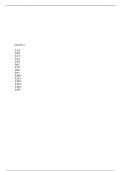
Question 1:
1.1 D
1.2 B
1.3 A
1.4 A
1.5 B
1.6 C
1.7 B
1.8 D
1.9 A
1.10 D
1.11 A
1.12 D
1.13 D
1.14 D
1.15 C
, Please change the order and sequence of these point please
2.1 Risk Response Strategies
1. Avoidance
This involves deciding not to engage in activities that carry risk. A company may choose
to abandon a risky project altogether if the potential negative outcomes outweigh the
benefits.
Example: Rainbow Paint Ltd could choose not to enter the low-quality paint market to
avoid damaging its brand reputation.
2. Reduction (Mitigation)
This strategy focuses on taking steps to reduce either the likelihood or the impact of the
risk.
Example: Installing better ventilation and fire control systems to reduce the risk of fire
from flammable raw materials.
3. Transfer (Sharing)
The risk is transferred to a third party, typically via insurance, outsourcing, or joint
ventures.
Example: Rainbow Paint Ltd can transfer equipment servicing risks to German
technicians via service level agreements (SLAs).
4. Acceptance (Retention)
The company decides to accept the risk without any action, usually because the cost of
mitigation is greater than the risk itself.
Example: Accepting fluctuations in exchange rates when importing raw materials.
5. Exploit (for positive risks)
This strategy aims to make sure that a positive risk happens and benefits the organisation.
Example: Exploiting the advanced manufacturing systems to produce high-end,
innovative paint products.
2.2 Risks Faced by Rainbow Paint Ltd
Strategic Risks
• Risk Event: Failure of the low-cost product line
Cause: Entering a highly competitive market outside the company’s traditional premium
1.1 D
1.2 B
1.3 A
1.4 A
1.5 B
1.6 C
1.7 B
1.8 D
1.9 A
1.10 D
1.11 A
1.12 D
1.13 D
1.14 D
1.15 C
, Please change the order and sequence of these point please
2.1 Risk Response Strategies
1. Avoidance
This involves deciding not to engage in activities that carry risk. A company may choose
to abandon a risky project altogether if the potential negative outcomes outweigh the
benefits.
Example: Rainbow Paint Ltd could choose not to enter the low-quality paint market to
avoid damaging its brand reputation.
2. Reduction (Mitigation)
This strategy focuses on taking steps to reduce either the likelihood or the impact of the
risk.
Example: Installing better ventilation and fire control systems to reduce the risk of fire
from flammable raw materials.
3. Transfer (Sharing)
The risk is transferred to a third party, typically via insurance, outsourcing, or joint
ventures.
Example: Rainbow Paint Ltd can transfer equipment servicing risks to German
technicians via service level agreements (SLAs).
4. Acceptance (Retention)
The company decides to accept the risk without any action, usually because the cost of
mitigation is greater than the risk itself.
Example: Accepting fluctuations in exchange rates when importing raw materials.
5. Exploit (for positive risks)
This strategy aims to make sure that a positive risk happens and benefits the organisation.
Example: Exploiting the advanced manufacturing systems to produce high-end,
innovative paint products.
2.2 Risks Faced by Rainbow Paint Ltd
Strategic Risks
• Risk Event: Failure of the low-cost product line
Cause: Entering a highly competitive market outside the company’s traditional premium


