

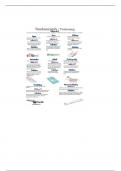
Fundamentals : Positioning Why we do it
To ensure client comfort and safety while preventing complications related to the client's condition, treatment, or procedure.
Prone Litho
Lithotomy
tomy
Supine A patient will be lying on their Most commonly seen in
Supine is considered the most stomach. OB/GYN, whether during an
natural “at rest” position. What am II?? exam or labor.
What am i? The patient lies face down on What am I ?
A position where the patient is his stomach. The head is Patient is lying flat on their back
flat on his back. Think “S” for typically turned to one side. with knees elevated and hips
Supine-lying on your Spine- Indications level, often supported by
facing the Sky. stirrups.
Drainage of the mouth after oral
Indications or neck surgery. It also allows Indications
Used in surgery for abdominal, for full extension of knees and Gynecological procedures and
facial, and extremity procedures. legs. childbirth.
Sim’s P
Position
osition Lateral Fowler's position
Prone + lateral position. Lying on either side. Includes semi fowler's position
What am II?? What am i? which is between 30-40 degrees.
High fowler's is 90 degrees.
A position in which the patient Right lateral means the right
lies on his side with his upper side of the patient is touching What am i?
the bed; left lateral indicates A position in which the head and
leg flexed and drawn in towards
the left side of the patient is trunk are raised 40-90 degrees.
the chest, and the upper arm
flexed at the elbow. touching the bed.
Indications Indications Indications
Administering enemas, perineal GI issues, and rectal Cardiac issues, SOB r/t respiratory
examinations, and for comfort in surgery/colonoscopies. or cardiac issues, NG placement,
pregnancy. May be used for EGD.
colonoscopies.
Trendelenburg Reverse T
Trendelenburg
rendelenburg
“Upside Down.” Also known as the “shock What am i?
position.” Patient is in the supine position with the head of the
What am II?? bed elevated and the foot of the bed down.
This position involves a patient already lying supine, Indications
lowering the head of the bed and raising the foot. Used in surgery to help promote perfusion in obese
Indications patients. It can also be helpful in treating venous air
Used to treat hypotension, during gynecological embolism and preventing pulmonary aspiration.
and abdominal hernia surgeries, and in the
placement of central lines.
, Crut
Crutches,
ches, Canes & W
Walkers,
alkers, OH MY!
Crutches Canes
● The top of the crutch should rest 1-1.5 inches under ● Cane should be held in the opposite hand of the
the axilla when the patient is standing erect. affected limb
● The cane and the injured leg should move and plant
● Hand Grips should be even with the patients hips. on the ground at the same time.
● Go upstairs with the good limb first.
● Elbows should be flexed at about a 30 degree ● Downstairs with the bad limb first.
angle.
1. Cane is used on the good, "unaffected," side to provide
Crutches: 4-point gait (weight bearing) support to the opposite lower limb
1) Place right crutch forward a comfortable distance. 2. Advance cane simultaneously with the opposite "affected"
lower limb
2) Shift weight and move left foot forward. Never place 3. The "unaffected" lower limb should assume the first full
foot ahead of crutch that was just moved. weight-bearing step on level surfaces.
3) Move left crutch forward.
4) Move right foot forward.
5) Repeat steps above
Crutches: 2-point gait (non-weight bearing)
1) Begin in the tripod position, maintain weight on the
"unaffected" [weight-bearing] extremity
2) Advance both crutches and the affected extremity
[crutches are placed forward 6 - 8 inches]
3) Move the "unaffected" weight-bearing foot/leg
forward [beyond the crutches]
4) Advance both crutches, and then the affected
extremity
5) Continue sequence making steps of equal length
Crutches: Walking up stairs
1) Hold onto rail with on hand and crutches with the
other hand.
2) Step up with the strong (unaffected) leg
3) Bring the "affected" leg and the crutches up
4) "Up with the good.”
Crutches: Walking down stairs
1) Place the "affected" leg and the crutches down on
the step below; support weight by leaning on the
crutches
2) Bring the "unaffected" leg down
3) "Down with the bad.”
Walkers
The patient should be taught to walk with the affected leg.
Arms should be used to support some of †the patient's weight
1. Advance walker approximately 12 inches
2. Advance the "affected" lower limb
3. Walk into the walker stepping off the affected limb touching the heel to the ground
first.
4. Never go upstairs or an escalator with a walker
, Prioritization & Delegation
Delegation
Transferring performance of specific tasks to another
competent and qualified individual. Prioritization
Look at the whole picture.
Five rights of Delegation 1. Airway, breathing, circulation unless giving
❖ The "right" person: Is this within the CPR. Then is circulation, airway, breathing.
persons scope of practice? 2. Maslow’s hierarchy of needs
❖ The "right" task: Am I delegating the 3. Nursing process: Assess before you intervene
correct task for this specific patient? (Assess-Diagnose-Plan-Implementation-Evalu
❖ The "right" circumstances: Is this ation).
appropriate at this time? Is this the right 4. Remember an acute issue or a sudden change
setting? Do we have the right resources? takes priority over chronic illness or expected
❖ The "right" directions and communication: findings.
Am I able to communicate what needs to be 5. Save the brain first! Look at organ hierarchy:
done in a precise, easily understood manner? brain, heart, lungs, liver,kidneys.
Be clear on the task, objectives, limits and 6. Remember an elevated potassium (important
expectations. for heart function) is more dangerous than a
❖ The "right" supervision and evaluation: fever.
Am I able to supervise and evaluate
appropriately? Am I able to give appropriate
feedback, whether positive or negative? May
I intervene as needed?
The Delegation Thought Process
❖ Are there laws and rules in place that support the
delegation?
❖ Is the task within the scope of practice of the
RN/LPN?
❖ Is the RN/LPN competent to make delegation
decisions? Triage
❖ Has there been assessment of the client’s needs? ❖ Emergent Red Priority 1 ( Highest):
❖ Is the RN/LPN/UAP competent to accept the Patients who suffer from
delegation? life-threatening injuries and whom
❖ Does the ability of the caregiver match the care need immediate attention.
needs of the client? Examples: trauma, chest pain, respiratory
❖ Can the task be performed without requiring distress, acute neurological deficits, limb
nursing judgment? amputations, and cardiac arrest.
❖ Are the results of the task reasonably predictable? ❖ Urgent Yellow Priority 2
❖ Can the task be safely performed according to Reserved for those who have injuries with
exact, unchanging directions? complications that are not life threatening. Must
❖ Can the task be safely performed without complex be treated within 1-2 hours.
observations or critical decisions? Examples: Asthma without respiratory distress,
❖ Can the task be performed without repeated simple fracture, fever, hypertension, abdominal
nursing assessments? pain, or kidney stones.
❖ Is appropriate supervision available? ❖ Non urgent Green Priority 3
Assigned to those who have minor injuries who
If the answer is NO to any of these questions do not have complications and can wait several
DO NOT DELEGATE hours for treatment.
Examples: lacerations, sprains, colds.
❖ Black tag indicates the patient will not
Time management benefit from medical attention. These
The ability to anticipate daily activities and combine patients are usually deceased or soon
them when possible to get the most done in a specific will be.
time frame. Time management involves both the
ability to prioritize and to delegate.
❖ Identify tasks
❖ Organize the work day
❖ Work on the most important tasks first
❖ Begin rounds before the shift
❖ Delegate when possible and appropriate.
❖ Gather all needed supplies before
performing a task
❖ Document as you go
Copyright Nurse Angie 2018
To ensure client comfort and safety while preventing complications related to the client's condition, treatment, or procedure.
Prone Litho
Lithotomy
tomy
Supine A patient will be lying on their Most commonly seen in
Supine is considered the most stomach. OB/GYN, whether during an
natural “at rest” position. What am II?? exam or labor.
What am i? The patient lies face down on What am I ?
A position where the patient is his stomach. The head is Patient is lying flat on their back
flat on his back. Think “S” for typically turned to one side. with knees elevated and hips
Supine-lying on your Spine- Indications level, often supported by
facing the Sky. stirrups.
Drainage of the mouth after oral
Indications or neck surgery. It also allows Indications
Used in surgery for abdominal, for full extension of knees and Gynecological procedures and
facial, and extremity procedures. legs. childbirth.
Sim’s P
Position
osition Lateral Fowler's position
Prone + lateral position. Lying on either side. Includes semi fowler's position
What am II?? What am i? which is between 30-40 degrees.
High fowler's is 90 degrees.
A position in which the patient Right lateral means the right
lies on his side with his upper side of the patient is touching What am i?
the bed; left lateral indicates A position in which the head and
leg flexed and drawn in towards
the left side of the patient is trunk are raised 40-90 degrees.
the chest, and the upper arm
flexed at the elbow. touching the bed.
Indications Indications Indications
Administering enemas, perineal GI issues, and rectal Cardiac issues, SOB r/t respiratory
examinations, and for comfort in surgery/colonoscopies. or cardiac issues, NG placement,
pregnancy. May be used for EGD.
colonoscopies.
Trendelenburg Reverse T
Trendelenburg
rendelenburg
“Upside Down.” Also known as the “shock What am i?
position.” Patient is in the supine position with the head of the
What am II?? bed elevated and the foot of the bed down.
This position involves a patient already lying supine, Indications
lowering the head of the bed and raising the foot. Used in surgery to help promote perfusion in obese
Indications patients. It can also be helpful in treating venous air
Used to treat hypotension, during gynecological embolism and preventing pulmonary aspiration.
and abdominal hernia surgeries, and in the
placement of central lines.
, Crut
Crutches,
ches, Canes & W
Walkers,
alkers, OH MY!
Crutches Canes
● The top of the crutch should rest 1-1.5 inches under ● Cane should be held in the opposite hand of the
the axilla when the patient is standing erect. affected limb
● The cane and the injured leg should move and plant
● Hand Grips should be even with the patients hips. on the ground at the same time.
● Go upstairs with the good limb first.
● Elbows should be flexed at about a 30 degree ● Downstairs with the bad limb first.
angle.
1. Cane is used on the good, "unaffected," side to provide
Crutches: 4-point gait (weight bearing) support to the opposite lower limb
1) Place right crutch forward a comfortable distance. 2. Advance cane simultaneously with the opposite "affected"
lower limb
2) Shift weight and move left foot forward. Never place 3. The "unaffected" lower limb should assume the first full
foot ahead of crutch that was just moved. weight-bearing step on level surfaces.
3) Move left crutch forward.
4) Move right foot forward.
5) Repeat steps above
Crutches: 2-point gait (non-weight bearing)
1) Begin in the tripod position, maintain weight on the
"unaffected" [weight-bearing] extremity
2) Advance both crutches and the affected extremity
[crutches are placed forward 6 - 8 inches]
3) Move the "unaffected" weight-bearing foot/leg
forward [beyond the crutches]
4) Advance both crutches, and then the affected
extremity
5) Continue sequence making steps of equal length
Crutches: Walking up stairs
1) Hold onto rail with on hand and crutches with the
other hand.
2) Step up with the strong (unaffected) leg
3) Bring the "affected" leg and the crutches up
4) "Up with the good.”
Crutches: Walking down stairs
1) Place the "affected" leg and the crutches down on
the step below; support weight by leaning on the
crutches
2) Bring the "unaffected" leg down
3) "Down with the bad.”
Walkers
The patient should be taught to walk with the affected leg.
Arms should be used to support some of †the patient's weight
1. Advance walker approximately 12 inches
2. Advance the "affected" lower limb
3. Walk into the walker stepping off the affected limb touching the heel to the ground
first.
4. Never go upstairs or an escalator with a walker
, Prioritization & Delegation
Delegation
Transferring performance of specific tasks to another
competent and qualified individual. Prioritization
Look at the whole picture.
Five rights of Delegation 1. Airway, breathing, circulation unless giving
❖ The "right" person: Is this within the CPR. Then is circulation, airway, breathing.
persons scope of practice? 2. Maslow’s hierarchy of needs
❖ The "right" task: Am I delegating the 3. Nursing process: Assess before you intervene
correct task for this specific patient? (Assess-Diagnose-Plan-Implementation-Evalu
❖ The "right" circumstances: Is this ation).
appropriate at this time? Is this the right 4. Remember an acute issue or a sudden change
setting? Do we have the right resources? takes priority over chronic illness or expected
❖ The "right" directions and communication: findings.
Am I able to communicate what needs to be 5. Save the brain first! Look at organ hierarchy:
done in a precise, easily understood manner? brain, heart, lungs, liver,kidneys.
Be clear on the task, objectives, limits and 6. Remember an elevated potassium (important
expectations. for heart function) is more dangerous than a
❖ The "right" supervision and evaluation: fever.
Am I able to supervise and evaluate
appropriately? Am I able to give appropriate
feedback, whether positive or negative? May
I intervene as needed?
The Delegation Thought Process
❖ Are there laws and rules in place that support the
delegation?
❖ Is the task within the scope of practice of the
RN/LPN?
❖ Is the RN/LPN competent to make delegation
decisions? Triage
❖ Has there been assessment of the client’s needs? ❖ Emergent Red Priority 1 ( Highest):
❖ Is the RN/LPN/UAP competent to accept the Patients who suffer from
delegation? life-threatening injuries and whom
❖ Does the ability of the caregiver match the care need immediate attention.
needs of the client? Examples: trauma, chest pain, respiratory
❖ Can the task be performed without requiring distress, acute neurological deficits, limb
nursing judgment? amputations, and cardiac arrest.
❖ Are the results of the task reasonably predictable? ❖ Urgent Yellow Priority 2
❖ Can the task be safely performed according to Reserved for those who have injuries with
exact, unchanging directions? complications that are not life threatening. Must
❖ Can the task be safely performed without complex be treated within 1-2 hours.
observations or critical decisions? Examples: Asthma without respiratory distress,
❖ Can the task be performed without repeated simple fracture, fever, hypertension, abdominal
nursing assessments? pain, or kidney stones.
❖ Is appropriate supervision available? ❖ Non urgent Green Priority 3
Assigned to those who have minor injuries who
If the answer is NO to any of these questions do not have complications and can wait several
DO NOT DELEGATE hours for treatment.
Examples: lacerations, sprains, colds.
❖ Black tag indicates the patient will not
Time management benefit from medical attention. These
The ability to anticipate daily activities and combine patients are usually deceased or soon
them when possible to get the most done in a specific will be.
time frame. Time management involves both the
ability to prioritize and to delegate.
❖ Identify tasks
❖ Organize the work day
❖ Work on the most important tasks first
❖ Begin rounds before the shift
❖ Delegate when possible and appropriate.
❖ Gather all needed supplies before
performing a task
❖ Document as you go
Copyright Nurse Angie 2018


