

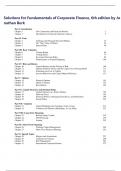
Solutions for Fundamentals of Corporate Finance, 6th edition by Jo
gt gt gt gt gt gt gt gt gt
nathan Berk
gt
Part I: Introduction
gt gt
Chapter 1 gt The Corporation and Financial Markets
gt gt gt gt 1
Chapter 2 gt Introduction to Financial Statement Analysis gt gt gt gt 5
Part II: Tools
gt gt
Chapter 3 gt Arbitrage and Financial Decision Making
gt gt gt gt 15
Chapter 4 gt The Time Value of Money
gt gt gt gt 26
Chapter 5 gt Interest Rates gt 49
Part III: Basic Valuation
gt gt gt
Chapter 6 gt Valuing Bonds gt 65
Chapter 7 gt Valuing Stocks gt 77
Chapter 8 gt Investment Decision Rules gt gt 85
Chapter 9 gt Fundamentals of Capital Budgeting gt gt gt 100
Part IV: Risk and Return
gt gt gt gt
Chapter 10 gt Capital Markets and the Pricing of Risk gt gt gt gt gt gt 108
Chapter 11 gt Optimal Portfolio Choice and the Capital Asset Pricing Model gt gt gt gt gt gt gt gt 117
Chapter 12 gt Estimating the Cost of Capital gt gt gt gt 131
Chapter 13 gt Investor Behaviour and Capital Market Efficiency gt gt gt gt gt 137
Part V: Options
gt gt
Chapter 14 gt Financial Options gt 143
Chapter 15 gt Option Valuation gt 152
Chapter 16 gt Real Optionsgt 162
Part VI: Capital Structure and Dividend Policy
gt gt gt gt gt gt
Chapter 17 gt Capital Structure in a Perfect Market gt gt gt gt gt 185
Chapter 18 gt Debt and Taxes gt gt 192
Chapter 19 gt Financial Distress, Managerial Incentives, and Information gt gt gt gt gt 199
Chapter 20 gt Payout Policy gt 207
Part VII: Valuation
gt gt
Chapter 21 gt Capital Budgeting and Valuation with Leverage
gt gt gt gt gt 213
Chapter 22 gt Valuation and Financial Modelling: A Case Study
gt gt gt gt gt gt 227
Part VIII: Long-Term
gt gt Financing
gt
Chapter 23 gt Raising Equity Capital gt gt 235
Chapter 24 gt Debt Financing gt 239
Chapter 25 gt Leasing 242
Part IX: Short-Term Financing
gt gt gt
Chapter 26 gt Working Capital Management gt gt 248
Chapter 27 gt Short-Term Financial Planning gt gt 253
Part X: Special Topics
gt gt gt
Chapter 28 gt Mergers and Acquisitions gt gt 257
Chapter 29 gt Corporate Governance gt 260
Chapter 30 gt Risk Management gt 263
Chapter 31 gt International Corporate Finance gt gt 272
,Chapter 1 gt
The Corporation and Financial Markets
gt gt gt gt
1-
1. g A corporation is a legal entity separate from its owners. This means ownership shares in the cor
t g t g t gt gt gt gt gt gt gt gt gt gt gt gt gt gt gt gt
poration can be freely traded. None of the other organizational forms share this characteristic.
gt gt gt gt gt gt gt gt gt gt gt gt gt
1-
2. g Owners’ liability is limited to the amount they invested in the firm. Shareholders are not responsib
t g t gt gt gt gt gt gt gt gt gt gt gt gt gt gt gt
le for any encumbrances of the firm; in particular, they cannot be required to pay back any debts incurred
gt gt gt gt gt gt gt gt gt gt gt gt gt gt gt gt gt gt
by the firm.
gt gt gt
1-
3. Corporations (all shareholders have limited liability). Limited partnerships provide limited liability f
g t g t gt gt gt gt gt gt gt gt gt gt gt
or the limited partners, but not for the general partners.
gt gt gt gt gt gt gt gt gt
1-
4. Advantages: Limited liability, liquidity, infinite life. Disadvantages: Double taxation, separ
g t g t g t g t g t g t g t g t g t g t g t
ation of ownership and control.
g t gt gt gt
1-
5. g The corporation that only holds real estate must pay corporate income taxes. The real estate invest
t g t gt gt gt gt gt gt gt gt gt gt gt gt gt gt gt
ment trust (REIT) does not pay corporate taxes but must pass through substantially all of the income to t
gt gt gt gt gt gt gt gt gt gt gt gt gt gt gt gt gt gt
he trust unit holders to whom it is taxable.
gt gt gt gt gt gt gt gt
1-6. g t g t First, the corporation pays the taxes. After taxes, $2 × (1 –
gt gt gt gt gt gt gt gt gt gt gt
0.34) = $1.32 per share is left to pay dividends. Once the dividend is paid, personal tax on this must be p
gt gt gt gt gt gt gt gt gt gt gt gt gt gt gt gt gt gt gt gt gt gt
aid, leaving $1.32 × (1 –
gt gt gt gt gt
0.18) = $1.0824 per share. So after all the taxes are paid, you are left with $1.0824 per share.
gt gt gt gt gt gt gt gt gt gt gt gt gt gt gt gt gt gt gt
1-
7. g As a real estate investment trust (REIT) pays no corporate tax, the full amount of $2 per unit ca
t g t g t gt gt gt gt gt gt gt gt gt gt gt gt gt gt gt gt gt gt
n be paid out to you as a trust unit holder. You must then pay personal income tax on the distribution. So
gt gt gt gt gt gt gt gt gt gt gt gt gt gt gt gt gt gt gt gt gt gt
you are left with gt gt gt
$2 × (1 – 0.4) = $1.20 per unit.
gt gt gt gt gt gt gt gt
1-8. As the manager of an iPhone applications developer, you will make three types of financial decisions.
gt gt gt gt gt gt gt gt gt gt gt gt gt gt gt
i. You will make investment decisions such as determining which type of iPhone application projects wil
gt gt gt gt gt gt gt gt gt gt gt gt gt gt
l offer your company a positive NPV and should, therefore, be developed by your company.
gt gt gt gt gt gt gt gt gt gt gt gt gt gt
ii. You will make the decision on how to fund your iPhone application investments and what mix of de
gt gt gt gt gt gt gt gt gt gt gt gt gt gt gt gt gt
bt and equity your company will have.
gt gt gt gt gt gt
iii. You will be responsible for the cash management of your company, ensuring that your company has th
gt gt gt gt gt gt gt gt gt gt gt gt gt gt gt gt
e necessary funds to make investments, pay interest on loans, and pay your employees.
gt gt gt gt gt gt gt gt gt gt gt gt gt
1-9. Shareholders can gt
i. ensure that employees are paid with company stock and/or stock options.
gt gt gt gt gt gt gt gt gt gt
ii. ensure that underperforming managers are fired. gt gt gt gt gt
iii. write contracts that ensure that the interests of the managers and shareholders are closely aligned.
gt gt gt gt gt gt gt gt gt gt gt gt gt gt
iv. mount hostile takeovers. gt gt
1-
10. g t g t This will affect and hurt the customers. It will have a negative impact on the customers, for they
gt gt gt gt gt gt gt gt gt gt gt gt gt gt gt gt gt g
,will likely get sour milk. It will also have a negative impact on shareholders because, in the long run, cu
t gt gt gt gt gt gt gt gt gt gt gt gt gt gt gt gt gt gt gt
stomers will realize that the supermarket sells sour milk and will switch to other supermarkets. Thus, the
gt gt gt gt gt gt gt gt gt gt gt gt gt gt gt gt gt
value today of the future income and cash flow streams generated by the supermarket will drop because
gt gt gt gt gt gt gt gt gt gt gt gt gt gt gt gt gt
of the long-
gt gt
term loss of customers caused by this strategy. This will negatively affect the current stock price as share
gt gt gt gt gt gt gt gt gt gt gt gt gt gt gt gt gt
holders anticipate these long-term drawbacks.
gt gt gt gt
, All Chapters solutions are given in this P
gt gt gt gt gt gt gt
DF however some extra files are availab
gt gt gt gt gt gt
le too with solutions set.
gt gt gt gt
gt gt gt gt gt gt gt gt gt
nathan Berk
gt
Part I: Introduction
gt gt
Chapter 1 gt The Corporation and Financial Markets
gt gt gt gt 1
Chapter 2 gt Introduction to Financial Statement Analysis gt gt gt gt 5
Part II: Tools
gt gt
Chapter 3 gt Arbitrage and Financial Decision Making
gt gt gt gt 15
Chapter 4 gt The Time Value of Money
gt gt gt gt 26
Chapter 5 gt Interest Rates gt 49
Part III: Basic Valuation
gt gt gt
Chapter 6 gt Valuing Bonds gt 65
Chapter 7 gt Valuing Stocks gt 77
Chapter 8 gt Investment Decision Rules gt gt 85
Chapter 9 gt Fundamentals of Capital Budgeting gt gt gt 100
Part IV: Risk and Return
gt gt gt gt
Chapter 10 gt Capital Markets and the Pricing of Risk gt gt gt gt gt gt 108
Chapter 11 gt Optimal Portfolio Choice and the Capital Asset Pricing Model gt gt gt gt gt gt gt gt 117
Chapter 12 gt Estimating the Cost of Capital gt gt gt gt 131
Chapter 13 gt Investor Behaviour and Capital Market Efficiency gt gt gt gt gt 137
Part V: Options
gt gt
Chapter 14 gt Financial Options gt 143
Chapter 15 gt Option Valuation gt 152
Chapter 16 gt Real Optionsgt 162
Part VI: Capital Structure and Dividend Policy
gt gt gt gt gt gt
Chapter 17 gt Capital Structure in a Perfect Market gt gt gt gt gt 185
Chapter 18 gt Debt and Taxes gt gt 192
Chapter 19 gt Financial Distress, Managerial Incentives, and Information gt gt gt gt gt 199
Chapter 20 gt Payout Policy gt 207
Part VII: Valuation
gt gt
Chapter 21 gt Capital Budgeting and Valuation with Leverage
gt gt gt gt gt 213
Chapter 22 gt Valuation and Financial Modelling: A Case Study
gt gt gt gt gt gt 227
Part VIII: Long-Term
gt gt Financing
gt
Chapter 23 gt Raising Equity Capital gt gt 235
Chapter 24 gt Debt Financing gt 239
Chapter 25 gt Leasing 242
Part IX: Short-Term Financing
gt gt gt
Chapter 26 gt Working Capital Management gt gt 248
Chapter 27 gt Short-Term Financial Planning gt gt 253
Part X: Special Topics
gt gt gt
Chapter 28 gt Mergers and Acquisitions gt gt 257
Chapter 29 gt Corporate Governance gt 260
Chapter 30 gt Risk Management gt 263
Chapter 31 gt International Corporate Finance gt gt 272
,Chapter 1 gt
The Corporation and Financial Markets
gt gt gt gt
1-
1. g A corporation is a legal entity separate from its owners. This means ownership shares in the cor
t g t g t gt gt gt gt gt gt gt gt gt gt gt gt gt gt gt gt
poration can be freely traded. None of the other organizational forms share this characteristic.
gt gt gt gt gt gt gt gt gt gt gt gt gt
1-
2. g Owners’ liability is limited to the amount they invested in the firm. Shareholders are not responsib
t g t gt gt gt gt gt gt gt gt gt gt gt gt gt gt gt
le for any encumbrances of the firm; in particular, they cannot be required to pay back any debts incurred
gt gt gt gt gt gt gt gt gt gt gt gt gt gt gt gt gt gt
by the firm.
gt gt gt
1-
3. Corporations (all shareholders have limited liability). Limited partnerships provide limited liability f
g t g t gt gt gt gt gt gt gt gt gt gt gt
or the limited partners, but not for the general partners.
gt gt gt gt gt gt gt gt gt
1-
4. Advantages: Limited liability, liquidity, infinite life. Disadvantages: Double taxation, separ
g t g t g t g t g t g t g t g t g t g t g t
ation of ownership and control.
g t gt gt gt
1-
5. g The corporation that only holds real estate must pay corporate income taxes. The real estate invest
t g t gt gt gt gt gt gt gt gt gt gt gt gt gt gt gt
ment trust (REIT) does not pay corporate taxes but must pass through substantially all of the income to t
gt gt gt gt gt gt gt gt gt gt gt gt gt gt gt gt gt gt
he trust unit holders to whom it is taxable.
gt gt gt gt gt gt gt gt
1-6. g t g t First, the corporation pays the taxes. After taxes, $2 × (1 –
gt gt gt gt gt gt gt gt gt gt gt
0.34) = $1.32 per share is left to pay dividends. Once the dividend is paid, personal tax on this must be p
gt gt gt gt gt gt gt gt gt gt gt gt gt gt gt gt gt gt gt gt gt gt
aid, leaving $1.32 × (1 –
gt gt gt gt gt
0.18) = $1.0824 per share. So after all the taxes are paid, you are left with $1.0824 per share.
gt gt gt gt gt gt gt gt gt gt gt gt gt gt gt gt gt gt gt
1-
7. g As a real estate investment trust (REIT) pays no corporate tax, the full amount of $2 per unit ca
t g t g t gt gt gt gt gt gt gt gt gt gt gt gt gt gt gt gt gt gt
n be paid out to you as a trust unit holder. You must then pay personal income tax on the distribution. So
gt gt gt gt gt gt gt gt gt gt gt gt gt gt gt gt gt gt gt gt gt gt
you are left with gt gt gt
$2 × (1 – 0.4) = $1.20 per unit.
gt gt gt gt gt gt gt gt
1-8. As the manager of an iPhone applications developer, you will make three types of financial decisions.
gt gt gt gt gt gt gt gt gt gt gt gt gt gt gt
i. You will make investment decisions such as determining which type of iPhone application projects wil
gt gt gt gt gt gt gt gt gt gt gt gt gt gt
l offer your company a positive NPV and should, therefore, be developed by your company.
gt gt gt gt gt gt gt gt gt gt gt gt gt gt
ii. You will make the decision on how to fund your iPhone application investments and what mix of de
gt gt gt gt gt gt gt gt gt gt gt gt gt gt gt gt gt
bt and equity your company will have.
gt gt gt gt gt gt
iii. You will be responsible for the cash management of your company, ensuring that your company has th
gt gt gt gt gt gt gt gt gt gt gt gt gt gt gt gt
e necessary funds to make investments, pay interest on loans, and pay your employees.
gt gt gt gt gt gt gt gt gt gt gt gt gt
1-9. Shareholders can gt
i. ensure that employees are paid with company stock and/or stock options.
gt gt gt gt gt gt gt gt gt gt
ii. ensure that underperforming managers are fired. gt gt gt gt gt
iii. write contracts that ensure that the interests of the managers and shareholders are closely aligned.
gt gt gt gt gt gt gt gt gt gt gt gt gt gt
iv. mount hostile takeovers. gt gt
1-
10. g t g t This will affect and hurt the customers. It will have a negative impact on the customers, for they
gt gt gt gt gt gt gt gt gt gt gt gt gt gt gt gt gt g
,will likely get sour milk. It will also have a negative impact on shareholders because, in the long run, cu
t gt gt gt gt gt gt gt gt gt gt gt gt gt gt gt gt gt gt gt
stomers will realize that the supermarket sells sour milk and will switch to other supermarkets. Thus, the
gt gt gt gt gt gt gt gt gt gt gt gt gt gt gt gt gt
value today of the future income and cash flow streams generated by the supermarket will drop because
gt gt gt gt gt gt gt gt gt gt gt gt gt gt gt gt gt
of the long-
gt gt
term loss of customers caused by this strategy. This will negatively affect the current stock price as share
gt gt gt gt gt gt gt gt gt gt gt gt gt gt gt gt gt
holders anticipate these long-term drawbacks.
gt gt gt gt
, All Chapters solutions are given in this P
gt gt gt gt gt gt gt
DF however some extra files are availab
gt gt gt gt gt gt
le too with solutions set.
gt gt gt gt


