1
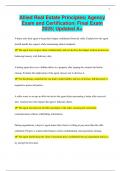
Allied Real Estate Principles| Agency
Exam and Certification| Final Exam
2025| Updated A+
A buyer asks their agent to keep their budget confidential from the seller. Explain how the agent
should handle this request while maintaining ethical standards.
The agent must respect client confidentiality and not disclose the budget without permission,
balancing honesty with fiduciary duty.
A listing agent discovers a hidden defect in a property after signing the contract but before
closing. Evaluate the implications if the agent chooses not to disclose it.
Not disclosing a material fact can lead to legal liability and loss of license; full disclosure is
required to protect all parties.
A seller wants to accept an offer but insists the agent delays presenting a better offer received
later. Analyze how this impacts the agent’s fiduciary duties.
The agent must present all offers promptly to the seller, ensuring fair and timely
communication without withholding information.
During negotiations, a buyer’s agent learns their client is willing to pay more than the offer
submitted. Propose a solution that balances client confidentiality and negotiation strategy.
The agent should keep the client’s maximum price confidential but use negotiation tactics to
try and get the best deal.
, 2
A client asks an agent to act in dual agency without fully understanding the consequences.
Identify key risks and how the agent should proceed.
Dual agency can create conflicts of interest; the agent must explain risks clearly and get
written consent before proceeding.
A tenant informs the agent of a safety issue in a rental property. Evaluate the agent’s
responsibilities regarding disclosure and repair.
The agent must inform the landlord and ensure timely repairs to comply with habitability
laws and protect tenant safety.
An agent receives a verbal offer on a property but the seller insists on written offers only. Assess
the agent’s next steps.
The agent should inform the buyer the offer must be in writing to be considered valid and
enforceable.
A seller instructs the agent to advertise a property with misleading information to attract buyers.
Analyze the ethical and legal implications.
Misleading advertising violates fair marketing laws and ethical codes; the agent should
refuse and report the issue.
A buyer’s agent suspects a client may not fully understand the terms of a contract. Propose how
the agent should handle this.
, 3
The agent should recommend the client seek legal advice or clarification to ensure informed
consent before signing.
An agent accidentally discloses a client’s confidential financial information to a competing
buyer. Identify the consequences and corrective actions.
This breaches confidentiality, risking legal action and loss of trust; the agent should
apologize, inform the client, and take steps to prevent recurrence.
A property has multiple offers with different contingencies. Evaluate how the agent should
advise the seller in choosing the best offer.
The agent should assess all terms, including price, contingencies, and closing timelines,
helping the seller weigh risks and benefits.
A buyer wants the agent to conceal their intention to resell the property quickly for profit.
Analyze the agent’s ethical obligations.
The agent must disclose any material facts affecting the transaction honestly, avoiding
misrepresentation or concealment.
An agent is asked to represent both buyer and seller but the seller insists on full disclosure of
buyer’s negotiating limits. Assess how to navigate this.
The agent must maintain confidentiality for both parties and avoid sharing negotiating limits
to prevent conflict of interest.
Allied Real Estate Principles| Agency
Exam and Certification| Final Exam
2025| Updated A+
A buyer asks their agent to keep their budget confidential from the seller. Explain how the agent
should handle this request while maintaining ethical standards.
The agent must respect client confidentiality and not disclose the budget without permission,
balancing honesty with fiduciary duty.
A listing agent discovers a hidden defect in a property after signing the contract but before
closing. Evaluate the implications if the agent chooses not to disclose it.
Not disclosing a material fact can lead to legal liability and loss of license; full disclosure is
required to protect all parties.
A seller wants to accept an offer but insists the agent delays presenting a better offer received
later. Analyze how this impacts the agent’s fiduciary duties.
The agent must present all offers promptly to the seller, ensuring fair and timely
communication without withholding information.
During negotiations, a buyer’s agent learns their client is willing to pay more than the offer
submitted. Propose a solution that balances client confidentiality and negotiation strategy.
The agent should keep the client’s maximum price confidential but use negotiation tactics to
try and get the best deal.
, 2
A client asks an agent to act in dual agency without fully understanding the consequences.
Identify key risks and how the agent should proceed.
Dual agency can create conflicts of interest; the agent must explain risks clearly and get
written consent before proceeding.
A tenant informs the agent of a safety issue in a rental property. Evaluate the agent’s
responsibilities regarding disclosure and repair.
The agent must inform the landlord and ensure timely repairs to comply with habitability
laws and protect tenant safety.
An agent receives a verbal offer on a property but the seller insists on written offers only. Assess
the agent’s next steps.
The agent should inform the buyer the offer must be in writing to be considered valid and
enforceable.
A seller instructs the agent to advertise a property with misleading information to attract buyers.
Analyze the ethical and legal implications.
Misleading advertising violates fair marketing laws and ethical codes; the agent should
refuse and report the issue.
A buyer’s agent suspects a client may not fully understand the terms of a contract. Propose how
the agent should handle this.
, 3
The agent should recommend the client seek legal advice or clarification to ensure informed
consent before signing.
An agent accidentally discloses a client’s confidential financial information to a competing
buyer. Identify the consequences and corrective actions.
This breaches confidentiality, risking legal action and loss of trust; the agent should
apologize, inform the client, and take steps to prevent recurrence.
A property has multiple offers with different contingencies. Evaluate how the agent should
advise the seller in choosing the best offer.
The agent should assess all terms, including price, contingencies, and closing timelines,
helping the seller weigh risks and benefits.
A buyer wants the agent to conceal their intention to resell the property quickly for profit.
Analyze the agent’s ethical obligations.
The agent must disclose any material facts affecting the transaction honestly, avoiding
misrepresentation or concealment.
An agent is asked to represent both buyer and seller but the seller insists on full disclosure of
buyer’s negotiating limits. Assess how to navigate this.
The agent must maintain confidentiality for both parties and avoid sharing negotiating limits
to prevent conflict of interest.