protein
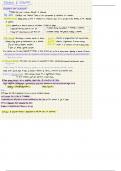
&Feestate ↳
enzymes can push a reaction foreward or backwards
Key idea :
catalyst and Catalysis ↑ rate of the achievement of equilibrium of a reaction
Transition energy : energy needed to more a reactant to its transition state
. It is not
part of the energy of the reactants
or products
Energy : propensity of a system to change or the likelihood a system will change
released
↑ energy
system
-
more likely to change into a lover form
↑ reactant energy than productse energy is
↓ reactant energy than consumed
↓
energy system likely to
:
change into a
higher form or system products ->
energy is
#Free
energy
:
the energy a reaction requires or releases 160 : reaction is
nonspontaneous and requires energy
:
catalyst help speed up achievement of a reaction A610
: reaction is
spontaneous
& releases
energy
16
S gain kcal/mol
=
loss of 0
energy negative =
.
reaction is at equilibrium and has no
energy change
of energy =
positive kcal/mol
* a reaction uses the same magnitude of energy in either direction but the flow of
,
energy changes depending on direction of reaction
* equilibrium means the rate of conversion of reactants to
products = rate of conversion of products to reactantA
↳ read vxn as written
the ways
Le Chatelier's principle to shift creation of reaction/products through adding/removing & heat/alternative
:
materials pressure
↳
Dequilibrum
Catalyst change the reaction new reaction that has lover activation energy
by creating
·
energy a
every action requires to begin to reactant to iD transition State
input ,
so energy is required move a
transition
Memical State Shows energy change for :
a
hypothetical reaction
↳ most energetic part but substrate ,
is least stable
* Free
energy doesn't tell u anything about rate of reaction or time
Huge negative energy means Spontaneous but doesn't instantaneous that the will even
happen at all
-
... mean or rxn
energy = thermodynamics rates Kinetis =
Kinetics
-
order etc refer to dependence of the role of reaction to different substratea s
1st if enzyme fun is due to 1 substrate
42 substrates but only one in excess contributes to the fxn of the enzyme is still st order
2nd if I substrates that influence the rate
O order is it substrates don influence it at all
the of
A the roles of enzymatic reactions is
dependent on only conc .
substrate
&Feestate ↳
enzymes can push a reaction foreward or backwards
Key idea :
catalyst and Catalysis ↑ rate of the achievement of equilibrium of a reaction
Transition energy : energy needed to more a reactant to its transition state
. It is not
part of the energy of the reactants
or products
Energy : propensity of a system to change or the likelihood a system will change
released
↑ energy
system
-
more likely to change into a lover form
↑ reactant energy than productse energy is
↓ reactant energy than consumed
↓
energy system likely to
:
change into a
higher form or system products ->
energy is
#Free
energy
:
the energy a reaction requires or releases 160 : reaction is
nonspontaneous and requires energy
:
catalyst help speed up achievement of a reaction A610
: reaction is
spontaneous
& releases
energy
16
S gain kcal/mol
=
loss of 0
energy negative =
.
reaction is at equilibrium and has no
energy change
of energy =
positive kcal/mol
* a reaction uses the same magnitude of energy in either direction but the flow of
,
energy changes depending on direction of reaction
* equilibrium means the rate of conversion of reactants to
products = rate of conversion of products to reactantA
↳ read vxn as written
the ways
Le Chatelier's principle to shift creation of reaction/products through adding/removing & heat/alternative
:
materials pressure
↳
Dequilibrum
Catalyst change the reaction new reaction that has lover activation energy
by creating
·
energy a
every action requires to begin to reactant to iD transition State
input ,
so energy is required move a
transition
Memical State Shows energy change for :
a
hypothetical reaction
↳ most energetic part but substrate ,
is least stable
* Free
energy doesn't tell u anything about rate of reaction or time
Huge negative energy means Spontaneous but doesn't instantaneous that the will even
happen at all
-
... mean or rxn
energy = thermodynamics rates Kinetis =
Kinetics
-
order etc refer to dependence of the role of reaction to different substratea s
1st if enzyme fun is due to 1 substrate
42 substrates but only one in excess contributes to the fxn of the enzyme is still st order
2nd if I substrates that influence the rate
O order is it substrates don influence it at all
the of
A the roles of enzymatic reactions is
dependent on only conc .
substrate