

Biodiversity restoration
Restoration = “…the process of managing or assisting the sustainable recovery of an ecosystem that
has been degraded, damaged or destroyed…”
Restoration ecology vs ecological restoration
• Ecological restoration is a societal activity
• Restoration ecology is a scientific discipline
→High advantage for gathering experimental evidence (=proving causation) for ecology (vs.
observational=you can collect correlations but no causation) (! Do do work together)
→restoration ecology is the science behind ecological retoration
Why restoration?
• Biodiversity loss
o Genetic diversity (varioations of allelics, variation in genes)
o Species diversity
o Ecosystem diversity
o Alpha diversity= at a specific location how many allelics, species, hetergenity,
ecosystems do you find
o Beta diversity= uniqueness of a system for example: if you find one species only in
one location it will amount to higher beta diversity
o Gamma diversity= entire sum of every single diversity
• Disruption of ecosystem biogechemistry (soil, air, water, including pesticides) bv: PFAS
polution, fosfor polution, pesticide etc.
• Land use changes
• Climate change
• Invasive species
ALL DRIVERS INTERACT!
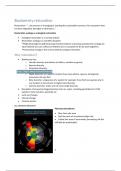
Planetary boundaries
• Blue lines safe zone
• Red line zone of uncertainty (high risk)
• Yellow line zone of uncertainty (increasing risk but
still little bit predictable)
•
, Old map of soil degradation
→heavy populated areas are
quit degraded
Eutrophication
• Nitrogen with introduction of artificial fertilizers
• Concentration nitrogen to high
• We more than doubled the amount of available nitrogen in ecosystems on earth
• Nitrogen trade flow on earth, arrow points to where is import of nitrogen and the thickness
of arrow indicates how much
o Biggest problems will occur in Europe, north America, south east asia
• Nitrogen emissions, for example from lifestock you get airborne nitrogen
On the right, the last remaining wildernesses; show how correlated the nitrogen is with
high density population and lower in places with wilderness
,Also increase in fosfor, but seems less worse than
nitrogen increase. But this graph mislead people
because much lower and doesn’t rise anymore
(because we running out). →this will be explained
during this course
You can predict the
protons in the ocean in 80
years when you know the
Co2 concentration in the
atmosphere
Airborne sulphur pollution
• This problem is tackled at a global scale to a fair amount of extant
• Most of sulphur came of burning coal, but you can chemically extract sulphur compounds
before burning it, it was just a byproduct
o You cant do this for carbon, carbon is the chain that makes oil, it is the energy
carrier, which you need, you need to set carbon free
o Same for nitrogen, you need nitrogen to have the production levels to feed the
people (artificial fertilizers fueled the population growth)
drainage
if you drain the soil you will get soil erostion, because organic
material in soil will be degraded
, Land use changes: agricultural intensification and urbanization
→forest converted to arable
fields and urbanized, some of
them new habitat (which is not
true biodiverse native forest)
!only small percentage is
permanent habitat and that is
what land use changes do,
continuity of ecosystems is one of
the most important parts of
having stability of ecosystem
processes and biodiversity, if you have no continuity you always have to reassemble your
communities, and reassembling communities take a long time.
→grassland has disappeared to and converted into forest
→heathlands also disappeared
→very low amount of primary forests and in Europe often
small points
→ Primary forest often still at edges/mountains because
nobody wants to live there
!!! this is a worldwide pattern, ecosystems that are
located in flat area and is neutriant rich without imput of
artificial fertilizers, are often doomed and (completely) gone
→Most loss is due to agriculture and forestry
→forestry is most of the case in Europe, they are degraded by forest
Restoration = “…the process of managing or assisting the sustainable recovery of an ecosystem that
has been degraded, damaged or destroyed…”
Restoration ecology vs ecological restoration
• Ecological restoration is a societal activity
• Restoration ecology is a scientific discipline
→High advantage for gathering experimental evidence (=proving causation) for ecology (vs.
observational=you can collect correlations but no causation) (! Do do work together)
→restoration ecology is the science behind ecological retoration
Why restoration?
• Biodiversity loss
o Genetic diversity (varioations of allelics, variation in genes)
o Species diversity
o Ecosystem diversity
o Alpha diversity= at a specific location how many allelics, species, hetergenity,
ecosystems do you find
o Beta diversity= uniqueness of a system for example: if you find one species only in
one location it will amount to higher beta diversity
o Gamma diversity= entire sum of every single diversity
• Disruption of ecosystem biogechemistry (soil, air, water, including pesticides) bv: PFAS
polution, fosfor polution, pesticide etc.
• Land use changes
• Climate change
• Invasive species
ALL DRIVERS INTERACT!
Planetary boundaries
• Blue lines safe zone
• Red line zone of uncertainty (high risk)
• Yellow line zone of uncertainty (increasing risk but
still little bit predictable)
•
, Old map of soil degradation
→heavy populated areas are
quit degraded
Eutrophication
• Nitrogen with introduction of artificial fertilizers
• Concentration nitrogen to high
• We more than doubled the amount of available nitrogen in ecosystems on earth
• Nitrogen trade flow on earth, arrow points to where is import of nitrogen and the thickness
of arrow indicates how much
o Biggest problems will occur in Europe, north America, south east asia
• Nitrogen emissions, for example from lifestock you get airborne nitrogen
On the right, the last remaining wildernesses; show how correlated the nitrogen is with
high density population and lower in places with wilderness
,Also increase in fosfor, but seems less worse than
nitrogen increase. But this graph mislead people
because much lower and doesn’t rise anymore
(because we running out). →this will be explained
during this course
You can predict the
protons in the ocean in 80
years when you know the
Co2 concentration in the
atmosphere
Airborne sulphur pollution
• This problem is tackled at a global scale to a fair amount of extant
• Most of sulphur came of burning coal, but you can chemically extract sulphur compounds
before burning it, it was just a byproduct
o You cant do this for carbon, carbon is the chain that makes oil, it is the energy
carrier, which you need, you need to set carbon free
o Same for nitrogen, you need nitrogen to have the production levels to feed the
people (artificial fertilizers fueled the population growth)
drainage
if you drain the soil you will get soil erostion, because organic
material in soil will be degraded
, Land use changes: agricultural intensification and urbanization
→forest converted to arable
fields and urbanized, some of
them new habitat (which is not
true biodiverse native forest)
!only small percentage is
permanent habitat and that is
what land use changes do,
continuity of ecosystems is one of
the most important parts of
having stability of ecosystem
processes and biodiversity, if you have no continuity you always have to reassemble your
communities, and reassembling communities take a long time.
→grassland has disappeared to and converted into forest
→heathlands also disappeared
→very low amount of primary forests and in Europe often
small points
→ Primary forest often still at edges/mountains because
nobody wants to live there
!!! this is a worldwide pattern, ecosystems that are
located in flat area and is neutriant rich without imput of
artificial fertilizers, are often doomed and (completely) gone
→Most loss is due to agriculture and forestry
→forestry is most of the case in Europe, they are degraded by forest


